Choosing the right wire nuts in 2026 requires more than comparing colors or package counts. These small connectors sit inside crowded junction boxes, where heat, vibration, moisture, and conductor size can affect long-term safety. No single type wins every job.
NFPA research on 2015–2019 home fires linked to electrical distribution and lighting equipment reported an annual average of 32,620 fires, 470 deaths, and $1.3 billion in direct property damage. Wire nuts do not cause every electrical failure, but poor connections can increase resistance, heat, and arcing risks. That makes connector selection a practical safety decision, not a minor purchasing detail.
This guide compares standard twist-on, winged, weather-resistant, and specialty wire nuts. It also explains when a connector’s spring design, shell material, sealing compound, and conductor range matter. UL Solutions’ UL 486C standard provides an important benchmark for twist-on wire connectors, while NFPA 70, the National Electrical Code, requires suitable connections and approved wiring methods. Product markings still deserve careful attention. Check the listed wire combinations, solid or stranded compatibility, voltage rating, and installation instructions. A larger cap is not automatically better. Neither is the most expensive option. Field conditions change the answer. A dry indoor lighting circuit may need a different connector from an outdoor junction box exposed to condensation. Some recommendations also depend on local inspection rules and manufacturer testing. That detail is easy to overlook. A careful comparison should therefore balance verified certification, application fit, installation experience, and credible technical documentation.
What Are the Top Wire Nuts Types for 2026?
Wire nuts remain common for residential and light commercial splices, but their safety depends on compatibility. UL 486C covers many twist-on wire connectors and evaluates secure connection, insulation, pull resistance, and temperature performance. A connector should also carry clear markings for conductor size, quantity, and approved wire materials. Do not rely on appearance alone.
The NEC adds another practical requirement. Under NEC 110.14, splicing devices must be identified for the conductors being joined. Copper-to-copper connections are usually straightforward. Aluminum or copper-clad aluminum conductors need connectors specifically marked for that material. Mixing wire types without confirmation can create oxidation, heat, or loosened connections. That mistake is easy to make.
Twist-on, winged, and push-in connectors may all suit different jobs. Twist-on types offer familiar installation and strong tactile feedback. Winged designs can improve grip when gloves are involved. Push-in models may save space, but their markings deserve close attention. For equipment rated 100 amperes or less, NEC 110.14(C) commonly points installers toward the 60°C conductor limitation, unless an exception applies. The connector’s rating must still match the circuit. I would verify the package and installation instructions every time. Field assumptions are not a reliable testing method.
How wire nuts work under UL 486C and NEC 110.14 compatibility rules
NEC 110.14 requires conductors and terminals to be compatible with their material and installation conditions. For equipment rated 100 amperes or less, or marked for 14 AWG through 1 AWG conductors, the 60°C conductor ampacity provisions generally apply; equipment rated over 100 amperes or marked for conductors larger than 1 AWG generally uses the 75°C provisions. Always follow the connector’s marking and installation instructions.
For 2026 installations, twist-on wire nuts remain practical connectors for many residential and light commercial wiring tasks. Common models carry ratings of 600 V and 105°C, but these numbers describe tested limits, not a universal guarantee. The connector, conductor, insulation, and enclosure must work within the same conditions.
Fit matters. A wire nut should match the conductor material, wire range, and number of conductors. Solid copper and stranded copper may require different connector approvals. Aluminum conductors need specifically listed solutions. I check the printed wire combination chart before twisting, even when the connection looks familiar. Small details often decide reliability.
A secure connection needs clean, undamaged conductors with properly matched strip lengths. Twist the wires together as directed, then tighten the connector until no bare copper remains outside it. Do not rely on the nut alone to correct loose or uneven wires. I have seen connections that felt tight but failed a careful pull test. That mistake is easy to repeat.
The 600 V rating suits many branch-circuit applications, while the 105°C rating supports elevated operating temperatures under approved conditions. Heat from crowded boxes, continuous loads, or nearby equipment can change the real situation. Leave adequate space, follow the applicable electrical code, and use the product’s tested instructions. A rating label helps, but it cannot replace sound installation judgment.
A practical comparison of commonly used twist-on wire connector designs, typical applications, and representative electrical ratings.
| Twist-On Wire Nut Type | Typical Conductor Combination | Common Voltage Rating | Common Temperature Rating | Typical Application | Main Advantages | Important Selection Considerations |
|---|---|---|---|---|---|---|
| Standard Winged Wire Nut | Approximately 2–6 copper conductors from 18 AWG to 10 AWG, depending on the listed connector size | 600 V | 105°C | General-purpose branch-circuit splicing, lighting, receptacle, and control wiring | Large gripping wings, easy hand installation, and broad use across common residential and commercial wiring | Use only with the conductor sizes and combinations shown in the product listing; do not exceed the rated conductor capacity |
| Wingless Wire Nut | Approximately 2–6 copper conductors from 22 AWG to 10 AWG, depending on the connector size | 600 V | 105°C | Compact junction boxes, crowded control cabinets, and applications where installation space is limited | Small external profile, efficient use of enclosure space, and compatibility with many standard solid or stranded copper combinations | Requires firm twisting force and correct stripping length; verify that the connector is listed for stranded conductors when applicable |
| Large Winged Wire Nut | Commonly used for larger copper combinations, such as 2–6 conductors from approximately 14 AWG to 6 AWG | 600 V | 105°C | Feeders, larger branch circuits, equipment wiring, and multi-conductor splices | Higher conductor capacity and improved hand torque for larger wire sizes | Connector size, wire range, and conductor count vary considerably; never use a small connector for an oversized splice |
| Pre-Twisted Wire Nut | Usually 2–4 or 2–6 copper conductors within a specified range, commonly including 14 AWG, 12 AWG, and 10 AWG combinations | 600 V | 105°C | Fast, repeatable installation in production electrical work and routine building wiring | Factory-formed internal spring or thread design can reduce installation time and provide consistent engagement | The conductors must still be inserted to the required depth; pre-twisted does not mean every wire combination is automatically permitted |
| Moisture-Resistant Twist-On Connector | Typically 2–4 copper conductors in common building-wire sizes, subject to the individual listing | 600 V | 105°C | Damp locations, outdoor lighting, irrigation controls, and wiring exposed to condensation | Sealant or internal moisture-resistant compound helps reduce water intrusion and corrosion at the splice | Confirm whether the listing permits wet locations; the connector does not replace a properly rated enclosure or cable entry method |
| Aluminum-to-Copper Rated Wire Nut | Specified aluminum-to-copper or aluminum-to-aluminum combinations, often within approximately 14 AWG to 6 AWG ranges | 600 V | 105°C | Repairs or extensions involving aluminum building wire and copper conductors | Designed to address compatibility concerns such as oxidation and differing metal properties | Only use a connector specifically listed for the exact aluminum and copper conductor combination; ordinary copper-only wire nuts are not interchangeable |
| High-Temperature Ceramic Twist-On Connector | Selected copper conductor combinations for heating equipment, luminaires, appliances, and other elevated-temperature circuits | Typically 300–600 V, depending on the listing | Often above 105°C; some designs are listed for approximately 150°C to 200°C | High-temperature areas where standard thermoplastic connectors may not be suitable | Improved resistance to heat compared with common nylon or thermoplastic connector bodies | Temperature rating is application-specific; verify conductor insulation temperature, enclosure conditions, and the complete product listing |
| Compact Low-Profile Twist-On Connector | Typically 2–4 smaller copper conductors, often in the 18 AWG to 14 AWG range | 600 V | 105°C | Low-voltage controls, lighting fixtures, compact junction boxes, and space-restricted splices | Reduced body size and easier placement in shallow or crowded electrical boxes | Compact dimensions usually mean lower conductor capacity; check the maximum wire count and minimum wire size before installation |
Technical note: The 600 V and 105°C values shown above are common ratings for many general-purpose twist-on wire connectors, but ratings are not universal. The exact permitted wire sizes, conductor materials, number of conductors, insulation types, wet-location suitability, and temperature limits must be confirmed from the connector’s certification and installation instructions. Use products evaluated to the applicable wire-connector requirements, such as UL 486C where applicable, and follow local electrical codes.
Push-in connectors deserve attention in 2026 electrical projects. Their spring contacts allow fast terminations with compatible solid copper conductors. However, a 30 A rating is not universal. It applies only to specific connector models, conductor sizes, insulation temperatures, and installation conditions.
UL 486C covers many wire connectors, including push-in designs. Always check the product listing and technical sheet before relying on that rating.
The National Fire Protection Association’s Home Structure Fires report found more than 32,000 annual fires involving electrical distribution and lighting equipment during its recent study period. Loose connections are not the only cause, but poor termination quality can increase heat and resistance.
Solid-wire compatibility matters. Many push-in connectors accept solid conductors within a defined gauge range, while stranded wire may require a different connector. Aluminum conductors usually need separate approval. In field installations, I have seen installers trust the “30 A” label too quickly. That shortcut deserves more reflection. Small details matter. A conductor inserted only halfway can look acceptable while failing under load.
Tips: Strip the wire to the marked length, then inspect the copper for scratches or bending. Pull-test each conductor gently. Keep circuits within their protective-device rating. For continuous high-load equipment, a listed screw or lever connector may provide better serviceability. Record the connector type, wire size, and torque or insertion requirements for future maintenance.
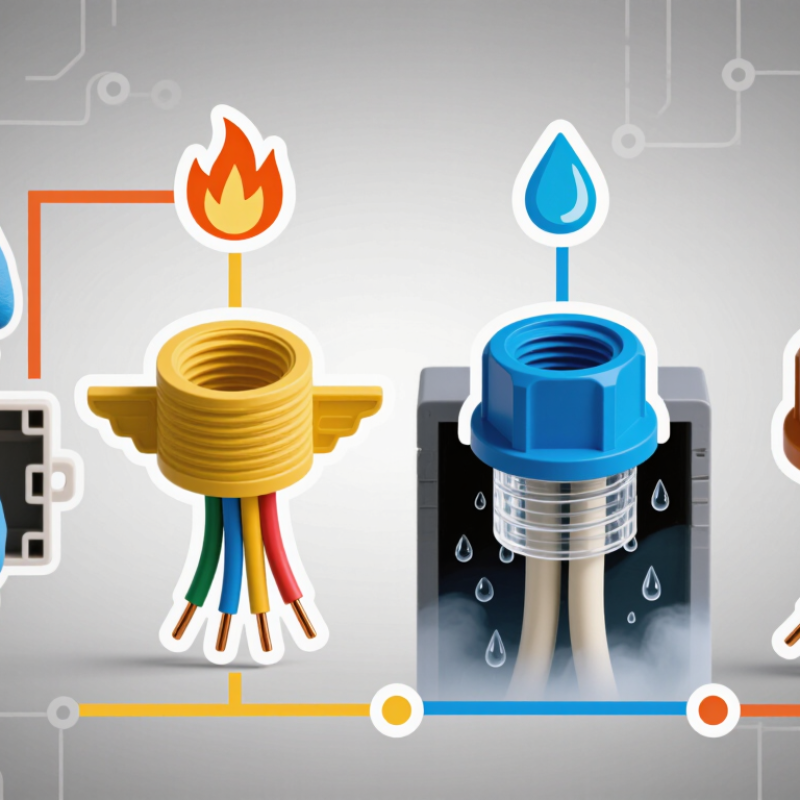
Weatherproof wire nuts are designed for outdoor boxes, garden lighting, damp basements, and exposed service areas. The critical detail is the wet-location listing, not the word “weatherproof” alone. A proper listing indicates testing for moisture exposure under defined conditions. Always check the connector’s marking and installation instructions.
Some wire nuts contain silicone-based sealant inside the cap. The sealant fills small air gaps around joined conductors and helps resist moisture entry. It does not repair damaged insulation. It also cannot compensate for loose connections. Choose a connector rated for the wire material, conductor range, and circuit conditions. Mixing incompatible conductors deserves extra caution.
Prepare clean, dry wire ends. Strip only the recommended length. Twist the conductors evenly, then tighten the nut until no copper remains visible. Give each wire a gentle pull. The connection should stay firm. A properly sealed nut still needs a weatherproof enclosure, suitable cable fittings, and careful water management. Condensation can enter from above, below, or through a neglected opening.
One common mistake is trusting silicone too much. I would still inspect seals after installation. Heat, sunlight, vibration, and aging can change performance. Real job sites are rarely perfect. When moisture exposure is serious, a qualified electrician should verify the connection, enclosure, and circuit protection together.
For 2026, the best wire nut depends on three verified details: AWG range, conductor count, and listing data. A connector rated for 14–12 AWG may not accept 10 AWG safely. The label matters.
UL 486C covers wire connectors and evaluates mechanical security, insulation, and temperature performance. Its requirements support a practical rule: match the listed conductor material and size exactly. A five-conductor connector is not automatically suitable for five larger conductors. Copper and aluminum combinations also require specific approval, not guesswork.
Conductor count needs careful checking. A package may list “2–6 wires,” but that range can change with AWG size. For example, six 14 AWG conductors create different heat and insertion conditions than six 10 AWG conductors. The 2023 National Electrical Code, Section 110.14(B), requires splices and terminals to provide a secure connection and proper insulation. That is where installation quality becomes visible.
Twist-on nuts remain useful. Winged designs improve grip, while compact designs fit crowded boxes. Push-in connectors can save time, but their listed wire range and solid-wire limits deserve attention. I would not choose by appearance alone. Field checks often reveal an overlooked issue: the connector is listed, but the actual wire combination is not. That small mismatch can undermine an otherwise careful installation. UL data helps, but the label still needs a human reading.