
2026 Top Rotary Desiccant Dehumidifier Manufacturers?

Selecting a rotary desiccant dehumidifier manufacturer in 2026 requires more than comparing catalogue capacities. Buyers need to examine moisture-removal performance, operating temperatures, regeneration energy, controls, and service access. These details matter in pharmaceutical rooms, battery production, food processing, and other spaces where damp air can disrupt work.

The International Energy Agency’s The Future of Cooling report projects that global energy demand for space cooling could more than triple by 2050. That is a useful signal of growing cooling pressure, but it is not a forecast for the dehumidifier market. The distinction matters. ASHRAE’s Handbook—HVAC Applications treats desiccant dehumidification as a specialist HVAC approach, with system choices shaped by application and operating conditions. A manufacturer’s headline capacity alone cannot show how a unit will perform in a real plant.

Look closely at test conditions, rotor materials, heat-source options, and published performance data. Ask how the supplier handles commissioning, spare parts, and routine rotor inspection. Small details count. A service panel that is difficult to reach can turn simple maintenance into lost production time. Still, no brochure can replace a site-specific assessment, and even experienced buyers may find comparisons awkward when test methods differ. This guide examines leading manufacturers through product range, technical evidence, application experience, and support. Its aim is practical: help readers ask sharper questions before requesting a quotation.
2026 Top Rotary Desiccant Dehumidifier Manufacturers?

Understanding Rotary Desiccant Dehumidifiers and Their Core Components

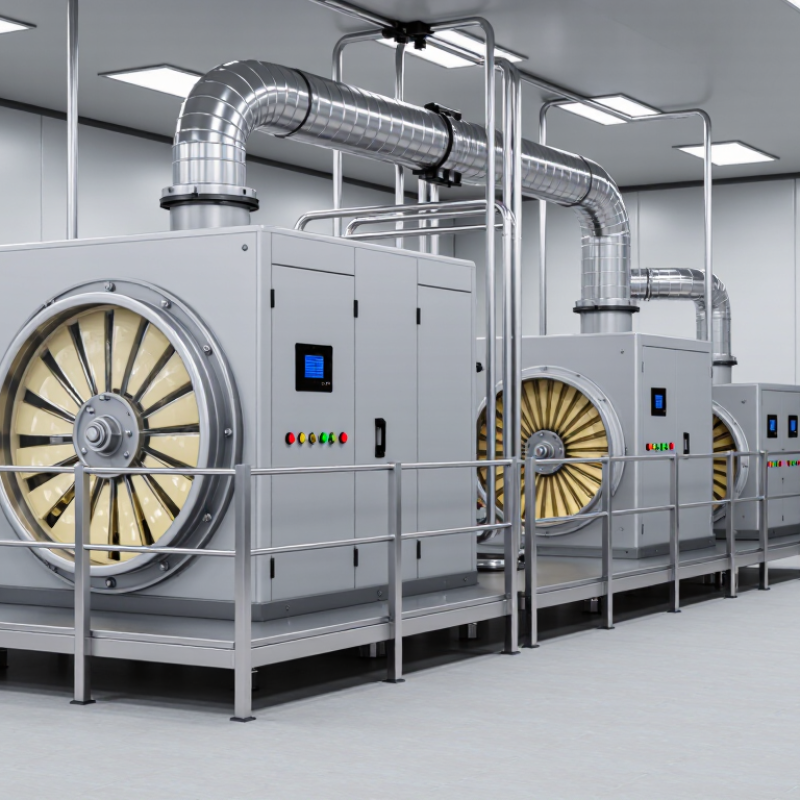
A rotary desiccant dehumidifier removes water vapor by passing process air through a slowly turning wheel coated with moisture-attracting material. Unlike cooling-based systems, it can dry air below typical refrigeration limits. This makes it useful in cold rooms, battery production, and humidity-sensitive storage. The wheel is divided into air-treatment and regeneration zones. That split matters. Moist air passes through one section, while a separate heated airstream carries captured moisture away.

At the center sits a rotor filled with hygroscopic media. Silica gel and molecular sieve are common choices. Its many small channels provide a large contact area, but performance depends on even airflow and intact seals. A drive motor turns the wheel gradually. A heater warms regeneration air, while a separate fan moves it through the wheel and exhaust duct. Filters protect the media from dust, and perimeter seals limit mixing between the two air streams. Small leaks matter.

Temperature and humidity sensors help the controls adjust heat and airflow, though readings can drift when sensors are poorly placed. During commissioning and routine service, check wheel rotation, filter loading, seals, and outlet dew point. A high outlet temperature alone does not prove effective drying. Excessive regeneration heat can also waste energy. Real systems are less tidy than diagrams, so operating settings should be checked against actual site conditions.

How to Evaluate Manufacturers of Rotary Desiccant Dehumidifiers in 2026

In 2026, evaluating rotary desiccant dehumidifier manufacturers means checking verified performance, not brochure capacity. The IEA’s 2018 report, The Future of Cooling, projects global energy demand for space cooling to more than triple by 2050. That is not a dehumidifier market forecast, but it highlights why buyers should assess operating energy alongside humidity control. Details matter.

Ask for test records using ASHRAE Standard 139, which specifies methods for rating desiccant-based dehumidification equipment. Compare moisture removal in kilograms per hour at your actual inlet temperature and humidity. Request regeneration energy per kilogram of water removed, outlet dew point, airflow, and pressure drop. A capacity figure without test conditions is not useful. Not on paper.

Inspect the rotor, seals, drive, and access for routine maintenance. Ask how the unit performs at part load and what testing covers dust, corrosion, and seal leakage. Request references from facilities with similar humidity targets, plus details on commissioning, spare parts, and service response. One point is easy to miss: a low-energy rating may depend on heat that your site cannot reliably supply. Check that assumption before comparing bids.

Leading Rotary Desiccant Dehumidifier Manufacturers and Their Product Ranges

Rotary desiccant dehumidifier manufacturers typically offer several product families: compact units for small rooms, modular systems for larger facilities, and process models for low-humidity production areas. Their ranges may vary by airflow, rotor size, regeneration heat source, and control options. Some systems use electric heat; others can use steam or recovered heat. A product sheet rarely tells the whole story. Check operating conditions, not just nominal capacity.

The International Energy Agency’s 2018 report, The Future of Cooling, estimates that space cooling uses about 10% of global electricity. This broad figure is not specific to desiccant equipment, but it shows why energy use deserves attention. Compare performance at your actual inlet temperature and humidity. Ask manufacturers for airflow, outlet humidity, regeneration energy, and performance data at stated test conditions. A small omission matters. Real rooms fluctuate.

Tips: Match the unit to the required dew point and moisture load. Confirm service access, filter replacement needs, and control response. Ask for a test report using conditions close to your site. A neat catalog can still leave gaps.

Rotary Desiccant Dehumidifier Product Ranges

Indicative process-airflow bands commonly used to describe equipment scale. Actual product ranges vary by manufacturer and depend on operating conditions.

Airflow is only one selection factor; required moisture removal, inlet conditions, target humidity, and process temperature also affect equipment sizing. These bands are general reference ranges, not a manufacturer ranking or a survey of specific products.

Comparing Manufacturer Capabilities, Applications, and Global Support

Rotary desiccant dehumidifier manufacturers differ in more than rated moisture removal. Compare rotor design, airflow range, control options, and service access. Ask for performance data at your actual inlet temperature and humidity, not only ideal test conditions. That matters. A unit sized for a dry warehouse may struggle in a cold production room.

Applications shape the right choice. Pharmaceutical storage may need stable humidity records and carefully managed air distribution. Food processing can require corrosion-resistant surfaces and straightforward cleaning. Battery production often calls for very low dew points, tight process control, and integration with existing ventilation. Check whether the manufacturer can explain energy use across operating conditions. A large capacity number alone can mislead. No selection is perfectly clean-cut; plant layouts and seasonal loads complicate comparisons.

Global support is equally practical. Review commissioning availability, spare-parts access, response times, and the clarity of operating manuals in the regions where equipment will run. Ask who handles troubleshooting after installation and how staff training is delivered. Not always. A broad service map does not guarantee fast help at a remote site. Request references for similar applications, sample maintenance schedules, and written service commitments before comparing quotations. These details reveal whether a manufacturer can support the equipment beyond delivery.

2026 Top Rotary Desiccant Dehumidifier Manufacturers? - Comparing Manufacturer Capabilities, Applications, and Global Support

This comparison uses general supplier profiles rather than named companies or a ranked list. Capabilities vary by model and project; confirm operating conditions, performance data, certifications, and service coverage directly with each supplier.

Comparison dimension Compact / OEM-focused supplier Application-specialist supplier Large-project / full-service supplier
Typical product scope Packaged or modular units; often suited to equipment integration and defined duty points. Configured systems for specific process, storage, or environmental-control requirements. Engineered systems that may include air handling, controls, heat recovery, and project coordination.
Rotor and process options Check available rotor media, airflow range, regeneration method, and whether the unit can meet the specified inlet conditions. May offer application-specific rotor selection and process/regeneration configurations; confirm compatibility with contaminants and temperature. May provide broader system-level choices, including heat-source integration; verify the configuration in the project submittal.
Performance information to request Moisture-removal capacity and power consumption at the stated inlet temperature, relative humidity, and airflow. Selection data across the expected operating range, including process-air conditions and regeneration energy. Guaranteed project duty, design assumptions, control sequence, and expected performance under part-load conditions.
Common application fit Equipment packages, smaller production spaces, and applications with relatively standard requirements. Battery and pharmaceutical production, food processing, cold storage, laboratories, or other humidity-sensitive processes, subject to design suitability. Large industrial facilities, multi-zone projects, and installations requiring coordinated HVAC and controls engineering.
Controls and integration Check included sensors, control modes, alarms, and available communication interfaces. Ask about process-specific control sequences, remote monitoring, and integration with the site automation system. Confirm controls engineering scope, interface responsibilities, commissioning support, and documented protocols.
Customization and project support Often most straightforward when requirements align with standard configurations; confirm customization limits and lead time. May provide application engineering and equipment adaptation; clarify design review, drawings, and commissioning scope. May support multi-discipline project delivery; define responsibility for installation, commissioning, and performance testing.
Global service and spare parts Coverage may depend on distributors or service partners; verify local response arrangements and parts availability. Regional support may be available through specialist teams or partners; confirm service locations and escalation procedures. A broader international network may be offered, but country-level coverage, response times, and stocked parts should be confirmed.
Certifications and documentation Check applicable electrical and safety approvals for the destination market and the exact unit configuration. Request material, hygiene, or industry-specific documentation where required; applicability depends on the system and jurisdiction. Confirm project documentation, local-code compliance, equipment approvals, and any required third-party inspection.
Best-fit selection check Compare total installed cost, operating point, footprint, and service access—not unit price alone. Prioritize demonstrated experience with the process conditions and request references for comparable applications. Assess lifecycle energy use, project coordination, local service capability, and clearly defined performance guarantees.

Note: These profiles describe common supplier approaches, not guaranteed attributes of every manufacturer. Rotary desiccant dehumidifier performance depends on the selected unit, process-air conditions, regeneration conditions, and system design.

Key Factors to Consider When Selecting a Manufacturer for Your Needs

Choosing a rotary desiccant dehumidifier manufacturer starts with your actual operating conditions. Share the target humidity, airflow, inlet temperature, and expected hours of use. A capable engineering team should explain how rotor size, regeneration heat, and air leakage affect performance. Ask for test data at conditions close to yours, not only a best-case figure. Details matter.

Check how the manufacturer verifies construction and quality. Request information on desiccant rotor materials, seals, insulation, controls, and inspection steps. Ask whether performance testing covers both process and regeneration air. A clear report is more useful than broad claims. A polished brochure can still leave gaps. If possible, review a sample maintenance schedule and spare-parts list before ordering.

Support after delivery matters, especially when the unit serves a continuous process. Confirm response times, technician availability, and training options. Discuss access to filters, sensors, and rotor components, including typical replacement intervals. Compare energy use and service needs alongside the purchase price. A lower quote may omit useful controls or commissioning work. I would not treat any single specification as decisive; even careful estimates can miss changing site conditions. Share those uncertainties early, and ask the manufacturer to state its assumptions in writing.