Top 10 OEM Precision Casting Solutions for Global Buyers?
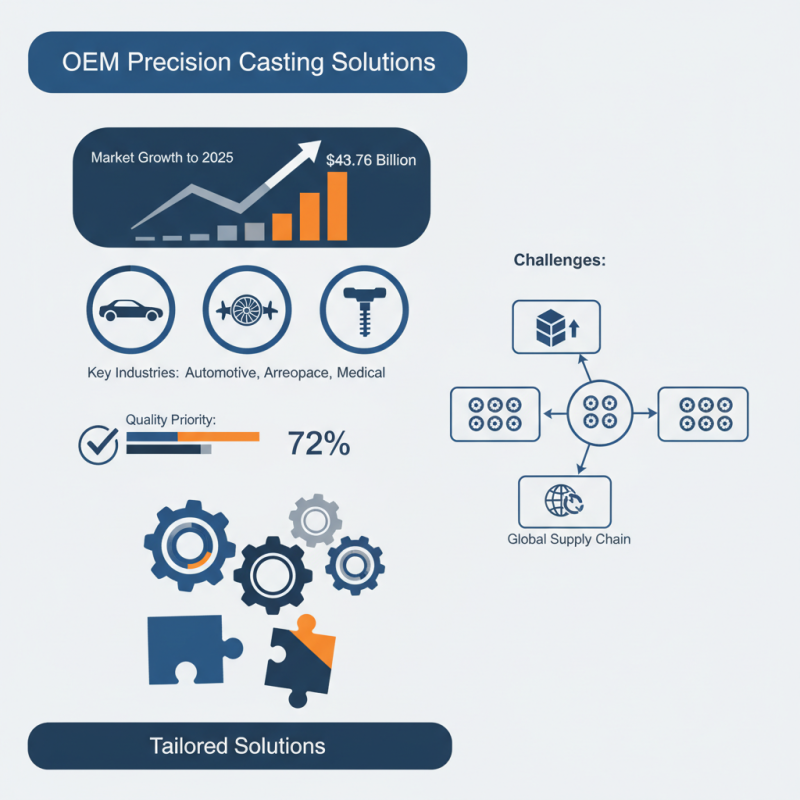
In the rapidly evolving manufacturing landscape, OEM Precision Casting plays a pivotal role. According to a report by Grand View Research, the global precision casting market is projected to reach USD 43.76 billion by 2025, driven by technological advancements and increasing demand across industries. OEM Precision Casting caters to a broad range of sectors, including automotive, aerospace, and medical devices, showcasing its versatility and importance.
The reliability of OEM Precision Casting is crucial, especially as companies seek tailored solutions. With the prevalence of customized products, buyers often face challenges in finding the right partners. A study by Statista highlights that 72% of manufacturers prioritize quality when selecting casting solutions. This emphasizes the need for precision and expertise in every casting process.
However, despite its advantages, there are hurdles to overcome. Some OEMs struggle with scalability and maintaining consistency in quality. Additionally, the complexity of managing global supply chains can lead to delays and increased costs. As the industry grows, addressing these issues will be vital for sustained success in OEM Precision Casting.
Overview of Precision Casting in the OEM Industry
Precision casting plays a crucial role within the OEM industry. This method enables manufacturers to produce intricate parts with remarkable accuracy. Common materials used include aluminum, steel, and iron. Each material offers unique properties, which can affect performance and durability in various applications. The casting process often involves melting the material and pouring it into molds tailored for specific components. This flexibility allows for a wide range of designs in different sectors.
However, challenges exist in precision casting. Quality control is vital, as any small defect can lead to significant issues down the line. Ensuring the correct tolerances and surface finishes can be difficult. Moreover, the cost of high-quality molds may deter some buyers from pursuing this solution. Regular evaluations and updates of techniques are necessary to maintain efficiency and quality. This ongoing process of improvement reflects the dynamic nature of the industry. Balancing cost and quality remains a constant struggle for many OEM manufacturers.
Key Criteria for Selecting Precision Casting Manufacturers
When selecting precision casting manufacturers, it’s essential to consider several key criteria. The quality of materials used can significantly impact the final product. Look for suppliers who use high-grade alloys and can provide detailed specifications. This ensures durability and performance.
Another important factor is the manufacturer’s experience and expertise in the field. A company with years of industry experience often has the know-how to address complex challenges. Nevertheless, it’s worthwhile to examine their recent projects and client feedback. This can reveal their current capabilities and commitment to quality.
Also, assess the technology and equipment used in the manufacturing process. State-of-the-art machinery can enhance precision and efficiency. However, as technology evolves rapidly, some manufacturers may lag behind. Regularly reviewing their innovation practices can be beneficial. Ensure that the manufacturer has robust quality assurance processes in place. This not only guarantees compliance with standards but also reduces the risk of defects.
Top OEM Precision Casting Solutions by Industry Type
Precision casting plays a critical role in various industries. Different sectors require unique solutions that address their specific needs. In the automotive industry, for example, precision casting offers durability and lightweight components. These features improve fuel efficiency and performance. The aerospace sector also benefits significantly, using casting to create complex geometries for safety-critical parts.
In the medical field, precision casting allows for the production of intricate devices. These pieces must meet stringent regulatory standards. Aerospace and medical sectors emphasize reliability in their components. However, the challenge remains in maintaining quality throughout the casting process. Innovators in the industry strive to refine these methods constantly.
Another critical area is the electronics industry, where precision casting provides components for devices. It ensures optimal function in small, intricate parts. However, the risk of defects remains. As industries seek improvements, ongoing dialogue between manufacturers and customers is essential. Addressing these challenges will enhance the overall effectiveness of precision casting solutions.
Top 10 OEM Precision Casting Solutions by Industry Type
Innovative Technologies Driving Precision Casting Solutions
Innovative technologies are transforming precision casting solutions across various industries. According to a recent report by Allied Market Research, the global precision casting market is projected to reach nearly USD 52 billion by 2026, growing at a CAGR of approximately 6.4%. This growth is primarily driven by advancements in materials and manufacturing processes.
One notable trend is the adoption of 3D printing technology in the casting process. This method reduces lead times and allows for complex geometries that traditional casting cannot achieve. Furthermore, real-time monitoring technologies provide data to improve quality control, ensuring consistent results. The integration of AI in design and production is also gaining traction, increasing efficiency. However, embracing these technologies requires a skilled workforce, which is a challenge for many companies.
Materials innovation, such as high-temperature alloys and ceramics, is another area worth exploring. These materials can withstand extreme conditions, making them suitable for aerospace and automotive applications. Yet, transitioning to new materials introduces risks and uncertainties. Companies must assess the long-term performance versus the initial investment. Balancing innovation with reliability remains a critical concern for buyers looking for precision casting solutions.
Global Trends Impacting the OEM Precision Casting Market
The OEM precision casting market is evolving rapidly. Global trends significantly influence sourcing decisions. Companies now prioritize sustainability and efficiency. They are seeking suppliers that reduce waste and greenhouse gas emissions. This push for eco-friendly practices is reshaping relationships with manufacturers.
Technological advancements further impact the market. Additive manufacturing is offering new possibilities. It allows for the production of complex geometries that traditional casting cannot achieve. However, not all firms adapt quickly to these changes. Some still rely on outdated processes, creating a gap in competitiveness. Companies must invest in new technologies to meet customer demands effectively.
The geopolitical landscape also plays a vital role. Trade policies and tariffs affect raw material costs and availability. This unpredictability forces global buyers to reassess their supply chain strategies frequently. Companies need to remain agile and responsive to maintain market relevance. Balancing cost and quality becomes increasingly challenging in this environment.

