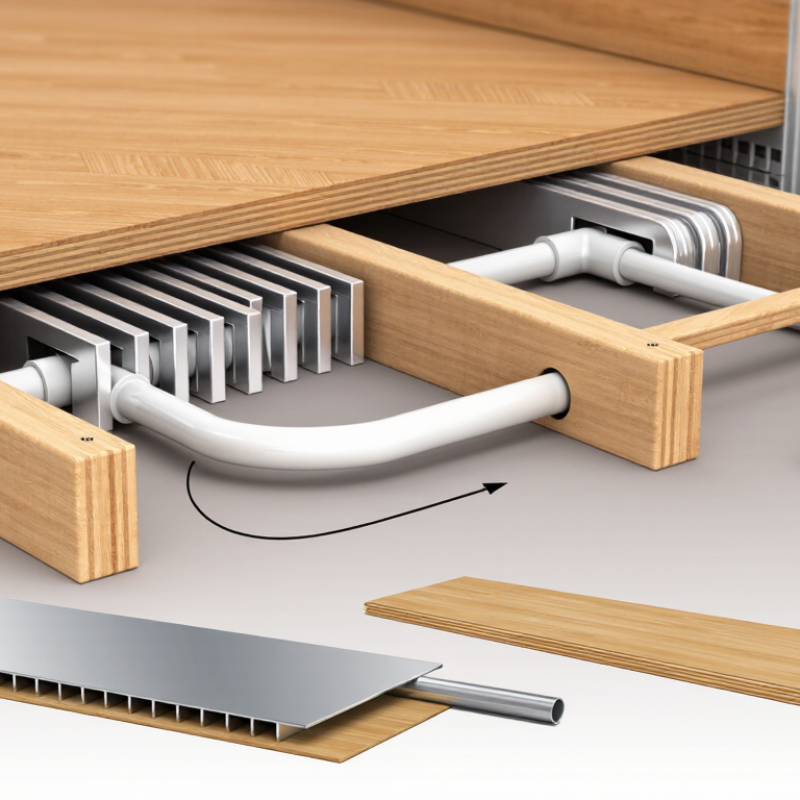
| Formed channel (C-shaped or omega-style) plate | Formed aluminum sheet | About 205–237 W/m·K for common aluminum alloys | Channel grips or partly surrounds the tube; heat spreads into the plate and adjacent floor material. | Between-joist and staple-up radiant floor installations; available for common tube diameters such as 1/2-inch and 5/8-inch PEX. | Lightweight, widely used, and generally offers good heat spreading for its thickness. | Confirm the channel matches the tube’s actual outside diameter. Fit, plate thickness, spacing, and tight contact with the subfloor affect performance. |
| Full-coverage or wide sheet plate | Aluminum sheet, often formed with tube channels | About 205–237 W/m·K for common aluminum alloys | Covers a broader area than a narrow channel plate, spreading heat across more of the underside of the floor. | Joist-bay and other suspended-floor systems where broader plate coverage is part of the design. | Broad coverage can help reduce concentrated heat patterns and distribute heat across the bay. | Requires suitable bay dimensions and a layout compatible with the tubing plan. A larger plate does not by itself guarantee higher system output. |
| Extruded channel plate | Extruded aluminum | About 205–237 W/m·K for common aluminum alloys | A rigid, shaped channel holds the tube; the extrusion’s cross-section provides a defined heat-spreading path. | Installations needing a more rigid channel or a specific tube-retention profile. | Maintains its shape well and can provide consistent tube seating when correctly sized. | Usually bulkier than thin formed sheet. Check the tube profile, plate dimensions, fastening method, and compatibility with the floor assembly. |
| Galvanized steel channel plate | Zinc-coated carbon steel | About 45–60 W/m·K for carbon steel; coating and grade vary | Holds the tube in a channel; heat spreads less readily through the plate than through aluminum of similar geometry. | Some suspended-floor or retrofit applications where steel plates are specified or readily available. | Steel is mechanically robust and can be suitable where the plate design and system details account for its properties. | Lower thermal conductivity than aluminum. Inspect the coating for damage and follow the manufacturer’s guidance for damp or corrosive environments. |
| Copper channel or sheet plate | Copper | About 385–400 W/m·K for common copper grades | Very high material conductivity can spread heat effectively, but overall performance still depends on plate geometry and tube contact. | Specialty applications where copper is specified and its cost and material compatibility are acceptable. | Higher thermal conductivity than aluminum, carbon steel, or stainless steel. | Typically a specialty choice rather than the default. Check cost, availability, joining details, and compatibility with nearby metals and system conditions. |
| Stainless-steel channel plate | Stainless steel | About 14–17 W/m·K for many common stainless grades | Provides tube support, but spreads heat less readily than aluminum or copper at comparable dimensions. | Special environments or designs where stainless steel is specifically required. | Can offer corrosion resistance in suitable grades and environments. | Thermal conductivity is relatively low. Verify the stainless grade, plate design, and system requirements rather than choosing on corrosion resistance alone. |