China’s automotive industry is scaling quickly, and that shift is raising expectations for production testing. The China Association of Automobile Manufacturers reported 30.16 million vehicles produced in 2023, including 9.59 million new energy vehicles. Globally, the International Energy Agency’s Global EV Outlook 2024 estimated nearly 14 million electric car sales in 2023, about 18% of all car sales. These figures show why reliable motor testing matters.
An Automotive Motor Tester checks more than whether a motor turns. Depending on the system, it can measure electrical performance, speed, torque, temperature, vibration, or insulation. In a factory, repeatable results help engineers catch faults before products reach vehicle assembly. On a test bench, details such as cable routing, cooling flow, and sensor calibration can affect readings. Small errors matter.
Numbers matter. So does service.
This guide introduces ten manufacturers in China’s automotive motor testing sector. It is intended as a starting point, not a substitute for supplier audits or technical trials. Buyers should compare measurement range, test-cycle time, automation options, software records, calibration support, and experience with the relevant motor type. Published specifications can look convincing; they do not always show how a system performs during a long production shift. That deserves a closer look. The right choice depends on the motor, factory process, and support requirements—not simply the lowest quoted price.
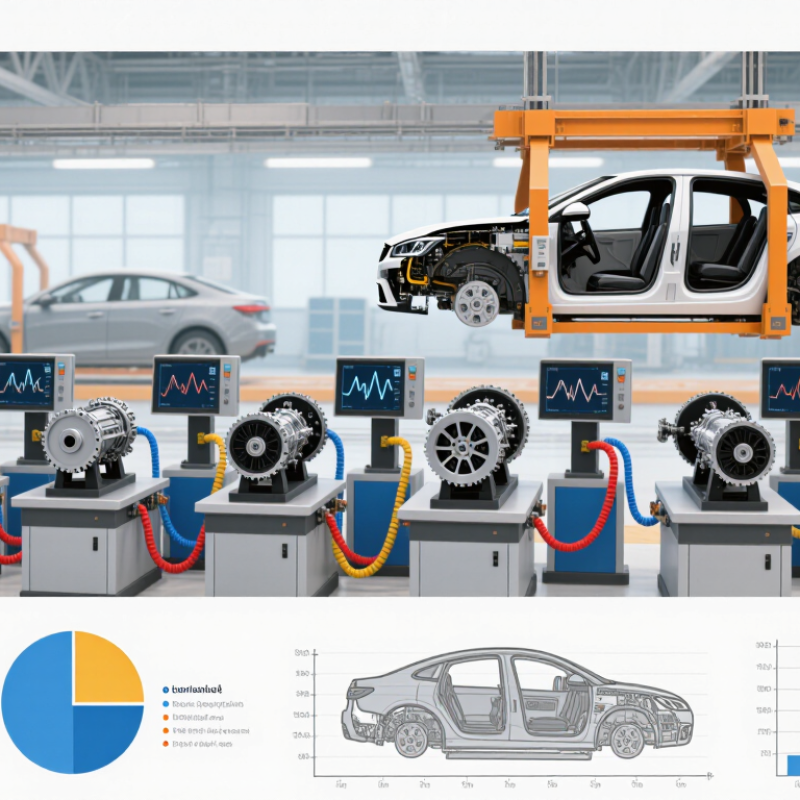
An automotive motor tester checks how a motor behaves electrically and under load. It can measure voltage, current, winding resistance, insulation condition, speed, and torque. Some test setups also monitor vibration and temperature. These readings help technicians distinguish a weak winding from a mechanical problem, such as a tight bearing or misaligned shaft.
Numbers need context. A current spike during startup may be expected, while the same spike under steady load could point to a fault. A tester can record readings at different speeds and loads, giving engineers a clearer picture than a single pass-or-fail result.
Small changes matter. Comparing measurements with the motor’s specifications and earlier test records can reveal gradual wear before performance drops noticeably. Results also support production checks and repair decisions, but they do not replace careful inspection.
Loose connections, inconsistent test conditions, or an inaccurate sensor can distort the data. This is easy to overlook. Even reliable instruments require correct setup, repeatable procedures, and a technician who knows when a reading deserves another check.
China Top 10 Automotive Motor Tester Manufacturers
Key Technologies Used in Automotive Motor Testing
Automotive motor testing combines mechanical measurement with electrical analysis. A dynamometer applies controlled load while sensors record torque and rotational speed. Together, these readings show how efficiently a motor converts electrical input into motion. An encoder tracks shaft position, and a power analyzer measures voltage, current, and power factor. Small changes matter. A loose coupling or poorly aligned fixture can distort results.
Thermal sensors monitor winding and housing temperatures during longer test cycles. Vibration sensors can reveal imbalance, bearing wear, or mounting problems that basic performance readings may miss. Modern data acquisition systems synchronize these signals and compare them across repeatable load profiles. Insulation resistance checks and winding tests can also help identify electrical faults. Still, a clean test result does not guarantee identical performance in every vehicle. The setup matters, and test conditions should be recorded carefully.
Tips: Warm the motor consistently, verify sensor calibration, and document ambient temperature. Check fixture alignment before each run. Never treat one measurement as the whole story.
Three-phase voltage waveform for electrical signature analysis
This analytical example shows balanced 50 Hz, 230 V RMS phase-to-neutral supply waveforms, with a peak of approximately 325 V. Voltage and current waveform analysis can help assess motor electrical behavior; actual automotive motor test conditions vary by motor, inverter, and test procedure.
The IEA’s Global EV Outlook 2024 reports nearly 14 million electric cars sold worldwide in 2023, around 18% of total car sales. China’s automotive sector is therefore a significant setting for motor testing. CAAM reported 9.495 million new energy vehicles sold in China that year. These figures do not prove demand for any specific tester, but they show why manufacturers should demonstrate readiness for varied motor designs and production volumes.
Evaluate test coverage before comparing price. Ask whether a system can measure torque, speed, power, temperature, and efficiency across the motor’s intended operating range. Request repeatability data, calibration records, and sample test reports—not just headline accuracy. Numbers need context. Check the test fixture, sensor placement, and software version used to produce them. A gap remains: published accuracy may not reveal fixture-related error.
Factory trials provide stronger evidence than brochures. Observe how operators mount a motor, configure a test, and handle failed results. Confirm data export options, production-line integration, training, spare-part availability, and response times for technical support. Ask for a reference installation with a similar motor type and duty cycle. A polished demonstration can still hide setup limitations. Weigh documented performance and service capability alongside price; the cheapest offer may require costly adaptation later.
China’s automotive motor-tester sector sits within a vast vehicle industry. The China Association of Automobile Manufacturers reported 30.16 million vehicles produced in 2023, including 9.59 million new-energy vehicles. That scale increases the need for repeatable motor validation under changing loads, heat, and vibration. These figures describe vehicle production, not tester demand. Numbers need context.
Profiles of ten leading manufacturers are most useful when they compare practical capabilities, rather than relying on broad claims. Readers can examine speed and torque ranges, inverter compatibility, thermal testing, automated data capture, and calibration support. A supplier serving a research laboratory may offer different equipment from one focused on high-volume production lines. Look for details on test fixtures, safety interlocks, measurement accuracy, and after-sales service. The International Energy Agency’s Global EV Outlook 2024 also documents the rapid expansion of electric-car production, strengthening the case for robust motor testing. Still, vehicle growth is only an imperfect proxy for tester-market size. A profile should state what its equipment can measure, and where its limits begin.
Scope note: The entries below are anonymized capability-based profile archetypes for comparing automotive motor testing solutions. They are not named companies or a verified ranking of manufacturers; capabilities vary by individual supplier and configured system.
| Profile | Capability Focus | Motor Coverage | Typical Test Functions | Common Measurement Outputs | Typical Application |
|---|---|---|---|---|---|
| 01 | End-of-line motor test systems | Production automotive motors and subassemblies | Electrical safety checks, winding checks, no-load operation, and configurable functional tests | Resistance, insulation results, current, voltage, speed, and pass/fail status | Automated or semi-automated production-line quality control |
| 02 | Electric traction motor dynamometer systems | Traction motors for electric and hybrid vehicles | Loaded operation, speed and torque sweeps, efficiency mapping, and thermal monitoring | Torque, rotational speed, mechanical power, electrical input, and temperature | Motor development, validation, and performance characterization |
| 03 | Motor-and-inverter test benches | Integrated electric drive units and motor-controller combinations | Drive-cycle operation, torque control, regenerative operation, and system-level performance testing | DC-bus voltage and current, phase values, speed, torque, and calculated efficiency | Evaluation of electric drive systems under controlled operating conditions |
| 04 | Stator and winding inspection systems | Stators and wound motor components | Winding resistance, insulation resistance, dielectric withstand, and surge comparison tests | Resistance, leakage current, withstand result, and winding-comparison indicators | Incoming inspection and manufacturing quality checks for winding processes |
| 05 | Rotor and mechanical condition test systems | Motor rotors and assembled rotating components | Balancing, runout inspection, vibration measurement, and rotational checks | Vibration, imbalance, runout, rotational speed, and inspection status | Rotor production and assessment of mechanical condition |
| 06 | NVH-focused motor test systems | Automotive motors and electric drive assemblies | Noise and vibration measurement across selected speed and load conditions | Sound-pressure data, vibration spectra, speed, and test-condition records | Noise, vibration, and harshness investigations during development or quality checks |
| 07 | Thermal and endurance test systems | Motors and drive units requiring extended operation | Continuous running, load cycling, temperature monitoring, and scheduled inspections | Temperature, speed, torque, electrical quantities, and elapsed test time | Durability evaluation and thermal-performance studies |
| 08 | Motor efficiency and performance mapping systems | Electric traction motors and other automotive motor designs | Steady-state operating-point tests and mapping over selected speed and torque ranges | Input and output power, torque, speed, and calculated efficiency | Comparing operating performance and identifying efficient operating regions |
| 09 | Small motor and actuator test systems | Automotive auxiliary motors and electromechanical actuators | Functional cycling, direction checks, load tests, and electrical parameter measurement | Current, voltage, speed or movement, operating time, and test status | Production checks for auxiliary systems and actuator assemblies |
| 10 | Custom-configured laboratory test benches | Prototype motors, special-purpose motors, and development samples | Configurable electrical, mechanical, thermal, and control-interface testing | Test-dependent electrical, torque, speed, temperature, and data-logging results | Engineering research, prototype validation, and tailored test procedures |
Automotive motor testers differ less by headline accuracy than by how reliably they reproduce real operating conditions. When comparing the top ten manufacturers, examine voltage and current ranges, speed measurement, load control, and data capture. A bench designed for small motors may not handle high-torque traction units. That gap matters. Check repeatability across cold starts, steady loads, and rapid changes, not just one impressive demonstration.
Applications should shape the choice. A component supplier may need quick end-of-line checks, while an engineering lab needs programmable cycles and detailed waveform records. Ask whether fixtures, safety enclosures, and software can adapt to different motor frames. Support also deserves a practical test: request calibration guidance, spare-part lead times, training options, and a sample report. A polished manual is useful, but response quality becomes obvious when a test fails. I would still verify regional service coverage; published promises can be vague.
Tips: Bring a motor drawing and two real test profiles to supplier discussions. Ask for a witnessed run using your own acceptance limits. Compare setup time, report clarity, and fault handling. Small differences add up.