Top 5 Tips for Choosing Industrial Ethernet Switches?
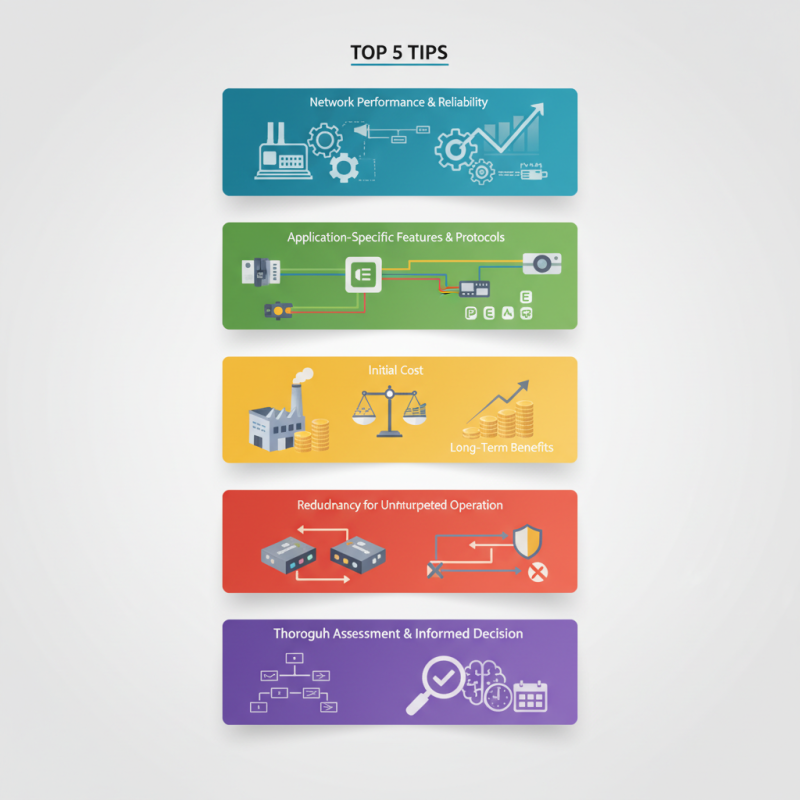
Choosing the right Industrial Ethernet Switch can significantly affect your network performance. In today’s industrial environments, reliable communication is crucial. An Industrial Ethernet Switch connects various devices, ensuring they communicate efficiently. Your choice impacts data transfer speeds, network reliability, and overall system performance.
Many factors influence the selection of an Industrial Ethernet Switch. For instance, different applications require specific features. Some switches might not support the necessary protocols or have the required bandwidth. Therefore, it is vital to understand your operational needs. You may find yourself questioning if the initial cost of a switch outweighs its long-term benefits.
Incorporating redundancy for uninterrupted operation is key. Yet, not every switch provides adequate redundancy. This can lead to network failures when least expected. Investing time in thoroughly assessing available options can prevent costly disruptions later. Ultimately, making an informed decision hinges on understanding these critical aspects of Industrial Ethernet Switches.
Understanding the Role of Industrial Ethernet Switches in Networking
Industrial Ethernet switches play a critical role in networking, especially in manufacturing and automation environments. They facilitate communication between devices, such as sensors, controllers, and computers. These switches are designed to operate in harsh conditions, withstanding dust, moisture, and extreme temperatures. This reliability is crucial for maintaining uninterrupted operations in industrial settings.
Choosing the right industrial Ethernet switch involves understanding your specific networking needs. Consider the number of devices you plan to connect and the data transfer speeds required. Also, think about the potential need for redundancy and scalability as your network grows. Many users overlook the importance of these factors, leading to suboptimal performance and increased downtime.
Security is another vital aspect. With cybersecurity threats on the rise, switches with built-in security features can help safeguard your network against potential breaches. However, not all switches offer the same level of protection. It’s essential to review technical specifications carefully and understand your network's vulnerabilities. Engaging with experts in the field can enhance your understanding and decision-making process.
Key Features to Look for in Industrial Ethernet Switches
When selecting industrial Ethernet switches, several key features can significantly impact network performance. Reliability is paramount in harsh environments. According to a report by Research and Markets, about 70% of industrial network failures stem from poor equipment durability. Look for switches that meet industrial standards like IP67 for dust and water resistance.
Another crucial factor is the number of ports. A versatile switch should have enough ports to accommodate future expansion. A 2022 study showed that companies often underestimated their needs, leading to operational bottlenecks. Select switches with modular designs to add or replace ports easily.
Deciding between managed or unmanaged switches is essential as well. Managed switches provide enhanced control and monitoring features. In critical applications, such as factory automation, over 40% of businesses reported improved efficiency with managed solutions. Consider scalability and management tools that fit your operational needs. Balancing these features with cost can be challenging, but it's vital for long-term investments in network infrastructure.
Evaluating Performance Metrics for Ethernet Switch Selection
When selecting an industrial Ethernet switch, evaluating performance metrics is crucial. Look for factors like throughput, latency, and packet loss. High throughput ensures that data transfers efficiently, while low latency is vital for real-time applications. Packet loss can disrupt communication and affect system reliability. These metrics provide tangible indicators of how well the switch will perform under load.
Another important aspect is scalability. Consider how many devices will connect to the switch now and in the future. A switch that meets current needs might not suffice later. It’s essential to assess how many ports and how much bandwidth you will require down the line. Pay attention to environmental resilience too. Industrial switches should withstand temperature fluctuations and physical shocks. Some switches are rated for extreme conditions, making them suitable for harsh environments.
It's also wise to think about redundancy. A single point of failure can cause significant downtime. Look for features like dual power supplies and failover capabilities. While these features may add to initial costs, they can save money in the long run. Evaluating these metrics will help ensure your choice leads to a reliable, robust network suited to your industrial needs.
Assessing Environmental Compatibility for Industrial Applications
When selecting industrial Ethernet switches, environmental compatibility is crucial. These switches operate in challenging conditions. Factors like temperature, humidity, and dust levels can impact their performance. Ensure the chosen switch can withstand extreme temperatures. Many models are rated for both low and high extremes.
Consider the dust and moisture levels in your environment. IP ratings indicate a switch's resistance to dust and water. A higher IP rating means better protection. This is vital in industries like manufacturing, where exposure is common.
The switch must also endure vibrations and shocks common in industrial settings. Look for ruggedized designs that offer enhanced durability. Additionally, evaluate the potential for electromagnetic interference. Selecting the right switch involves considering all these factors. Your choice impacts system reliability. Measure environmental factors accurately to avoid costly mistakes.
Budgeting and Cost Considerations When Choosing Ethernet Switches
When budgeting for industrial Ethernet switches, several factors come into play. It's essential to consider both the initial purchase price and the long-term operational costs. Industrial switches often have higher upfront costs due to their rugged design and advanced features. However, investing in quality can lead to savings over time. Cheaper switches might require more frequent replacements and maintenance.
Understanding your specific needs can help you avoid overspending. For example, a basic switch might suffice for smaller operations. But if you plan to scale or require specific features, opt for a more robust model. Take time to research features like port density and redundancy options. These can prevent future headaches and additional costs.
You may also want to factor in compatibility with existing infrastructure. Integrating new switches with legacy systems can be tricky and costly. Some switches might not support certain protocols. This could lead to unexpected expenses during installation. Thus, thorough preparation is crucial. Always budget for potential upgrades and ongoing maintenance to keep your network running smoothly.

