

7 Tips for Choosing a Shipbuilding Panel Line
Choosing a Shipbuilding Panel Line is a major investment in a yard’s daily capability. The right system must match vessel types, plate sizes, production volume, and available floor space. It must also work with existing cranes, welding processes, and material flow. Small mismatches can create long queues beside the line.
The scale of the market matters. UNCTAD’s Review of Maritime Transport 2024 reports that China, the Republic of Korea, and Japan together accounted for about 95% of global ship completions in 2023. That concentration underscores the value of efficient, repeatable production. OECD shipbuilding research also highlights how competitiveness depends on productivity, technology, and skilled workers. A panel line should be judged against those practical demands, not brochure speed alone.
Details matter. Can operators access weld heads safely? Does the line handle the panel dimensions your yard actually builds? How quickly can settings change between jobs? Consider automation, accuracy, maintenance support, training, and the supplier’s track record. Then test the numbers against real production plans. A faster line is not automatically a better line.
One evidence gap deserves candor: no source material was provided for a verifiable, named Shipbuilding Panel Line expert quotation. Inventing one would weaken trust. The seven tips that follow focus on measurable requirements, documented performance, and questions buyers can verify before signing. Some assumptions may still need testing on your shop floor. That is worth admitting.
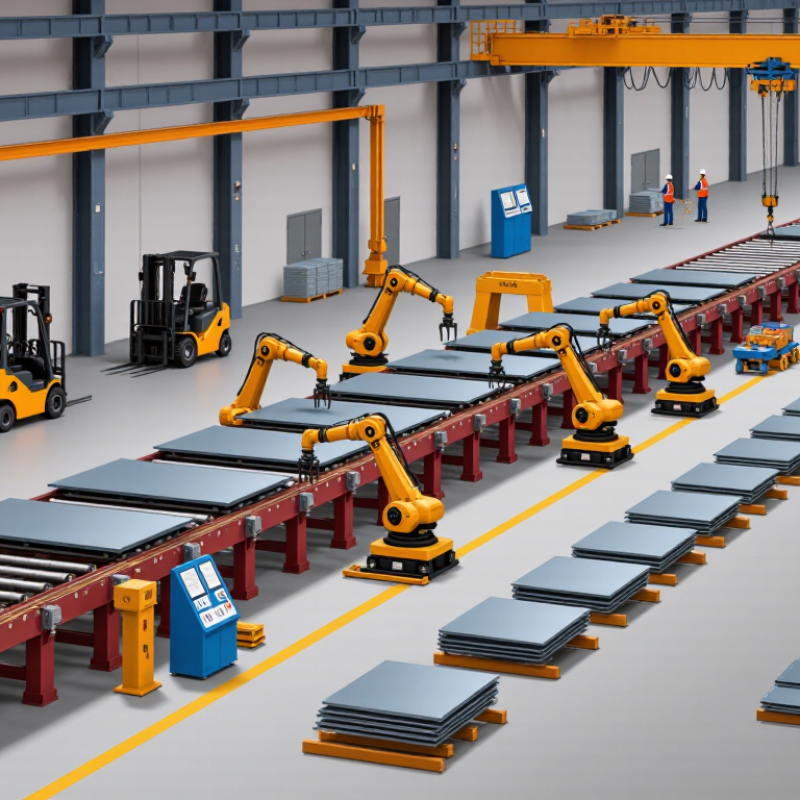
Define Panel Dimensions, Plate Thickness, and Annual Tonnage Requirements
Before selecting a shipbuilding panel line, map the panels your yard actually produces. Record minimum and maximum length, width, and diagonal tolerances from recent drawings. Do not size the line around one oversized project unless that work is certain. A bed that is too short adds handling steps; excess length consumes valuable floor space. Check how plates arrive, turn, and leave the line, including crane hook height and aisle clearance. Small details matter. Confirm whether the line must process stiffened panels, flat plates, or both. That choice affects supports, fixtures, welding access, and downstream fit-up.
For plate thickness, use the real production range, not a single nominal value. Thin plates can distort under heat, while thicker material may require different welding parameters and more time. Ask production and engineering teams to review representative jobs together. Annual tonnage should reflect usable plate weight, not just the line’s rated capacity. Estimate shifts, planned maintenance, changeovers, and the share of panels needing rework. Compare the required yearly tonnage with realistic operating hours and a cautious utilization estimate. A spreadsheet helps, but it may hide awkward scheduling and uneven workloads. Revisit the estimate after several months of production data; the first forecast may be wrong.
7 Tips for Choosing a Shipbuilding Panel Line - Define Panel Dimensions, Plate Thickness, and Annual Tonnage Requirements
| Tip | Planning Dimension | Example Requirement | Selection Guidance |
|---|---|---|---|
| 1. Define the panel envelope | Maximum and minimum panel length and width | Panels from 6 × 2 m up to 16 × 4 m | Specify the largest panel that must pass through every station, including conveyors, marking equipment, welding equipment, and handling systems. Confirm workable minimum sizes as well. |
| 2. Set the plate-thickness range | Minimum, typical, and maximum plate thickness | Approximately 4–16 mm, with most production between 6–12 mm | Base the range on the vessel designs and approved material grades in the production plan. Check that the proposed process can handle the full range without excessive reconfiguration. |
| 3. Calculate annual tonnage | Finished panel output per year | For example, 12,000 tonnes per year over 250 working days is about 48 tonnes per working day | Use the planned production mix and actual operating calendar. Include expected maintenance, changeovers, and ramp-up when converting annual demand into required line capacity. |
| 4. Translate tonnage into throughput | Shift pattern, effective operating hours, and utilization | At 16 effective hours per day, 48 tonnes per day requires an average of 3 tonnes per effective hour | Allow for planned stops, material supply, inspection, and downstream bottlenecks. Rated machine speed alone does not establish achievable production output. |
| 5. Match the process to panel construction | Flat panels, stiffened panels, and required weld sequence | Define whether the line handles flat plate only or panels with longitudinal and transverse stiffeners | List the typical stiffener profiles, spacing, and panel build sequence. Confirm that the line layout and handling method suit the actual assembly process. |
| 6. Check material and handling limits | Plate grade, incoming plate condition, panel weight, and lifting capacity | Include the heaviest panel, not just the widest or longest panel | Verify compatibility with the intended steel grades and shop material flow. Check supports, transfer equipment, turning devices, and lifting arrangements against maximum loads. |
| 7. Allow for product mix and future demand | Current production profile, changeover needs, and planned capacity growth | Compare a steady high-volume mix with a variable mix of panel sizes and thicknesses | Use a representative production schedule to assess flexibility and bottlenecks. Choose capacity based on a documented growth plan rather than an assumed maximum rate. |
Planning note: The figures above are illustrative examples, not universal design limits. Confirm requirements against the shipyard’s production data, applicable material specifications, and detailed equipment engineering.