
7 Tips for Buying a Full Engine from Global Suppliers

Buying a Full Engine from a global supplier is not simply a price comparison. It is a technical decision involving compatibility, operating conditions, documentation, and long-term support. A low-cost unit can become expensive when mounting points, control systems, emissions specifications, or service records do not match the equipment.

Tom Linebarger, former Cummins chairman and CEO, once said, “Our customers don’t buy engines; they buy uptime.” That principle should guide every supplier conversation. Buyers need clear answers about engine model, serial number, build year, rated power, fuel system, hours, and overhaul history. Ask for photographs of the nameplate and cold-start evidence. Request inspection reports from an independent technician when possible.

Details matter.

This guide presents seven practical tips for evaluating a Full Engine from international suppliers. It examines supplier credibility, specification matching, condition verification, warranty language, shipping preparation, parts availability, and total ownership cost. These checks are useful for construction machinery, agricultural equipment, generators, trucks, and industrial applications.

Still, no checklist removes every risk. Online photos may hide corrosion, storage damage, or previous repairs. A familiar brand does not guarantee a suitable replacement. Even experienced buyers can overlook regional voltage, fuel quality, or electronic-control differences. That is where careful questions become more valuable than confident assumptions.

A reliable purchase leaves a paper trail. It connects the engine to its application, inspection evidence, and realistic after-sales support. That standard is slower, but usually safer.
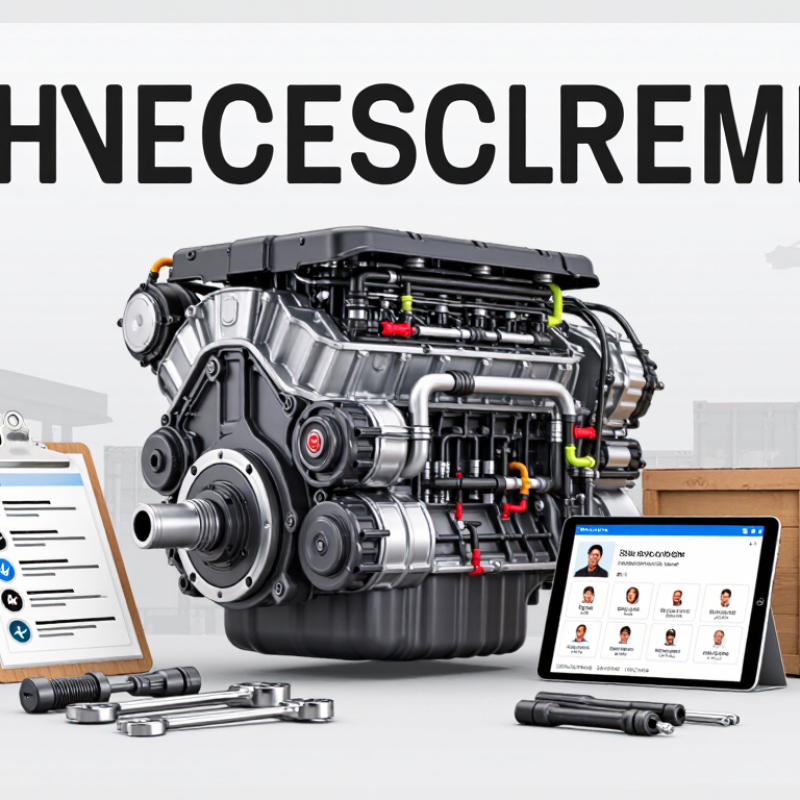
7 Tips for Buying a Full Engine from Global Suppliers

Define the Exact Full-Engine Specifications You Need

Tip: Write down the engine’s full identification details before contacting suppliers. Record the vehicle year, make, model, engine code, displacement, fuel type, and configuration. Note whether you need a long block, a complete engine with accessories, or another specific assembly. “Full engine” can mean different things to different sellers.

Tip: Check fitment beyond the model name. Compare the engine code, mounting points, transmission interface, sensor locations, and emissions equipment with your existing unit. Share clear photos of the engine label and connector layout when possible. A small sensor difference can delay installation, even when the displacement matches.

Tip: Specify what must arrive with the engine. List components such as the intake manifold, turbocharger, wiring harness, fuel system parts, and control unit, if required. Ask the supplier to confirm included parts in writing and describe the engine’s condition, testing, and inspection records. I once assumed “complete” included the wiring; it did not. That detail was easy to miss. Keep your requirements in one dated document, and flag anything you are unsure about before requesting a quote.

Verify Supplier Credentials, Certifications, and Global Trade Experience

A polished website is not proof of a reliable engine supplier. Ask for the company’s registered business details, physical address, and the name of the person responsible for export documents. Check that these details match across the quotation, invoice, and shipping paperwork. Small mismatches can delay a shipment. Request references from buyers who have purchased comparable engines, and ask specific questions about inspection records, packing, and after-sales support. Vague praise tells you little.

Review certifications carefully. Confirm the issuing organization, validity dates, and the activities or products covered; a certificate may not apply to the engine you are buying. Ask for a sample inspection report with identifying details, such as engine serial number, test readings, and recorded condition. For international orders, verify the supplier’s experience with your destination, including customs documentation, transport arrangements, and agreed delivery terms. Procedures differ by route, so do not assume a supplier’s past shipment guarantees a smooth one.

Keep copies of written answers. Compare them with the purchase contract before paying. If a supplier cannot explain who inspected the engine, ask again—or pause the order. That may feel overly cautious. It is easier than resolving unclear paperwork after a heavy crate has crossed an ocean, and even diligent checks can miss problems. No checklist removes all risk.

Compare Engine Quality, Pricing, Warranty, and Total Import Costs

When buying a full engine from an overseas supplier, compare specifications before comparing prices. Check the engine code, displacement, fuel type, included components, and stated condition. Ask for clear photos of the actual unit, including its serial number and mounting points. A clean exterior can hide wear, so request inspection records or compression-test results where available. Details matter.

A low quote may exclude sensors, wiring, intake parts, or a control unit. Ask for an itemized invoice and confirm exactly what “full engine” means. Compare warranty terms carefully: coverage period, exclusions, claim process, and who pays return freight. Get these details in writing. Warranty wording can be vague, and I would not assume that a promise covers labor or installation damage.

Estimate the landed cost, not just the engine price. Include crating, freight, insurance, customs duties, taxes, port handling, and local delivery. Request a shipping estimate based on the packed dimensions and destination, since a heavy crate can change the bill quickly. Confirm payment milestones and expected dispatch dates, then allow room for delays. One part I sometimes overlook is storage: a late pickup can add fees. Put the numbers in one comparison sheet, with currency, delivery terms, and warranty limits beside each supplier’s quote.

Inspect Compatibility, Testing Reports, and Refurbishment History

Buying a full engine from a global supplier requires more than matching a model name. Start by comparing the engine code, production year, fuel system, transmission interface, mounting points, and control-unit requirements. Ask for measurements and clear photographs of the bell housing, ports, sensors, and serial plate. Small differences matter. Have a qualified technician review the compatibility sheet before payment. Do not rely on a sales photograph alone.

Testing evidence should be specific, dated, and traceable. Request compression readings for every cylinder, leak-down results, oil-pressure data, cooling-system pressure tests, and a documented load test. The report should identify test equipment and operating temperatures. A vague statement such as “runs well” proves very little. Ask whether readings were taken before or after repairs. I have seen clean-looking engines fail because testing was limited to a brief startup. That mistake is easy to repeat.

Examine the refurbishment history line by line. Look for replaced bearings, pistons, seals, injectors, turbo components, and machining measurements. Confirm which parts were reused and why. Request invoices, technician notes, and photographs taken during disassembly. An independent inspector can verify hidden wear, corrosion, and repaired cracks. Also check the written warranty, return conditions, preservation method, and shipping documents. Records can be incomplete. Treat that gap as a risk, not an automatic rejection, and price the uncertainty before choosing the engine.

7 Tips for Buying a Full Engine from Global Suppliers - Inspect Compatibility, Testing Reports, and Refurbishment History

Tip What to Check Useful Evidence Buying Decision
1. Match the exact engine specification Compare the engine code and part number, model year, displacement, fuel type, aspiration, and emissions configuration. Engines with the same displacement may still differ. Vehicle identification number (VIN) details, engine identification label, clear photos of the engine code, and a written compatibility confirmation. Proceed only when the code and required configuration match, or a qualified technician confirms the differences can be correctly addressed.
2. Confirm fitment and included components Check mounting points, bellhousing pattern, sump shape, accessory layout, wiring connectors, sensors, and whether the engine is supplied as a long block or with accessories. Dimensioned photos, a written parts-included list, and confirmation of compatibility with the vehicle's transmission and engine management system. Price missing parts and any required modifications before comparing offers.
3. Request testing reports Ask whether the engine was tested before removal or after refurbishment. Relevant checks may include compression, cylinder leak-down, oil pressure, and a running test where available. A dated report identifying the engine, test conditions, readings for each cylinder, and the applicable service-manual limits. Compare results with the specification for that exact engine; readings without test conditions or an engine identifier are difficult to verify.
4. Review refurbishment history Clarify whether the engine is used, inspected, reconditioned, or rebuilt. Ask which components were replaced and whether machining was performed. Work order or invoice listing parts and machining, such as cylinder-head work, crankshaft grinding, or cylinder honing, if performed. Treat “refurbished” as a description, not proof; verify the actual work and parts in writing.
5. Check identity and visible condition Inspect the engine serial or identification number, oil and coolant openings, mating surfaces, and signs of impact, corrosion, contamination, or unauthorized repairs. Recent, high-resolution photos of all sides, identification markings, and close-ups of any repaired or damaged areas. Request clarification for mismatched identification details, unexplained damage, or photos that do not show the specific engine being sold.
6. Confirm warranty and return terms Check warranty duration, covered failures, installation requirements, claim deadlines, and responsibility for return shipping or replacement parts. Written terms stating whether labor, diagnostic costs, and freight are excluded, plus any required installation records or pre-installation checks. Do not rely on verbal assurances; include the warranty terms in the order documentation.
7. Calculate landed cost and shipping risk Include crating, freight, insurance, import duties or taxes, customs clearance, delivery to the final address, and any refundable core charge. Itemized quotation, shipment dimensions and weight, stated delivery terms, packing details, and a process for documenting transit damage. Compare total delivered cost and responsibilities—not just the engine price—and photograph the crate before accepting delivery.

Note: Compatibility, test limits, import requirements, and warranty coverage vary by engine, vehicle, and destination. Verify specifications with the vehicle manufacturer’s service information and applicable local authorities.

Confirm Shipping Terms, Customs Documents, and After-Sales Support

Buying a full engine from a global supplier is not only a mechanical decision. Shipping terms can decide who pays when a crate sits at port. Under ICC Incoterms 2020, confirm the named rule, delivery point, insurance duty, and risk-transfer moment in writing. “CIF” or “DAP” alone is not enough. Ask for the exact port, packing standard, and responsibility for inland transport.

The World Bank’s 2023 Logistics Performance Index evaluates customs, infrastructure, shipment quality, and timeliness separately. This matters because a reliable engine can still arrive late or damaged. Maritime shipping carries over 80% of global trade by volume, according to UNCTAD’s Review of Maritime Transport 2023. Request a commercial invoice, packing list, certificate of origin, transport document, and engine serial-number record. Check that descriptions, quantities, and values match across every document. Customs officers dislike surprises. So do buyers.

Before payment, define after-sales support with measurable terms. Specify diagnostic response time, parts availability, labor coverage, and evidence required for a warranty claim. The WTO estimates full Trade Facilitation Agreement implementation could reduce global trade costs by 14.3%. Clear paperwork supports that goal. I once focused on price and overlooked who would arrange a replacement sensor. That small omission created weeks of downtime. Build a written escalation path, keep inspection photos, and require a pre-shipment test report. Some contracts sound reassuring but remain vague. Read every exception.

7 Tips for Buying a Full Engine from Global Suppliers

Minimum evidence points to verify before placing an international engine order.

The checklist covers technical fit, supplier evidence, shipping terms, customs paperwork, inspection, and after-sales support. Confirm each evidence point in writing before payment and shipment.