
Top Rubber Oil Seal Manufacturers for Global Buyers

For global buyers, choosing Rubber Oil Seals is not a simple catalog exercise. The right seal must match shaft speed, temperature, pressure, lubricant, and the space available in the housing. A small mismatch can mean leakage, early wear, or an avoidable maintenance stop. Details matter.

This guide introduces leading manufacturers and practical points for comparing them. Buyers can examine material options, production capabilities, quality controls, customization, delivery reach, and technical support. Ask for clear test information and material documentation, then check that the supplier’s claims fit your application. A polished brochure is useful, but it is not proof of performance.

Robert K. Flitney, author of Seals and Sealing Handbook, is a respected technical voice in sealing practice. A buyer-focused paraphrase of the selection principles associated with his work is: “Choose the seal for its real operating conditions, not its catalog label.” That distinction is easy to miss. Not just price. A low unit cost may look attractive until installation demands, replacement intervals, or downtime enter the comparison. This guide cannot certify every supplier or predict performance in every machine. Buyers still need application-specific review and, where practical, sample evaluation. Use the manufacturer shortlist as a starting point, not a final verdict.
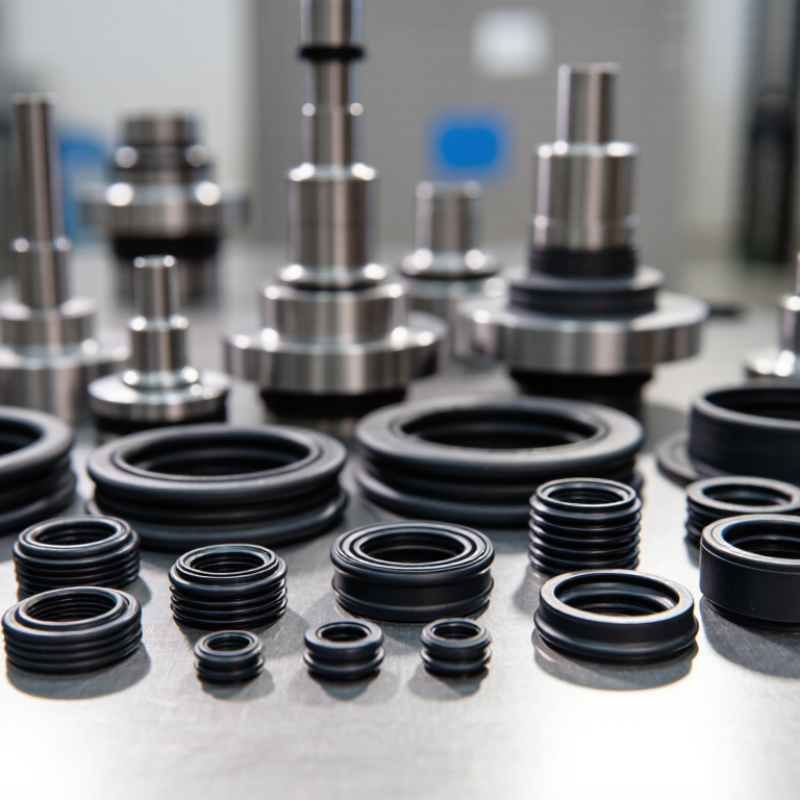
Top Rubber Oil Seal Manufacturers for Global Buyers

Understanding Rubber Oil Seals and Their Industrial Applications

Rubber oil seals sit around rotating shafts, retaining lubricant while limiting the entry of dust, water, and other contaminants. In a gearbox, a small sealing lip may face heat, shaft movement, and oil exposure at once.

Small parts. Large consequences.

Common designs use an elastomer body, a flexible lip, and sometimes a spring that maintains contact with the shaft. Material choice depends on temperature, fluid compatibility, speed, and surface finish; one compound rarely suits every duty.

Their applications span vehicle transmissions, pumps, compressors, agricultural equipment, and industrial motors. The International Organization of Motor Vehicle Manufacturers reported 93.5 million vehicles produced worldwide in 2023. That figure indicates the scale of equipment in which sealing components may be needed, but it is not a direct measure of oil-seal demand.

For buyers, dimensions alone are not enough: shaft runout, pressure, installation alignment, and lubricant chemistry can all affect service life. A seal that fits on paper may still leak after poor installation.

This is easy to underestimate.

Check operating conditions and test requirements with the manufacturer, especially when replacing a seal in equipment exposed to abrasive dust or frequent temperature changes.

OICA, 2023 production statistics.

Key Criteria for Evaluating Rubber Oil Seal Manufacturers

When evaluating rubber oil seal manufacturers, ask for evidence tied to your actual operating conditions: shaft speed, pressure, temperature, lubricant, and dust exposure. A seal tested only at room temperature may behave differently beside a hot gearbox. Request compound identification, hardness results, dimensional inspection records, and batch traceability. ISO 1817 provides methods for assessing rubber changes after liquid exposure; ASTM D395 covers compression set. These references help buyers compare test methods, not just sales claims. A polished datasheet can still hide gaps in validation.

Manufacturing control matters as much as material choice. Ask how suppliers monitor lip geometry, concentricity, surface finish, and curing consistency, and whether they retain samples from production batches. The U.S. Department of Energy’s 2002 industrial motor-systems assessment attributes about 27% of industrial motor-system electricity use to pumping. That figure does not measure seal losses, but it underscores why leakage, friction, and maintenance deserve attention in rotating equipment. Pilot testing is useful; it can also expose assumptions that looked convincing on paper.

Tips: Share the fluid name, shaft dimensions, operating range, and failure history. Request test conditions and acceptance limits, not just a pass result. One overlooked detail can matter.

Leading Manufacturers and Their Product Capabilities

Leading Manufacturers and Their Product Capabilities

A capable oil-seal manufacturer does more than mold rubber. It matches compound, lip geometry, and housing fit to the fluid, shaft speed, and operating temperature. NBR suits many mineral-oil applications; FKM can handle higher heat and more aggressive fluids. EPDM is generally unsuitable for petroleum oils, a detail buyers sometimes overlook. Options such as dust lips, garter springs, and bonded metal cases address different leakage and contamination risks. Ask for material data sheets, dimensional inspection records, and test results under conditions close to your actual assembly.

Production depth matters. Look for controlled mixing, precision tooling, and repeatable molding, followed by checks for lip dimensions, hardness, and concentricity. The International Rubber Study Group’s World Rubber Industry Outlook forecast global rubber demand at about 31.4 million tonnes in 2024, underscoring the scale of material supply and the need to verify compound consistency. That figure covers rubber broadly, not oil seals specifically. A supplier should also explain limitations; catalog temperature ranges alone do not prove service life.

Tips: Send a shaft drawing, fluid name, temperature range, and speed. Request samples for fit checks. Ask how the supplier tests leakage and aging. Small details count. A test setup may not fully reproduce field vibration, so leave room for validation.

Materials, Manufacturing Standards, and Quality Assurance

For global buyers, an oil seal’s material must match the fluid, temperature, speed, and shaft conditions. NBR suits many mineral-oil applications; FKM can withstand higher temperatures, while HNBR may offer better heat and wear resistance than standard NBR. No compound is universally best. The ISO 6194 series specifies dimensions and tolerances for rotary shaft lip-type seals, but buyers should also request compound identification and application-specific test results. Small parts matter.

Manufacturing checks should cover compound mixing, cure control, lip geometry, spring fit, and surface finish. Ask for hardness, tensile, aging, and leakage-test records, with results linked to production batches. ISO’s Survey 2022 recorded 1,265,216 ISO 9001 certificates worldwide; that figure reflects quality-management certification, not proof that a particular seal performs reliably. Grand View Research estimated the industrial rubber market at USD 31.56 billion in 2023, underscoring the scale of material sourcing and production. Still, certificates cannot replace validation under real operating conditions. A test on a polished laboratory shaft may not predict leakage on a worn, vibrating assembly. That gap deserves scrutiny.

Top Rubber Oil Seal Manufacturers for Global Buyers - Materials, Manufacturing Standards, and Quality Assurance

Buyer Evaluation Area Relevant Material, Standard, or Check Practical Specification or Evidence to Review Why It Matters
General-purpose oil-seal elastomer Nitrile rubber (NBR) Commonly selected for mineral-oil applications. A typical service-temperature range is approximately −30°C to +100°C; the usable range depends on the compound, oil, speed, and seal design. Offers a widely used balance of oil resistance and cost. Confirm compatibility with the actual lubricant and operating conditions.
Higher-temperature or demanding oil service Hydrogenated nitrile rubber (HNBR) Often specified where improved heat, aging, or wear performance is needed. Compound-specific temperature limits and fluid compatibility should be stated on the technical data sheet. Can suit applications beyond the capability of a standard NBR compound, but “HNBR” alone does not define performance.
Elevated-temperature and chemical service Fluoroelastomer (FKM) Frequently used for higher-temperature oil applications. Many formulations are rated for service up to around +200°C, but low-temperature flexibility and chemical compatibility vary by grade. Useful when the application demands heat and fluid resistance; verify the precise compound against the fluid and temperature cycle.
Low-temperature flexibility Silicone rubber (VMQ) Some compounds retain flexibility at temperatures well below those typical of NBR. Silicone is not a universal choice for dynamic oil seals; wear strength and fluid compatibility must be assessed. Material selection should account for shaft speed, lubrication, pressure, and the specific oil—not temperature alone.
Material identification ISO 1629 — rubber and latices; nomenclature Request the polymer designation and compound specification, rather than relying only on a broad description such as “oil-resistant rubber.” Helps buyers compare material declarations consistently. A polymer designation does not by itself establish a compound’s finished-part performance.
Oil-seal dimensions and terminology ISO 6194 series — rotary shaft lip-type seals Check the applicable part of the series, drawing revision, shaft and housing dimensions, tolerances, and agreed inspection method. Using a recognized dimensional framework supports clear communication, but the purchase drawing and application requirements remain controlling.
Elastomer classification ASTM D2000 Where applicable, request the complete ASTM D2000 line callout and test requirements for the specified rubber product. A complete callout provides more useful classification information than a material name alone; confirm that the standard fits the part and application.
Quality-management system ISO 9001 Request a current certificate, check its scope and issuing certification body, and confirm that the manufacturing site supplying the parts is covered. Certification concerns the quality-management system; it does not independently certify every seal or guarantee application performance.
Automotive supply chain IATF 16949 For automotive programs, verify current certification status, site coverage, and any customer-specific requirements applicable to the order. Provides an automotive-sector quality-management framework. Certification scope should be checked against the actual production location and product supply.
Incoming material control Compound identification and batch traceability Ask for batch or lot identification, material certificates where agreed, and documented controls for compound storage and shelf life. Supports investigation and containment if a material or production issue occurs.
Production consistency Molding and finishing process controls Review documented control of critical dimensions, flash, lip geometry, bonding, visual defects, and changes to tooling or compound. Stable processes help reduce variation between production lots. Critical characteristics should be defined on the approved drawing or control plan.
Finished-part verification Inspection and functional testing Agree sampling plans and acceptance criteria for dimensions, appearance, and any application-specific leakage, friction, or endurance testing. Test methods and limits should match the service conditions; generic test results may not predict performance in a different installation.
Global sourcing readiness Technical documentation and change control Request controlled drawings, material declarations, inspection records, packaging specifications, and advance notification of approved changes. Clear documentation supports consistent purchasing across sites and helps prevent unapproved changes to material or manufacturing conditions.
Temperature figures are indicative ranges for common material families, not guaranteed limits. Confirm compound-specific data, fluid compatibility, shaft and housing conditions, speed, pressure, and the seal manufacturer’s validated recommendations before approval.

How Global Buyers Compare Suppliers and Choose a Partner

Global buyers should compare rubber oil seal manufacturers against the actual operating conditions, not just catalog dimensions. Record shaft diameter, speed, pressure, temperature range, fluid type, and exposure to dust. Then ask whether the proposed material and design suit those conditions. A seal that fits on paper may leak after a cold start. Small details matter.

Request sample parts, material specifications, tolerance data, and inspection records. Check the sealing lip, spring, and contact surface under good light; measure critical dimensions with suitable tools. Ask how production lots are traced and how design changes are communicated. Ask for records, not promises. Quotes also need context: tooling, packaging, lead time, minimum order quantity, and handling of defective parts can change the real cost. A low unit price may not be the lowest-cost choice.

Communication is part of supplier performance. Notice whether technical questions receive specific answers, or only a quick price. A supplier may have capable equipment yet incomplete documentation; that gap deserves discussion, not automatic rejection. I would begin with a controlled pilot order, then review fit, leakage, wear, and consistency across the batch. This takes time. It can still miss a problem that appears only after months of service, so buyers should agree on follow-up data and a clear process for investigating failures.

Top Rubber Oil Seal Manufacturers for Global Buyers — How Global Buyers Compare Suppliers and Choose a Partner

A material’s temperature capability is one useful technical screening factor when comparing oil-seal suppliers. The chart shows indicative upper continuous service temperatures for common elastomer families—not guaranteed limits for every compound.

Indicative values in °C: actual operating limits depend on the specific compound, fluid, pressure, and application. Confirm the supplier’s technical data for the selected seal.

Article Source: