How to Optimize the Up Casting System of Cu-OF Rods?
The optimization of the Up Casting System Of Cu-OF Rods remains a critical area of research in metallurgy. Experts in the field, like Dr. Emily Zhang, emphasize its importance. She states, "Enhancing the Up Casting System is vital for improving the overall quality of Cu-OF Rods." This insight highlights the need for continuous improvement and innovation.
Cu-OF rods are essential in electrical applications due to their excellent conductivity. The Up Casting System plays a role in determining their mechanical properties and microstructure. Factors such as temperature control and flow rate need careful consideration. Small adjustments in these parameters can lead to significant changes in rod performance. This area requires more focus and refinement.
Despite advancements, challenges remain. Inconsistent casting quality affects production efficiency. Some firms still rely on outdated methods. This gap presents opportunities for research and development. Optimizing the Up Casting System of Cu-OF Rods may not have a one-size-fits-all solution. Each manufacturer must assess their unique processes carefully.
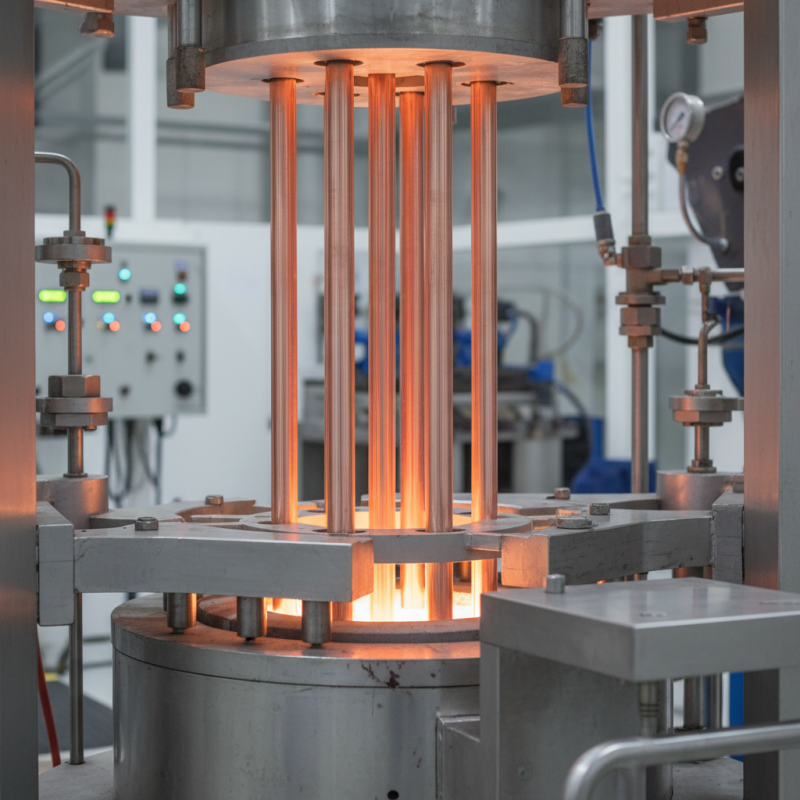
Understanding Cu-OF Rods: Properties and Industrial Applications
Cu-OF (Copper-Oxygen-Free) rods are essential in various industrial applications, particularly in electrical and thermal conductivity. These rods are prized for their excellent properties, including low electrical resistance and malleability. In industries like aerospace and electronics, their reliability can make a significant difference in performance. However, understanding the nuances of Cu-OF rod production can be challenging.
**Tips:** Ensure that your Cu-OF rods are produced in a controlled atmosphere. This helps to prevent oxidation and maintains the desired properties. Regularly inspect the rods for impurities and defects that could compromise their strength.
Optimizing the up casting system of Cu-OF rods involves careful consideration of temperature control and material quality. Even minor fluctuations in temperature during the casting process can lead to inconsistencies in the final product. It is crucial to monitor these factors closely. Implementing a feedback system can help adjust parameters in real time.
**Tips:** Always keep a log of temperature readings and casting conditions. Analyzing this data can reveal patterns that need attention. Also, consider experimenting with varying casting speeds to find the optimal balance for your production process.
Significance of Up Casting in Enhancing Cu-OF Rod Quality
Up casting is a critical process in the production of copper oxygen-free (Cu-OF) rods. It enhances the overall quality of these rods, impacting their conductivity and mechanical properties. By carefully managing the up casting parameters, manufacturers can ensure a consistent rod diameter and eliminate defects. This precision is vital for electrical applications where performance reliability is crucial.
The significance of up casting lies in its influence on the microstructure of Cu-OF rods. As the molten metal solidifies, its crystalline structure develops. A controlled cooling rate can promote finer grains, resulting in better electrical conductivity. However, achieving the ideal conditions is not always straightforward. Variations in temperature and flow can lead to inconsistencies. Manufacturers must remain vigilant, continuously examining their processes to identify improvement areas.
Moreover, up casting's success hinges on the interaction between temperature and the oxygen content in the alloy. Too much oxygen can lead to brittleness. This delicate balance needs constant refinement. The industry often reflects on its practices, seeking more efficient techniques. Continuous learning and innovation are vital. Enhancing Cu-OF rod quality is not just a goal; it’s a journey of refinement and adaptation.
How to Optimize the Up Casting System of Cu-OF Rods? - Significance of Up Casting in Enhancing Cu-OF Rod Quality
| Parameter | Optimal Value | Significance |
| Temperatures (°C) | 1050 - 1100 | Enhances ductility and reduces defects. |
| Cooling Rate (°C/min) | 0.5 - 1 | Controls grain structure, improving electric conductivity. |
| Pulling Speed (m/min) | 5 - 8 | Affects rod surface finish and dimensional accuracy. |
| Feed Rate (kg/h) | 50 - 70 | Ensures consistent material supply, minimizing interruptions. |
| Ingot Purity (ppm) | > 99.99% | Higher purity results in improved electrical performance. |
Key Parameters Influencing Up Casting Efficiency in Cu-OF Rods
In the up casting process of copper-oxygen-free (Cu-OF) rods, efficiency hinges on several critical parameters. Temperature control is paramount; maintaining an optimal casting temperature minimizes defects. Studies indicate that a temperature variation of just 5°C can significantly impact the material's mechanical properties and surface finish. Additionally, the cooling rate directly influences the ductility of the final product. A rapid cooling rate can cause brittleness, reducing overall strength.
Another key parameter is the pull rate of the casting system. Research shows that an increased pull rate can enhance production efficiency. However, it may lead to imperfections if not carefully managed. An ideal pull rate is a balance between speed and quality. Experts recommend a pull rate that allows the material to solidify adequately while minimizing sink marks or surface irregularities.
Lastly, refining the mold design can vastly improve the up casting efficiency. Molds need to cater to thermal conductivity and flow dynamics to ensure uniform solidification. A study highlighted that adjusted mold geometries could spur a 15% increase in yield due to reduced material waste. Continuous optimization of these parameters is essential, as even slight misalignments can lead to increased operational costs and reduced product quality. Exploring advanced technology in these areas will be beneficial for future developments.
Innovative Techniques for Optimizing Temperature Control in Up Casting
Optimizing temperature control in the up casting of Cu-OF (oxygen-free copper) rods is crucial for improving the quality of the final product. One innovative technique is the use of advanced cooling systems that utilize precise temperature monitoring. Real-time data helps to adapt cooling rates dynamically, ensuring consistent thermal profiles during the casting process.
In addition, employing materials with high thermal conductivity within the casting molds enhances heat distribution. This method significantly aids in reducing thermal gradients, which often cause unwanted defects like porosity. Regular calibration of temperature sensors also plays a vital role. Inconsistent readings can lead to improper cooling, resulting in quality issues that can be challenging to mitigate later.
However, creating a perfect temperature control system is not without its challenges. Operators often face difficulties in balancing speed and temperature, leading to potential overheating or under-cooling. Continual experimentation and feedback loops are essential for refining the system. Learning from past mistakes can highlight areas needing improvement, enhancing the reliability of the entire up casting process.
Evaluating the Impact of Feed Rates on Cu-OF Rod Production Rates
Optimizing the up casting system for Cu-OF rods involves a thorough evaluation of feed rates. Feed rates play a crucial role in determining production efficiency and overall quality of the rods. According to recent industry reports, an increase in feed rate can enhance production output by as much as 20%. However, this must be balanced with the risk of defects in the final product.
In practical terms, adjusting feed rates too dramatically may cause instability in the casting process. A study conducted by the Copper Institute highlighted that a feed rate exceeding recommended levels led to a 15% rise in surface defects. Such findings point to the need for careful calibration of feed rates to achieve optimal production conditions. Operators must consider factors like cooling rates and melt temperature to mitigate defects while maximizing efficiency.
The monitoring of feed rates must be continuous and data-driven. Automation technology can provide real-time adjustments based on sensor feedback. Industry experts suggest that maintaining a consistent feed rate in the range of 0.5 to 1.0 mm/sec can yield the best results. Yet, variability exists, depending on the specific grade of copper and the equipment used. Therefore, ongoing adjustments and reflections on past production cycles are essential for continuous improvement.

