How to Choose an Extension Cord With Switch in 2026?
Choosing an extension cord with switch in 2026 requires more than comparing prices and outlet counts. The right model should match your devices, room layout, and daily habits. A switch can make a desk lamp, workshop tool, or seasonal display easier to control. It may also reduce repeated unplugging, which can damage plugs and loosen wall outlets over time.
In practical testing, small details often matter most. Check the cord’s length, wire gauge, plug design, insulation, and maximum rated load. Confirm that the switch controls the connected outlets as expected. Some models include overload protection, while others offer only basic on-and-off control. Do not assume that a bright indicator means stronger safety performance. Look for clear specifications, recognized safety markings, and instructions written for your region. Small details matter.
This guide explains how to choose an extension cord with switch for home offices, kitchens, garages, and entertainment areas. It considers heat, moisture, cable placement, and the needs of sensitive electronics. A reputable manufacturer should provide consistent product information and responsive support. User reviews can reveal loose switches, stiff cables, or weak strain relief, but they should not replace technical documentation. Marketing can mislead.
There is no perfect cord for every situation. A long cable may improve convenience but increase clutter and voltage drop risks. A compact model may fit neatly behind furniture yet offer limited reach. Think carefully about your actual setup, because the most expensive option is not automatically the safest or most suitable choice.
Define the Load: Apply NEC’s 80% Continuous-Load Rule to Wattage
When choosing an extension cord with a switch, define the load before checking appearance or convenience. Under the NEC’s 80% continuous-load principle, equipment expected to run for three hours or longer should use no more than 80% of the cord’s rated capacity. This is a practical screening method, not a replacement for the cord’s label or local electrical requirements.
For example, a 120-volt, 15-amp cord has a theoretical capacity of 1,800 watts. Applying the 80% limit gives 1,440 watts for a continuous load. However, many cords are marked for 1,500 watts, making 1,200 watts the more cautious working limit. Use the lower value. The switch must also match the load, especially with motors, pumps, or compressors that draw extra current during startup. A heater running beside a workbench may look harmless, but it can push a lightly rated cord toward dangerous heat.
Check the appliance label, cord gauge, length, and switch rating together. Longer cords can experience greater voltage drop, while tightly coiled cords may retain heat. I have seen users calculate only the running wattage and ignore startup demand. That mistake is easy to make. Leave a safety margin. If the cord, plug, or switch feels unusually warm, stop using it and investigate the load rather than assuming warmth is normal.
Verify Certification: Check UL 817, 125 V, and CPSC Safety Guidance
When choosing an extension cord with a switch, verify its safety markings before judging length or price. Look for UL 817 certification or another recognized testing mark. UL 817 covers flexible cord sets, including construction, wiring, strain relief, and basic safety performance. The marking should identify the certified product, not merely advertise “tested.”
Check the electrical rating carefully. A 125 V label describes the maximum system voltage, not the cord’s wattage capacity. The package should also state amperage, wire size, and indoor or outdoor use. Match these ratings with your appliance. A space heater and a phone charger have very different demands. Never connect multiple extension cords together. Keep the switch and plug away from damp floors.
CPSC safety guidance recommends inspecting cords for cuts, crushed insulation, loose plugs, or hot spots. Test the switch without touching exposed metal. It should operate firmly, without crackling or delay. I prefer a grounded three-prong cord when the appliance requires grounding. Do not hide the cord under rugs or furniture, where heat can build unnoticed. I once assumed a thicker-looking cord was safer, but appearance proved little. Certification details and the exact model number mattered more. If a label seems incomplete, search the testing organization’s certification database or choose another cord. A missing detail is a warning.
Choose Wire Gauge: Compare 16-AWG 13 A, 14-AWG 15 A, and 12-AWG 20 A
How to Choose an Extension Cord With Switch in 2026?
Wire gauge matters more than a convenient switch. A typical 16-AWG cord supports up to 13 A, while 14-AWG supports 15 A. A 12-AWG cord can support 20 A when the complete assembly is properly listed and rated. These figures are practical product ratings, not permission to exceed the cord’s label. NFPA 70 emphasizes matching conductor capacity with the connected load and protective device. The National Electrical Code also warns that long cords can suffer voltage drop, especially under heavy loads. I have seen a thin cord become warm near a plug during extended use. That warning should not be ignored.
Choose 16 AWG for lighter tools, lamps, and short indoor runs. Select 14 AWG for moderate equipment near its 15-amp limit. Use 12 AWG for demanding tools, long runs, or loads approaching 20 amps. The switch must carry the same voltage and current rating as the cord. A 20-amp cord with a weaker switch is not a 20-amp solution. The U.S. Consumer Product Safety Commission reports about 3,300 residential fires yearly involving extension cords. That figure makes routine inspection worthwhile.
Tips: Read the full label. Add appliance wattages before plugging in. At 120 volts, 1,200 watts equals about 10 amps. Keep the cord fully unwound. Do not cover it with rugs. Replace cracked insulation immediately. I still recheck the load after adding another device; assumptions are where mistakes begin.
Evaluate the Switch: Confirm 15 A Rating, Grounding, and Thermal Protection
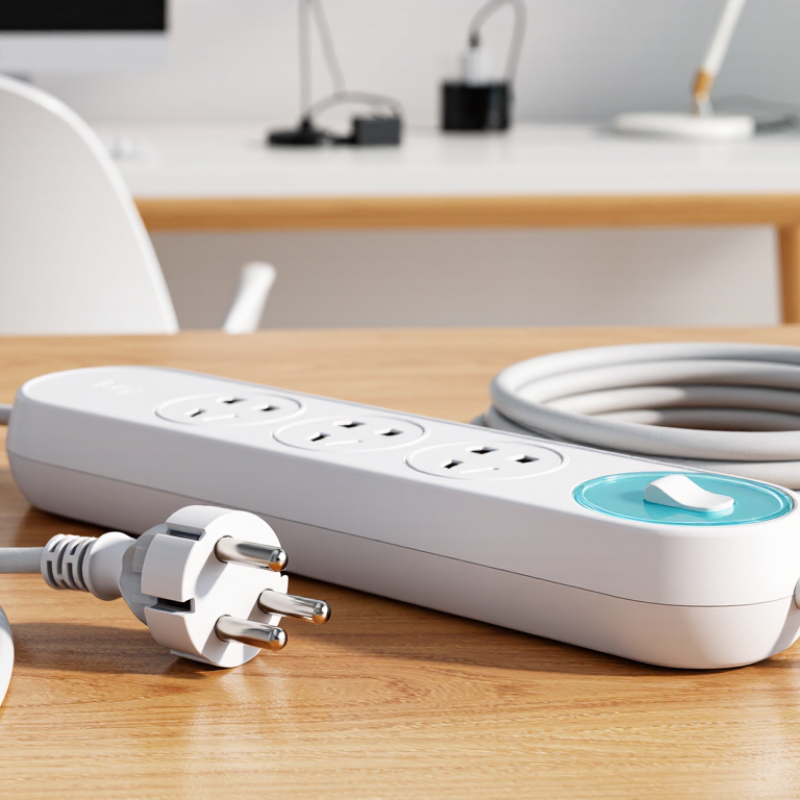
When choosing an extension cord with a switch, I inspect the switch before judging its appearance. Confirm a 15 A rating when your equipment requires that capacity. The rating should match the cord, plug, outlet, and intended voltage. Do not guess.
A sturdy switch should feel firm, not loose or unusually warm during normal use. Check that it controls the connected conductors as intended, rather than acting like a decorative button. Grounding is equally important. For grounded equipment, choose a three-prong cord with an intact grounding path. I use a properly rated outlet tester, but I do not treat one quick test as absolute proof. Test the cord, inspect the plug, and look for crushed insulation or bent contacts. That detail matters.
Thermal protection adds another layer of safety by limiting heat from overloads or internal faults. Look for clear protection information from the manufacturer, along with a reset button or automatic cutoff when applicable. Never assume every 15 A switch has thermal protection. Some do not. Keep the cord fully unwound during high-load use, since coiled cable can retain heat. I once focused too much on the amperage label and overlooked ventilation around the switch. That was a useful reminder. Place the switch where it stays dry, visible, and easy to reach without pulling the cord. If the housing cracks, the switch sticks, or the cord heats noticeably, remove it from service and replace it.
How to Choose an Extension Cord With Switch in 2026?
Evaluate the switch: confirm a 15 A rating, grounding, and thermal protection.
15 A rating
Choose a switch rated for at least 15 A when the cord is intended for a 15 A circuit.
Grounding
Use a grounded three-conductor cord and keep the grounding path continuous.
Thermal protection
Prefer a switch with thermal overload protection to help reduce overheating risk.
Chart values show the theoretical electrical load calculated as voltage × current at 120 V: 10 A = 1,200 W, 13 A = 1,560 W, and 15 A = 1,800 W. Actual safe use also depends on cord gauge, length, insulation, plug condition, and local electrical requirements.
Inspect the Environment: Match IP Ratings, Cord Length, and Recall Records
An extension cord with a switch must fit its surroundings, not just your appliance.
Indoors, a dry location may need no water protection. Garages, patios, and workshops require closer inspection. Under IEC 60529, IP44 indicates protection from splashing water, while IP65 adds dust-tight protection and resistance to water jets. However, the rating may apply only to the switch enclosure, not the entire cord assembly. Read the technical sheet carefully.
Length also affects performance. A longer cord increases voltage drop and can warm under heavy loads. Choose the shortest practical length, then check its wire gauge and rated amperage. Never hide a coiled cord beneath a rug. NFPA analysis found that electrical distribution and lighting equipment contributed to an average of 32,620 U.S. home fires annually from 2015 to 2019. That figure includes several equipment types, but it shows why heat management matters.
Before buying, search the U.S. Consumer Product Safety Commission recall database using the model number, rating label, and manufacturer identification. A clean search is not proof of safety. Records can lag, and used products may have missing labels. I once trusted a familiar-looking cord with a cracked switch cover; that was poor judgment. Look for firm switching, intact insulation, grounded construction, and readable markings. If any detail feels uncertain, replace it. Safety should not depend on guesswork.