How to Choose the Right Steel Heat Exchanger?

Choosing a Steel Heat Exchanger starts with the job it must perform, not the catalogue photograph. What fluid will pass through it? At what temperature, pressure, and flow rate? Those details shape material choice, exchanger design, and maintenance needs. A bright stainless-steel surface can look reassuring, but appearance alone says little about corrosion resistance or long-term performance.

The International Energy Agency’s Energy Efficiency 2023 report describes industry as responsible for roughly 37% of global energy use. Worldsteel reported global crude steel production of about 1.89 billion tonnes in 2023. These figures make efficient heat recovery an important consideration, though they do not predict savings for any single plant. As energy-efficiency expert Amory Lovins put it, “The cheapest energy is the energy you don’t use.” That principle supports careful selection, but it is not a substitute for engineering calculations.

This guide compares key choices, including stainless and carbon steel, shell-and-tube and plate designs, operating conditions, fouling, and service access. A practical check matters: will technicians be able to inspect and clean the unit without disrupting production? Even experienced buyers can overvalue initial purchase price. It happens. A lower-cost exchanger may demand more frequent maintenance or struggle with the actual duty. The right choice depends on verified process data and a clear understanding of trade-offs—not a single headline rating.
How to Choose the Right Steel Heat Exchanger?

Understanding Steel Heat Exchangers and Their Main Types

Steel heat exchangers transfer heat between fluids without mixing them. Steel describes the construction material, not one single design. Stainless steel is often chosen for corrosion resistance and clean surfaces, while carbon steel may suit less corrosive duties. Suitability depends on fluid chemistry, temperature, pressure, and maintenance needs.

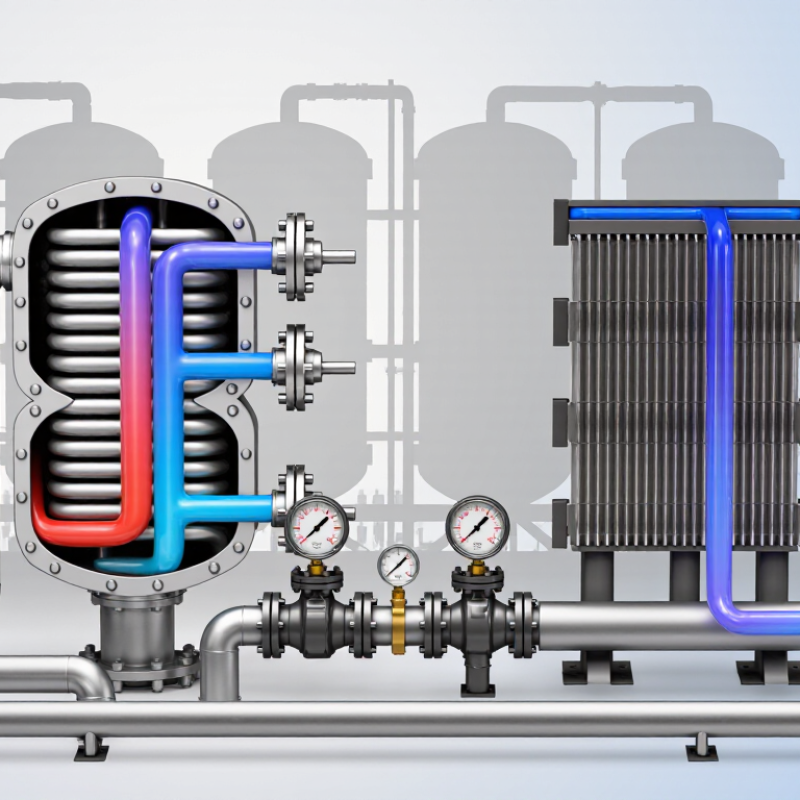
A shell-and-tube unit places many tubes inside a larger shell. One fluid travels through the tubes; another flows around them. This design can handle demanding temperatures and pressures, and tubes may be mechanically cleaned. It can require more floor space. Plate heat exchangers use thin steel plates with narrow channels. Their compact footprint and large heat-transfer area can be useful, but fibers or scale may clog tight passages. That matters.

Double-pipe designs carry one fluid through an inner pipe and another through the surrounding space. They are relatively simple to inspect and may suit smaller duties, though larger capacity can make them bulky. Coiled-tube units fit inside compact vessels and can support batch heating or cooling. Curved passages may complicate cleaning. The right choice is not always obvious from a specification sheet. Compare flow rate, pressure drop, likely fouling, cleaning access, and available space; early estimates can overlook seasonal changes in fluid conditions.

How to Choose the Right Steel Heat Exchanger? - Understanding Steel Heat Exchangers and Their Main Types
Heat Exchanger Type Typical Construction Key Advantages Points to Consider Common Applications
Shell-and-Tube A bundle of tubes sits inside a cylindrical shell; one fluid flows through the tubes and the other through the shell. Robust construction; suitable for a wide range of pressures and temperatures when properly designed; can handle many liquid, gas, and condensing duties. Requires space and can be heavy. Fouling, cleaning access, tube material, and corrosion allowance should be assessed for the service. Process plants, power generation, oil and gas processing, and utility services.
Gasketed Plate-and-Frame Thin corrugated metal plates form alternating flow channels, with gaskets directing the fluids. High heat-transfer efficiency and compact size; plate count can often be adjusted, and the unit can be opened for inspection and cleaning. Gasket material and operating limits must match the fluids, temperature, and pressure. Narrow channels may be unsuitable for some heavily fouling or particle-laden fluids. Building heating and cooling, food processing, and liquid-to-liquid duties with compatible fluids.
Welded Plate Plate channels are joined by welding rather than relying on removable gaskets; designs include fully welded and semi-welded arrangements. Avoids process-side gasket limitations and provides a compact plate-based design for duties that need higher containment than a conventional gasketed unit. Cleaning and repair options vary by design. Confirm pressure, temperature, fluid compatibility, and inspection requirements with the equipment designer. Industrial process heating and cooling, including selected services involving refrigerants or fluids that are not suitable for process-side gaskets.
Double-Pipe One pipe is placed inside another, creating separate passages for the two fluids; units may be connected in series or parallel. Simple configuration; useful for smaller duties and can be arranged to provide counter-current flow. Large duties may require substantial piping and floor space. Evaluate pressure drop, maintenance access, and the required heat-transfer area. Small process streams, pilot systems, and applications where a simple tubular arrangement is practical.
Spiral Plate Two metal sheets are formed into spiral channels, typically creating a separate passage for each fluid. A single-channel flow path can be beneficial for some viscous or fouling fluids; available designs may allow access for cleaning. Check the specific design’s pressure limits, materials, cleaning method, and suitability for solids or fibrous material. Wastewater, pulp and paper, and selected process services with viscous or fouling streams.
Material Selection Common options include carbon steel, stainless steel, and duplex stainless steel, selected for the parts exposed to each fluid. Matching materials to the process can help manage corrosion, mechanical requirements, and service life. No grade is universally corrosion-proof. Consider fluid chemistry, chlorides, temperature, erosion, cleaning chemicals, fabrication, and applicable design codes. All applications; material choice depends on the fluid on each side and the operating environment.
Selection Checklist Define both fluids, flow rates, inlet and outlet temperatures, allowable pressure drop, operating and design pressure and temperature, fouling tendency, cleaning method, available space, maintenance needs, materials, and applicable codes. Have a qualified designer verify thermal and mechanical performance for the actual operating conditions.

Defining Process Conditions and Heat Transfer Requirements

How to Choose the Right Steel Heat Exchanger?

Defining Process Conditions and Heat Transfer Requirements

Start with the process, not the catalogue. Record inlet and outlet temperatures, flow rates, operating pressure, fluid composition, and hours of operation. These figures define the heat duty and help determine whether a shell-and-tube or plate design is suitable. The U.S. Department of Energy’s 2008 report, Waste Heat Recovery: Technology and Opportunities in U.S. Industry, estimates that 20–50% of industrial energy input can leave as waste heat. That range signals opportunity, but it cannot replace measurements at your plant.

Check what the fluids carry. Chlorides, suspended solids, and changing pH can affect steel selection, corrosion risk, and cleaning intervals. A stream that looks clean during startup may foul after weeks of production. Allow for realistic fouling resistance and pressure drop; an overly tight temperature approach can demand more surface area and raise costs. Small details matter.

Use measured or validated process data where possible. The IEA’s Energy Efficiency 2023 report puts industry at about 37% of global final energy consumption, making heat recovery an important efficiency lever. Still, a large theoretical saving may shrink when flow varies or equipment runs intermittently. That part is easy to underestimate. Compare normal, peak, and upset conditions, then review the assumptions with operators who know how the line behaves on a cold morning or during cleaning. A little uncertainty belongs in the design basis.

Selecting a Steel Grade for Temperature and Corrosion

Choosing steel for a heat exchanger starts with the fluid, not a catalogue temperature limit. Chlorides, acidity, deposits, and cleaning chemicals can change corrosion risk dramatically. ASTM A240/A240M lists 304 stainless steel with 18–20% chromium and 8–10.5% nickel; 316 adds 2–3% molybdenum, which can improve resistance to chloride pitting. That matters. It does not make 316 immune: stagnant brine trapped beneath deposits can still attack a tube surface.

Temperature needs equal care. A grade’s allowable stress depends on temperature, product form, and design code, so check the applicable ASME Section II, Part D stress tables rather than relying on a generic “maximum service temperature.” Then assess the actual operating cycle: hot shutdowns, cold starts, and thermal gradients can stress joints and tube sheets. Small detail. Big consequence.

The scale of corrosion risk is substantial. NACE International’s 2016 IMPACT study estimated global corrosion costs at US$2.5 trillion, or 3.4% of global GDP, using 2013 data. That figure is not a heat-exchanger cost estimate, but it underlines why fluid analysis and inspection planning matter. Match the alloy to measured chemistry and operating conditions, then verify with corrosion testing where uncertainty remains. Real service data can be imperfect, too; a short test may miss years of deposit buildup.

Comparing Design, Capacity, and Pressure Ratings

How to Choose the Right Steel Heat Exchanger?
Comparing Design, Capacity, and Pressure Ratings

A good comparison starts with the duty, not the catalogue size. Record each fluid’s flow rate, inlet and target outlet temperatures, and operating schedule. These figures determine heat load and help estimate the required surface area. The U.S. Department of Energy’s report, Waste Heat Recovery: Technology and Opportunities in U.S. Industry, estimates that 20–50% of industrial energy input can leave as waste heat. That range is broad; actual recovery depends on the process. Check steel grade against fluid chemistry, temperature, and cleaning method. A stainless surface is not automatically the best choice.

Pressure ratings need equal attention. Compare the exchanger’s allowable pressure at its design temperature, not just a headline maximum. Account for pressure drops, start-up surges, and the ratings of connected piping and fittings. Where applicable, verify design and documentation against ASME Boiler and Pressure Vessel Code, Section VIII. An exchanger can meet the pressure requirement yet miss the thermal duty. That trade-off is easy to overlook.

Tips: Ask for a duty-point calculation showing flow, temperatures, pressure drop, and fouling assumptions. Confirm whether the quoted rating applies to the complete unit. Leave room for uncertainty; process data are rarely perfect.

Evaluating Maintenance Needs and Lifecycle Costs

How to Choose the Right Steel Heat Exchanger?
Evaluating Maintenance Needs and Lifecycle Costs

A steel heat exchanger’s purchase price is only one part of its cost. Cleaning access, replacement parts, inspection time, and unplanned downtime can matter more over years of operation. Look closely at the fluid chemistry and operating temperature. Chlorides, suspended solids, and frequent temperature changes can affect corrosion, fouling, and maintenance intervals. The details matter.

Ask how technicians will reach the tubes, plates, or shell interior for inspection and cleaning. A unit that requires extensive disassembly may add labor costs every time deposits build up. In a plant, even a short shutdown can disrupt production schedules. That matters. Compare expected cleaning frequency, gasket or component replacement needs, and the availability of qualified service staff. Estimates are not guarantees; actual maintenance depends on water quality and operating habits.

Lifecycle costing should include energy use as well as repairs. Fouling can reduce heat transfer, forcing equipment to work harder or lowering output. Track inlet and outlet temperatures, pressure drop, and cleaning dates to spot changes early. Keep records. A slightly higher initial cost may be worthwhile if the design simplifies routine inspection, but not in every installation. Have an engineer check the proposed material grade against the process fluid and expected service conditions before making the comparison.

How to Choose the Right Steel Heat Exchanger?

Comparing estimated 20-year lifecycle costs for three material options

In this illustrative scenario, carbon steel has the lowest initial cost but higher projected maintenance and replacement costs. Stainless options cost more upfront, so the best choice depends on the service environment, corrosion risk, and maintenance plan. Estimates are not market averages: the model assumes a 20-year period, undiscounted USD, carbon steel replacement at year 10, and no planned replacement for stainless options. Actual costs vary with operating conditions, fouling, and local pricing.