
Choosing the right Cement Plant manufacturer is not a brochure comparison. It is a decision about uptime, fuel use, product consistency, and support years after commissioning. A large capacity figure can look impressive. Yet it says little about how the kiln handles variable raw meal, or how quickly a worn mill part can be replaced. Ask for operating references from plants with similar materials, scale, and fuel conditions. Then verify those references directly.
Quality expert W. Edwards Deming is widely associated with the principle, “Quality is everyone’s responsibility.” He was not a cement-industry specialist, but the principle matters here: design, fabrication, installation, and operator training all affect plant performance. Review the proposed process flow, equipment list, energy guarantees, emissions-control design, spare-parts plan, and commissioning schedule. Ask who handles performance testing, and what happens if agreed targets are missed. Request evidence, not just confident promises.
The cheapest bid may leave costly gaps. A detailed scope can reveal them: for example, whether the price includes refractory installation, control-system integration, or hands-on operator instruction. Small details count. Talk with the manufacturer’s engineers, not only its sales team. Check their experience with your specific clinker and local operating conditions. I would not pretend that a checklist removes every risk; even a strong design can meet unexpected site constraints. But careful questions, documented commitments, and verifiable references make the choice more grounded—and make a polished promise easier to test against reality.
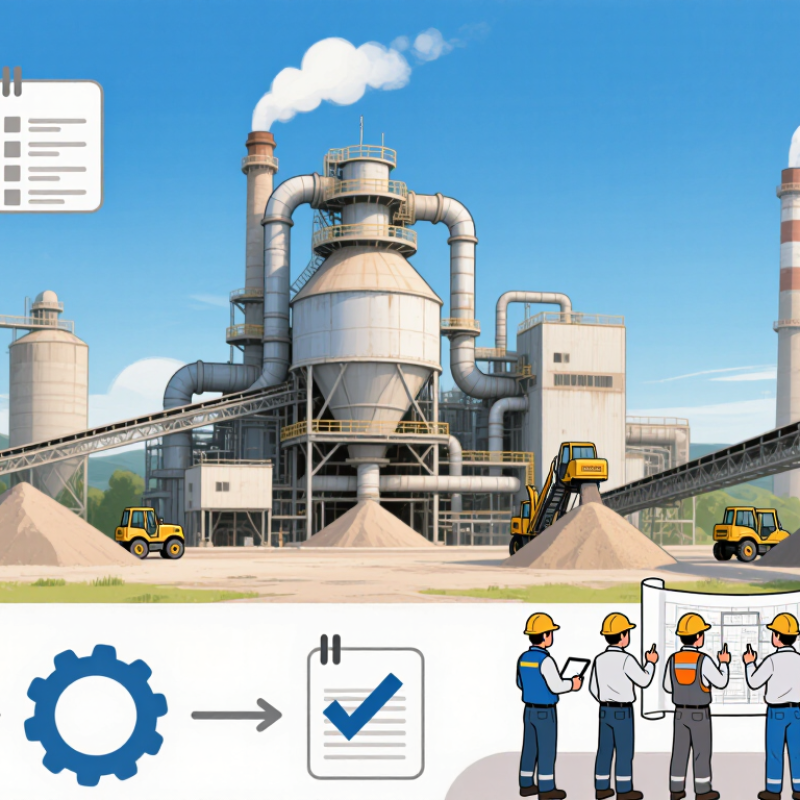
Before comparing cement plant manufacturers, define what the plant must produce and where it will operate. Set a target capacity in tonnes per day, then identify the cement types and quality ranges required. Be specific. A plant serving local construction projects may need different equipment from one supplying distant markets. Record expected production growth, too, but separate realistic demand from optimistic forecasts.
Describe the raw materials available, including their chemical composition and seasonal variation. Limestone from two nearby quarries can behave differently. Share test results where possible, and note any gaps; early estimates are rarely perfect. List fuel options, water supply, electricity capacity, site dimensions, transport access, and storage needs. Include desired automation levels, staffing assumptions, dust-control expectations, and a workable project schedule. These details help manufacturers propose equipment that fits the site, rather than a generic production line. Define the project boundary clearly: does it include quarry handling, grinding, kiln systems, packing, installation, and operator training? Write down budget limits and expansion plans. Some requirements will change after engineering review. That is normal, but vague starting points can make quotations difficult to compare.
Start by defining the plant’s required daily clinker output. The capacities shown are illustrative project-planning targets, not supplier performance data or a universal list of plant sizes. Confirm the appropriate capacity through a demand forecast, raw-material assessment, fuel and power availability, and an evaluation of the proposed production process.
A cement plant manufacturer’s engineering capability determines whether a design can handle real operating conditions, not just meet a quoted capacity. Ask how its team assesses local limestone, clay, fuel, and power supply. These details shape the kiln system, grinding circuit, and emissions controls. Request process flow diagrams and equipment specifications. Check that engineers can explain why each major component suits your materials and production goals. Clear answers matter.
Tips: Ask for references from plants with similar capacity and raw materials. Review sample drawings, commissioning plans, and maintenance documentation. Confirm who handles process integration. A polished presentation is not proof.
Look for engineering work that covers the whole line, from raw-material preparation to cement dispatch. Ask how the manufacturer checks heat balance, energy use, and expected output. Find out what happens if feed quality varies or a key machine stops. Get assumptions and performance limits in writing. Then compare them with your site conditions. A weak point may be easy to miss. I would still question any proposal that promises high output without explaining its test method, operating range, and support after installation.
When choosing a cement plant manufacturer, inspect equipment quality beyond the showroom finish. Ask for material specifications, fabrication records, and inspection reports for key components such as kiln shells, mill gearboxes, and fans. Look for consistent welds, accessible lubrication points, and clear maintenance access around hot or vibrating equipment. Small details matter. A poorly placed inspection hatch can turn routine checks into avoidable downtime.
Evaluate production technology against the plant’s actual feed materials, capacity targets, and energy needs. Request process-flow diagrams showing how crushing, grinding, kiln firing, and heat recovery work together. Ask how operators monitor mill vibration, kiln temperature, fuel use, and dust-collection performance. Then compare guaranteed output with results from comparable operating plants, not just ideal design figures. No single feature tells the whole story, and a clean test report may not reveal long-term maintenance demands. Ask what assumptions shaped the figures, how control systems respond to process changes, and which spare parts require long lead times. A site visit can help; listen for uneven equipment noise and watch whether operators can reach service points safely.
A cement plant is a long-term operating asset, so verify a manufacturer’s credentials before comparing prices. Ask for current quality-management certificates, then confirm their scope, expiry date, and issuing body directly. A certificate may cover office procedures but not equipment design, fabrication, or installation. Check the details.
References need evidence, not just a list of project names. Request contact details for plants with similar capacity and fuel systems, and ask operators about commissioning delays, spare-part availability, and unresolved faults. If possible, inspect a running site. Look closely at dust-control equipment, maintenance access, and the condition of stored components. A polished brochure can still hide practical gaps.
After-sales support deserves the same scrutiny as the kiln specification. Get response-time commitments, warranty exclusions, training plans, and a parts list in writing. Ask where critical components are stocked and who handles a night-time breakdown. The IEA’s 2023 Cement report estimates that cement production accounts for around 7% of global CO2 emissions, making process efficiency and reliable technical support especially consequential. Yet paperwork alone cannot prove performance. I would also ask for measured fuel and power data from comparable plants, though suppliers may not share every detail. That limitation matters.
| Evaluation Area | What to Verify | Evidence to Request | Questions to Ask | Warning Signs |
|---|---|---|---|---|
| Quality management certification | Check whether the manufacturer holds a current quality-management certificate, such as ISO 9001, and whether its scope covers the relevant design, manufacturing, or engineering activities. | Certificate number, scope, issue and expiry dates, and the certification body’s details. Verify the certificate directly with the issuing body or its official directory. | Does the certified scope include the facilities and activities responsible for this project? | Caution: A certificate is expired, cannot be independently verified, or covers a different site or activity. |
| Environmental and occupational safety systems | Check for relevant management-system certifications, such as ISO 14001 for environmental management and ISO 45001 for occupational health and safety. Confirm that the certificate scope and site are relevant. | Current certificates and their scopes, plus project-specific environmental and safety procedures where applicable. | How will environmental controls and worker-safety requirements be addressed during engineering, installation, and commissioning? | Caution: Certifications are presented as a substitute for project-specific legal permits or site compliance. |
| Regulatory and product conformity | Identify the destination country’s applicable laws and standards for equipment, electrical systems, pressure equipment, emissions, and construction. Requirements depend on jurisdiction and equipment type. | Applicable conformity documents, equipment schedules, technical files, and declarations required for the destination market. | Which local requirements apply, who is responsible for demonstrating compliance, and what is included in the contract? | Caution: A general conformity mark is offered as proof that every plant component meets every local requirement. |
| Relevant project references | Look for completed projects with comparable process scope, capacity, fuel mix, raw materials, site conditions, and operating requirements. | Reference project descriptions, commissioning dates, scope of supply, and permission to contact the plant owner or operator. | Can you speak with operators about commissioning, production stability, support response, and performance after handover? | Caution: References cannot be independently contacted, or projects are described without clarifying the manufacturer’s actual scope. |
| Technical and performance guarantees | Review guaranteed values and test conditions for applicable measures such as capacity, product quality, energy consumption, emissions, and availability. | Contract schedules defining measurement methods, operating conditions, test duration, exclusions, acceptance criteria, and remedies for shortfalls. | How will performance be measured, and what happens if agreed acceptance criteria are not met? | Caution: Performance figures are quoted without assumptions, test methods, or contractual consequences. |
| Engineering and project execution | Assess design capability, interface management, project schedule, procurement controls, installation planning, commissioning, and handover responsibilities. | Project organization chart, responsibility matrix, milestone schedule, interface list, and commissioning and training plans. | Who coordinates civil, mechanical, electrical, automation, and third-party interfaces? | Caution: Key responsibilities, exclusions, or schedule dependencies are not clearly documented. |
| After-sales support | Confirm the support channels, service coverage, escalation process, working hours, and response commitments available for the plant’s location. | Written service-level terms, contact and escalation procedures, service organization details, and examples of support arrangements. | What response times are contractually committed, and how are urgent production issues handled? | Caution: Support is described as “available” but no response times, responsibilities, or escalation route are stated. |
| Spare parts and maintenance | Check recommended critical spares, expected lead times, parts identification, maintenance requirements, and long-term availability arrangements. | Initial and recommended spare-parts lists, delivery terms, maintenance schedules, and any parts-availability commitments. | Which items are critical to plant availability, and what alternatives exist if a part is no longer available? | Caution: Critical spares, lead times, or maintenance responsibilities are omitted from the offer. |
| Training and documentation | Verify operator and maintenance training, language and format requirements, and delivery of operating, maintenance, and as-built documentation. | Training syllabus, documentation index, delivery schedule, and handover requirements included in the contract. | Does training cover normal operation, shutdown, troubleshooting, and safety procedures? | Caution: Training hours, documentation scope, or handover format are not specified. |
| Commercial and contractual clarity | Compare the complete scope, exclusions, payment milestones, warranty terms, delay provisions, acceptance tests, and dispute process. | Detailed technical and commercial offer, contract schedules, warranty conditions, and a written list of assumptions and exclusions. | Are installation, commissioning, training, taxes, freight, and local compliance costs included or excluded? | Caution: The headline price is clear but major scope boundaries or contractual remedies are not. |
A cement plant proposal should be compared against your actual production needs, not just its headline price. Check whether each offer uses the same capacity assumptions, raw material data, fuel options, and product specifications. A kiln sized for one limestone mix may not perform as expected with another. Ask manufacturers to state their assumptions clearly.
Compare the full scope line by line: equipment, civil works, installation, commissioning, operator training, and spare parts. Review expected energy use, emissions-control systems, maintenance access, and delivery milestones. Request references for plants with similar capacity and feedstock, then ask what difficulties arose during startup. A polished proposal can still leave important gaps. No scoring sheet captures every risk, so document unresolved questions before making a decision.
Tips: Create a simple comparison table, and mark exclusions in a separate column. Ask for written performance guarantees and the conditions attached to them. Check who handles troubleshooting after commissioning. If one offer is much cheaper, ask what has been omitted rather than assuming it is better value. A small mismatch today can mean costly changes later.