How to Choose the Right Laboratory Sample Pulverizer?
Choosing the right laboratory sample pulverizer is critical in many industries. These machines are vital for preparing samples for analysis. Their efficiency directly impacts the quality of results in laboratories. According to a recent market analysis by Mordor Intelligence, the global laboratory equipment market is expected to reach $57 billion by 2025. This growth underscores the importance of selecting quality equipment.
laboratory sample pulverizers vary widely in functionality and design. Some are tailored for specific materials, while others offer versatile applications. The choice can affect sample homogeneity, particle size, and overall experimental accuracy. Experts often recommend testing multiple pulverizers before making a decision. This trial-and-error approach can reveal strengths and weaknesses not initially apparent.
However, not all users consider the long-term implications of their choices. While a less expensive pulverizer may save upfront costs, it can lead to higher maintenance needs. It's crucial to weigh both short-term benefits and long-term reliability. As industries evolve, so do the demands on laboratory sample pulverizers. Making an informed choice is more important than ever.
Understanding the Different Types of Laboratory Sample Pulverizers Available
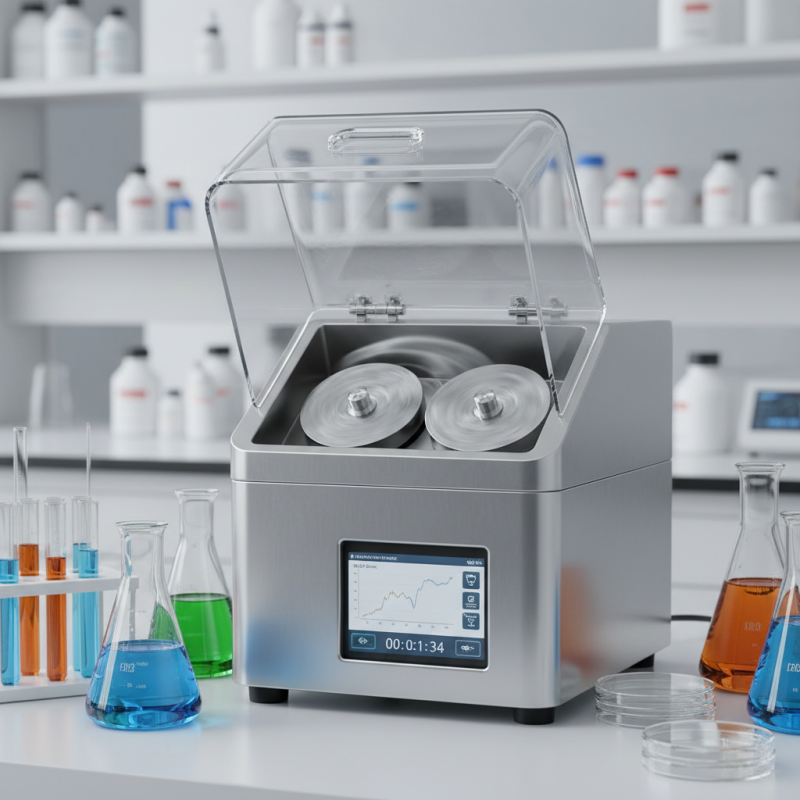
Laboratory sample pulverizers come in various types, each serving unique needs. Common types include hammer mills, ball mills, and disc mills. Hammer mills excel in processing brittle materials, while ball mills are versatile for various sample types. Disc mills are ideal for uniform particle size reduction. Understanding their functions is key to choosing the right one.
Recent industry reports indicate that hammer mills are preferred for samples like grains and spices. They effectively reduce particle size while maintaining the sample’s integrity. Conversely, ball mills are commonly used in metallurgy and chemistry labs. They can process materials into finer powders but may generate heat, impacting sample quality. Additionally, disc mills provide consistent results for harder materials like metals and ceramics.
Choosing the right pulverizer requires careful consideration of the sample type and processing goals. Each type has its advantages and limitations. For instance, ball mills might create inconsistent particle sizes due to heat generation. This inconsistency can lead to unreliable results in sensitive experiments. Striking a balance between efficiency and sample quality is vital in the selection process.
How to Choose the Right Laboratory Sample Pulverizer?
| Type of Pulverizer | Material Compatibility | Typical Applications | Advantages | Considerations |
| Ball Mill | Metals, ceramics, minerals | Material preparation, mineral processing | Fine grinding, high efficiency | Requires more energy, longer processing time |
| Hammer Mill | Coal, chemicals, grains | Animal feed, biomass, recycling | Versatile, easy maintenance | Coarseness may not be uniform |
| Disc Mill | Fruits, grains, dry materials | Food processing, laboratory analysis | Uniform particle size, high throughput | Limited to softer materials |
| Jet Mill | Pharmaceuticals, chemicals | Micronization, particle size reduction | No heat generation, fine particles | High operational costs |
| Mortar and Pestle | Soft minerals, drugs, spices | Small-scale sample preparation | Simple, cost-effective | Labor-intensive, time-consuming |
Key Factors to Consider When Choosing a Laboratory Sample Pulverizer
Choosing the right laboratory sample pulverizer requires careful consideration. Various factors influence your decision. The material type is crucial. Different materials require specific pulverizing methods. Consider whether you will be processing hard materials or softer ones. Each requires different strengths.
Tips: Always assess the material properties before selection. Analyze hardness, moisture content, and composition. These factors impact performance and durability.
Another important aspect is the sample size. Larger samples may need more power for efficient processing. Think about your usual sample sizes. A pulverizer that handles your largest samples is wise. This helps avoid frequent equipment changes.
Tips: Engage with staff for feedback. They help identify problem areas with existing equipment. Their insights can guide you to smarter choices.
Lastly, consider the maintenance needs of the equipment. Some pulverizers require more upkeep. This can lead to downtime. Check the maintenance schedule. More maintenance can disrupt workflows.
Tips: Read user reviews or talk to peers. Their experiences highlight potential drawbacks. Reflect on what challenges you might face with specific models.
Comparison of Key Factors in Choosing a Laboratory Sample Pulverizer
Analyzing Material Properties to Select the Suitable Pulverizer Design
When selecting a laboratory sample pulverizer, material properties play a crucial role. Different materials require distinct methods for effective pulverization. Harder materials may need a more robust design to withstand pressure and impact. Softer materials, on the other hand, might require gentler handling to avoid degradation. Consider the material's hardness, toughness, and moisture content. Understanding these aspects helps in making a better choice.
Another factor to consider is the desired particle size. Each application has a specific target size, influencing the pulverizer's design. Smaller particle sizes often demand a finer grinding mechanism, while larger sizes may not need as sophisticated a system. Additionally, the flow characteristics of the material can affect how smoothly it feeds into the pulverizer. Take time to analyze these properties. Sometimes, mismatched designs lead to inefficiencies, requiring constant adjustments.
User feedback can provide insights into how certain pulverizers perform under varied conditions. Not every choice will yield perfect results. Sometimes, a trial-and-error approach may be necessary to find the ideal fit. Investing time in understanding these factors can save future complications. A little reflection here can go a long way in ensuring success.
Evaluating Performance Metrics: Efficiency, Precision, and Durability
Choosing the right laboratory sample pulverizer hinges on performance metrics like efficiency, precision, and durability. Efficiency matters. A pulverizer should quickly process samples. Fast turnaround saves time and resources. But speed shouldn't compromise quality. Ensure it can handle different materials without faltering.
Precision is vital. An accurate pulverizer delivers reliable results. Look for models that consistently produce uniform particle sizes. This criterion is essential for experiments needing fine-tuned results. Inaccurate readings can lead to flawed conclusions. Check product reviews and user experiences to gauge real-world performance.
Durability also plays a key role. A robust pulverizer withstands the rigors of frequent use. Avoid units that wear down quickly. Regular maintenance can extend lifespan but choose wisely. Tip: Always assess the build quality before purchasing. Notice the materials used.
Tip: Evaluate the manufacturer's warranty. A longer warranty signifies confidence in the product's durability.
Tip: Don't rush the decision. Test multiple models before settling. Hands-on experience can reveal features you might overlook in specifications. A thoughtful selection process is crucial for achieving optimal lab results.
Cost-Effectiveness and Maintenance Considerations for Sample Pulverizers
When selecting a laboratory sample pulverizer, cost-effectiveness and maintenance play critical roles. A recent industry report indicates that up to 30% of lab budgets are allocated to equipment maintenance. Keeping this in mind, it's vital to consider the long-term expenses associated with operating sample pulverizers. Opting for a more affordable machine can lead to higher maintenance costs. This cycle can drain resources quickly.
Many users overlook regular maintenance. According to a survey, 45% of labs reported unplanned downtime due to neglect. Simple tasks, like cleaning and lubricating components, ensure optimal performance. A well-maintained pulverizer can last twice as long as a neglected one. However, users often assume that machines are self-sufficient. This could lead to more significant issues, requiring intricate repairs.
Cost-effectiveness also extends to energy consumption. Data shows that energy costs can account for nearly 15% of operating expenses. Choosing energy-efficient models can reduce this burden. Many options exist, but not all are created equal. Users should weigh the upfront investment against potential savings in power consumption. Note that ignoring these factors can impact both the budget and lab productivity.

