Choosing the right outdoor extension cord is crucial for safety and efficiency. According to the National Electric Code (NEC), using cords rated for outdoor use helps prevent hazards such as electrical shock and fire. Approximately 15,000 home accidents occur each year due to improper use of extension cords. This statistic underscores the importance of careful selection.
An outdoor extension cord must withstand weather conditions. They are often made with heavier insulation and rugged materials. These features protect against moisture and UV radiation. Selecting the right gauge is equally important. For instance, a lower gauge number indicates a thicker wire, capable of carrying more current. Many homeowners overlook this aspect, leading to potential frustrations.
In summary, not all outdoor extension cords are created equal. Using the wrong type or rating can create significant risks. Awareness of these details can be the difference between a successful project and an accident. Investing time to choose the right outdoor extension cord pays off in safety and performance.
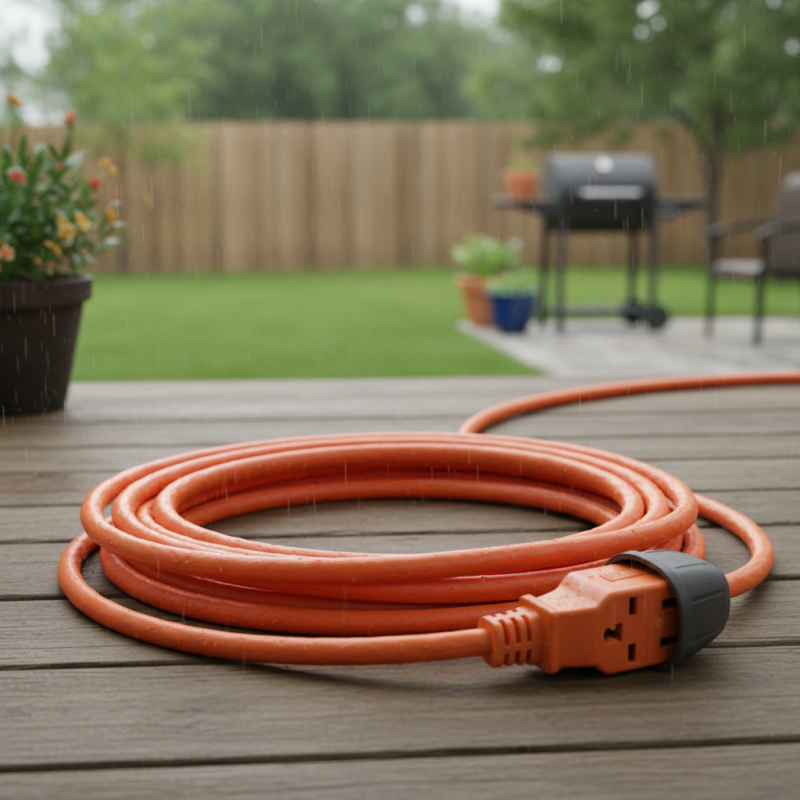
When working outdoors, the right extension cord plays a vital role. These cords are designed to withstand the elements. Rain, snow, and rough terrain can damage standard cords, leading to potential hazards. Understanding the specifications of outdoor cords is crucial for safety and efficiency.
Consider these tips when selecting an outdoor extension cord. Look for cords that are labeled for outdoor use. They should have a tough casing to resist abrasions and moisture. Think about the length you need. Too long can create a tripping hazard. Too short can limit your work area. Additionally, ensure the cord has adequate gauge for your power needs. A lower gauge number indicates a thicker wire, allowing for higher power delivery.
Remember to store your cords properly too. Coiling them can prevent tangles and damage. Don't leave cords exposed to sunlight for long periods. UV rays can degrade the material over time. Check for wear and tear regularly. A damaged cord can pose serious risks. Recognizing these details and adjustments can enhance your outdoor experience significantly.
Choosing the right outdoor extension cord is crucial for safety and efficiency. One key factor to consider is the cord's gauge. A lower gauge means a thicker wire, allowing for more power to flow. For outdoor use, a 12-gauge cord is often ideal. It handles high wattage tools and offers better performance in long distances. Think about what devices you'll be using. If it's a heavy-duty tool, don't compromise on the wire size.
Another essential factor is the length of the cord. Measure the distance from your power source to your destination. Always opt for a bit more length than needed. Cords that are too short can lead to dangerous situations. A long cord can create trip hazards, though. Look for ways to secure it safely. Make sure to check the cord's jacket material as well. It should be weather-resistant to handle rain and exposure to sunlight.
Weight and flexibility are also important. A heavy cord may be harder to manage but can withstand the outdoors better. Lightweight cords can tangle and break easily. Consider the environment you’re using it in. Will it see heavy foot traffic? Will it be exposed to harsh weather? Assess your needs carefully. Making choices based on these factors ensures that you maximize safety and efficiency in your outdoor projects.
When selecting an outdoor extension cord, knowing the types and their uses is essential. There are heavy-duty cords, commonly used for power tools and large appliances. They can handle high wattages and are designed for rugged environments.
Light-duty cords are suitable for smaller devices, like string lights or gardening tools. It's important to ensure the cord's rating matches the equipment you plan to use.
Tips: Always check the amp rating on your devices. This ensures the cord won't overheat.
Another type to consider is the retractable extension cord. These are convenient for storage and outdoor use. They can avoid tangling, but be cautious of wear and tear.
Ensure the cord is fully unwound during use to prevent damage.
Tips: Regularly inspect your cords for frays or damage. A small issue can escalate into a serious hazard.
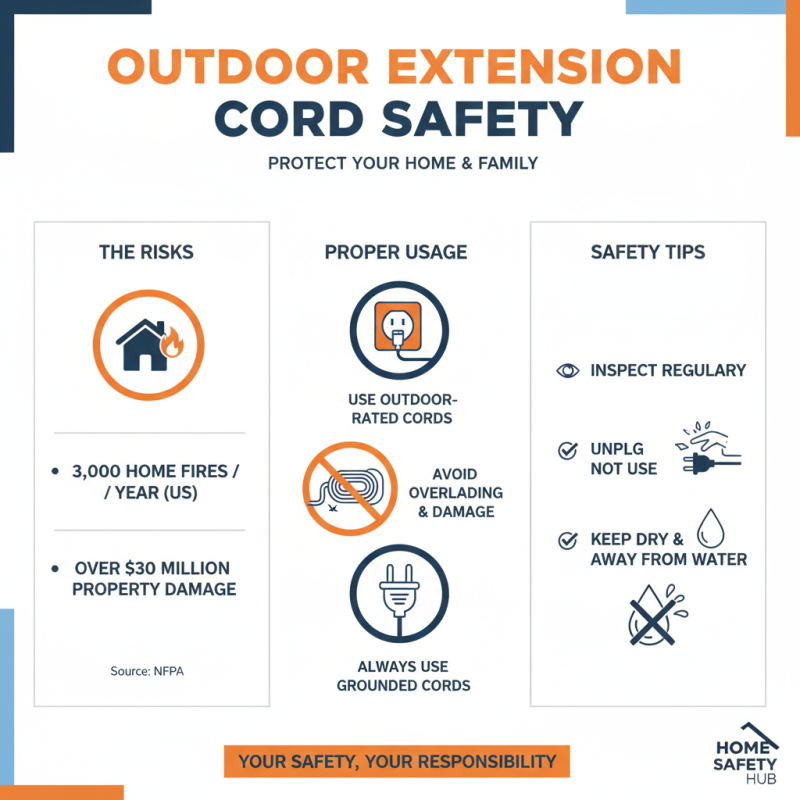
When using outdoor extension cords, safety should be your top priority. According to the National Fire Protection Association (NFPA), extension cords are involved in roughly 3,000 home fires every year in the U.S. These fires cause over $30 million in property damage. Proper usage can significantly reduce risks.
Choose extension cords rated for outdoor use. They are built to withstand weather conditions. Cords should have a thick insulation, ideally labeled for outdoor use. Check regularly for frays and damage. Damaged cords can lead to electric shocks. Avoid using multiple cords together. This can lead to overheating.
Proper storage is crucial, too. Coiling cords haphazardly can damage the wire. Instead, wrap them loosely. Always unplug cords when not in use. Leaving them plugged in can attract moisture. Following these tips makes outdoor activities safer for everyone involved.
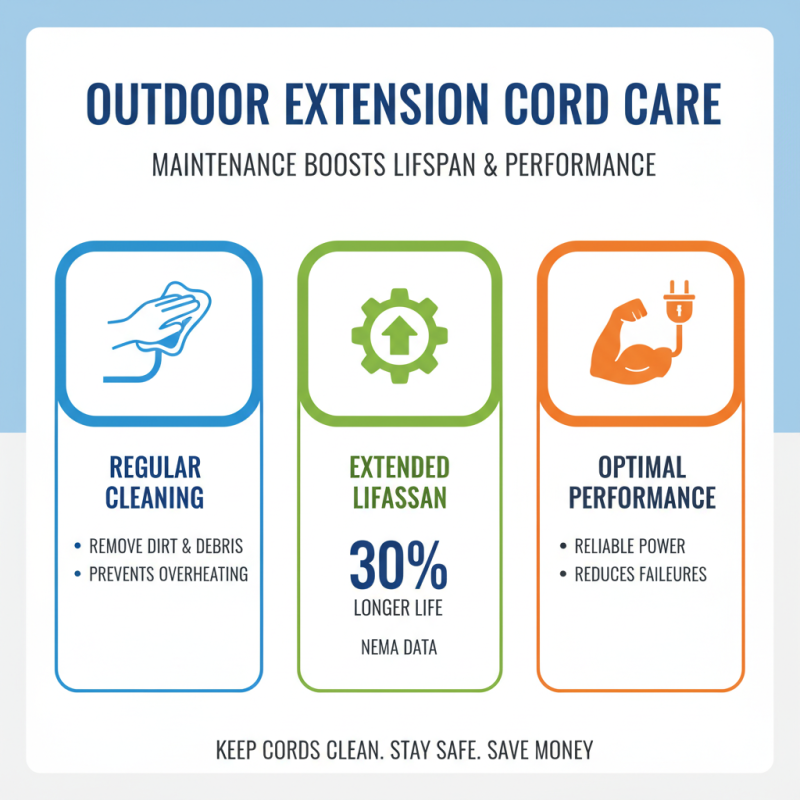
When it comes to outdoor extension cords, maintenance is key for optimal performance. Regular care can extend the lifespan of your cord significantly. Data from the National Electrical Manufacturers Association indicates that properly maintained cords can last 30% longer than neglected ones. Ensuring your cord is clean and free of debris is essential. Dirt can cause overheating, which leads to failures.
Avoiding kinks while storing your extension cord is crucial. Kinks can damage the internal wiring and decrease the cord's efficiency. Always wind your cord loosely and store it in a dry area. Keep an eye on the connections. Loose or damaged connections can increase resistance and lead to energy loss. Replace any damaged parts immediately to prevent hazards.
Tips: To prolong the life of your outdoor extension cord, consider using a reel for storage. This keeps the cord organized and reduces wear. Always check for frays before using. A small tear can lead to larger problems. Keeping up with maintenance helps you avoid future issues. Simple actions make a big difference in performance.