How to Choose the Best Vehicle Charging Pile for Your Needs?
When it comes to selecting the right vehicle charging pile, many factors come into play. Dr. Emily Tran, a leading expert in electric vehicle infrastructure, emphasizes, "Choosing the right charging pile can enhance user convenience and efficiency." Understanding your personal needs is crucial. Are you a daily commuter or an occasional road-tripper?
The optimal charging pile varies based on usage. Home installations provide convenience for regular charging. Public charging stations offer flexibility for those always on the go. However, one should consider charging speeds, compatibility, and power output. The right charging pile should align with your vehicle type and usage patterns.
Many people overlook the importance of location and accessibility. A poorly placed charging pile may hinder usage. It’s essential to assess the infrastructure in your area. Reflect on your charging habits and preferences. A thoughtful choice leads to better efficiency and satisfaction.
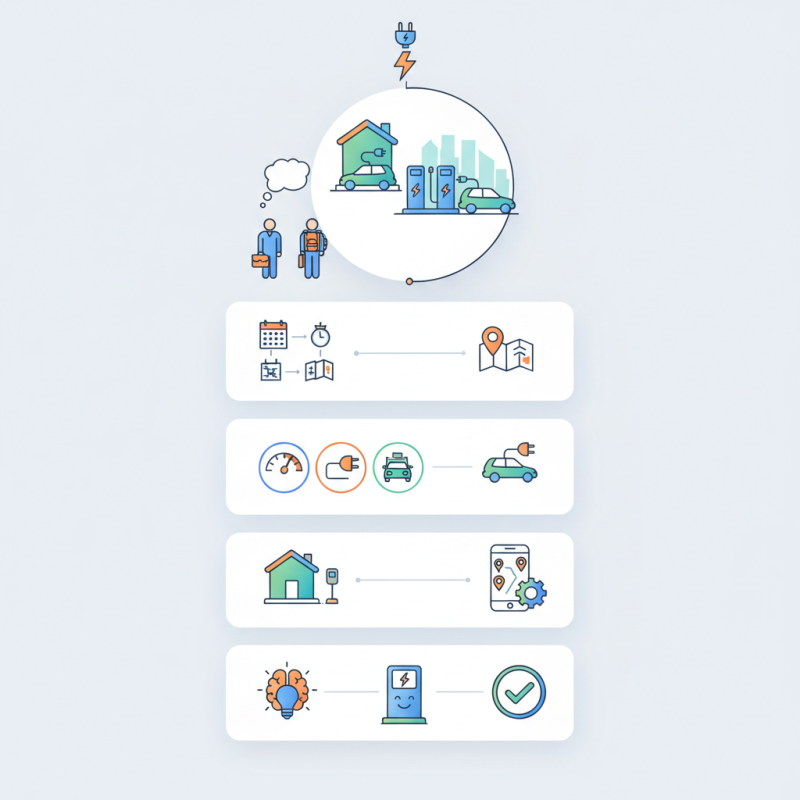
Understanding Different Types of Vehicle Charging Piles Available
When selecting a vehicle charging pile, understanding the different types available is crucial. There are primarily three types: Level 1, Level 2, and DC Fast Charging. Each type caters to various charging needs and environments.
Level 1 chargers only require a standard household outlet. They provide 120 volts and typically charge a vehicle overnight. This option is ideal for those with limited daily driving requirements. According to the U.S. Department of Energy, using a Level 1 charger can take up to 20 hours for a full charge. This slow method might not suit everyone, especially in urban areas with higher travel demands.
Level 2 chargers, which operate at 240 volts, offer faster charging. They typically reduce charging time to about 4-8 hours, making them suitable for home installations or public charging stations. A study by the International Council on Clean Transportation shows that Level 2 charging is becoming the standard for public workplaces and home usage. However, the installation cost can be a significant factor, often exceeding $1,000.
DC Fast Chargers provide rapid charging, often delivering 80% power in just 30 minutes. Though they are efficient, not all vehicles are compatible. Despite their advantages, building more fast charging stations remains a challenge in rural areas. This discrepancy highlights a need for ongoing infrastructure development. Overall, each charging pile type has distinct advantages and limitations that should match your vehicle usage and charging availability.
Assessing Your Charging Needs Based on Vehicle Type and Usage
When selecting a vehicle charging pile, it is crucial to assess your specific charging needs. Different vehicles have varying battery capacities and charging speeds. An electric vehicle (EV) may require a faster charger if you drive long distances frequently. Alternatively, a plug-in hybrid may only need a standard charger for occasional top-ups.
Consider your daily driving habits. If you have a short commute, a Level 1 charger may suffice. This type plugs into a regular outlet and is ideal for overnight charging. However, if you often travel longer distances or need to charge multiple times a week, a Level 2 charger will be more efficient. It significantly reduces charging time, providing a full charge in just a few hours.
Evaluate your home's electrical system too. Upgrading your charging infrastructure might be necessary to support a higher-capacity charger. Think about the location of the charger as well. It should be easily accessible and ideally in a shaded area to ensure safety and protection from weather conditions. These reflections can help you avoid common pitfalls in planning your EV charging strategy.
Evaluating Charging Speed: Level 1 vs. Level 2 vs. DC Fast Charging
When considering vehicle charging options, understanding charging speed is crucial. Charging speeds typically fall into three categories: Level 1, Level 2, and DC Fast Charging. Level 1 delivers slow charging power, ideal for overnight home use. It can take up to 8-12 hours to fully charge an electric vehicle (EV), making it less practical for quick trips.
Level 2 accelerates this process significantly. Commonly seen in public charging stations, it can recharge an EV in 4-6 hours. If you often charge on the go, Level 2 is a solid choice. For those who need rapid charging, DC Fast Charging is the game-changer. It can provide an 80% charge in as little as 30 minutes. However, availability may be limited.
Tips for evaluating your needs include assessing your daily driving distance and charging access. If you have a short commute, Level 1 might suffice. But for longer distances, Level 2 or DC Fast Charging should be considered. Watch out for the location of charging stations as well; some areas have more options than others. Planning is essential to avoid range anxiety and ensure reliability in your charging routine.
Considering Installation Requirements and Location for Charging Piles
When choosing a vehicle charging pile, location plays a crucial role. For residential areas, consider proximity to parking and electrical infrastructure. A study by the International Energy Agency stated that 80% of electric vehicle charging happens at home, highlighting the importance of installation feasibility. A nearby power source can lower installation costs significantly.
Commercial sites have different requirements. High-traffic locations benefit from multiple charging stations to reduce wait times. According to a report by BloombergNEF, the global public charging network is expected to grow significantly by 2025. This indicates a pressing need for accessible charging stations in urban areas. Local zoning laws and permits may also impact installation timelines and costs.
The landscape of charging solutions is always evolving. Not all Charging Piles are created equal. Factors such as output power and compatibility with various vehicles must be considered. The lack of standardization can lead to issues. Installing the right pile could mean the difference between convenience and frustration. Understanding these intricacies is essential for making an informed choice.
Budgeting for Purchase and Maintenance of Vehicle Charging Infrastructure
When considering the purchase of a vehicle charging pile, budget is a critical factor. Prices can vary significantly based on features, installation, and maintenance. Knowing your financial limits helps narrow down options. Expect to spend on both purchase and installation. Charging infrastructure can become a financial commitment over time.
Tips: Allocate a separate budget for maintenance. Regular check-ups can prevent costly repairs down the line. Also, think about the electricity costs you’ll incur. Charging piles can increase utility bills, depending on usage.
Evaluate the types of charging piles available. Some require more initial investment but may be more efficient. Assess your charging needs carefully. Do you charge daily? Are you using it for business? These questions will guide you in choosing the best option. A well-planned budget can ultimately enhance your charging experience.

