Who Are the Best Pneumatic Seal Manufacturers in China?

China’s pneumatic-seal market includes established manufacturers and smaller specialists. The best choice depends on more than price. Buyers should compare material grades, dimensional consistency, pressure and temperature limits, and evidence of quality control. A seal that looks identical on a sample bench may behave differently after thousands of cycles.

For Pneumatic Seals, application details matter. A cylinder operating in a clean packaging line has different needs from one exposed to dust, washdown, or temperature swings. Ask manufacturers for material data, tolerance information, and test results for the intended conditions. Check how they handle custom profiles, batch traceability, and replacement orders. These details reveal more than a polished catalog.

This guide compares Chinese manufacturers through practical buyer criteria, including product range, production capability, certifications, and export support. It also considers the limits of public information: a factory’s website cannot prove every performance claim. No source articles or verifiable expert quotation were provided, so I can’t responsibly attribute a quote to a named Pneumatic Seals expert. That gap matters. A trustworthy supplier assessment should be built on evidence, not a convenient quotation.
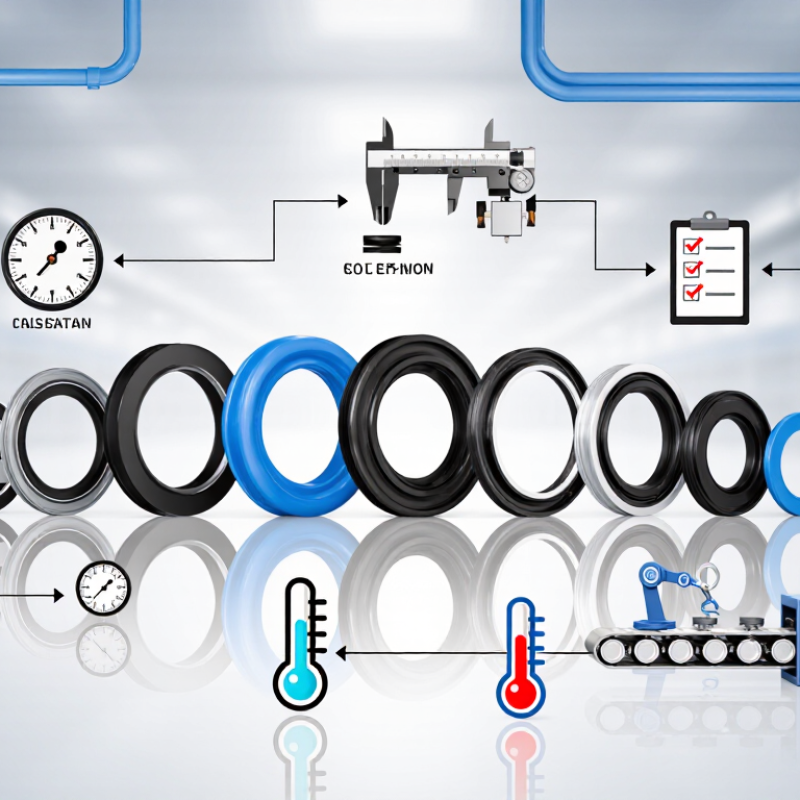
Who Are the Best Pneumatic Seal Manufacturers in China?

What Pneumatic Seals Are and Where They Are Used

Pneumatic seals are components that limit air leakage between moving or stationary surfaces. In a cylinder, a piston seal helps maintain pressure as the piston travels through the barrel. A rod seal controls leakage where the rod passes through the end cap. Wipers also keep dust and small particles away from internal surfaces. Small parts, important work.

These seals are common in factory automation, packaging lines, vehicle systems, and workshop tools. You may find them inside compact actuators that move a sorting arm or open a machine guard. Valves use seals to direct compressed air through different passages. Their performance depends on more than material alone. Pressure, temperature, movement speed, lubrication, and surface finish all matter.

A seal chosen for a slow, clean cylinder may not suit a fast actuator exposed to abrasive dust. Checking the operating conditions helps narrow the options, but installation matters too. A nicked seal can leak even when its dimensions look correct. Air quality is easy to overlook. Moisture or particles can shorten service life, so inspection and suitable filtration deserve attention. Real operating conditions can also differ from the specification sheet. That gap is worth reviewing.

How to Evaluate Pneumatic Seal Manufacturers in China

When evaluating pneumatic seal manufacturers in China, start with the conditions your seals must handle. Share the cylinder pressure, operating temperature, movement speed, and exposure to oil or dust. A capable engineering team should ask for these details before recommending a material or profile. Specific questions matter.

Ask how the manufacturer controls dimensions such as lip thickness and groove fit. Request inspection records and test methods, not just a general quality statement. For example, ask whether samples are checked for leakage after repeated cycling. Test results should reflect your actual operating conditions where practical. A polished brochure proves little.

Review material documentation, production traceability, and how rejected parts are handled. Confirm that sample parts and later production batches follow the same specifications. Small variations can affect sealing performance. Request a clear process for reporting defects and investigating their cause. Communication is part of quality.

A factory visit or live video walkthrough can reveal practical details: clean storage, calibrated measuring tools, and orderly workstations. Still, appearances can mislead. Compare samples and records, and consider an independent test for critical applications. Lead time, minimum order quantity, and technical support also deserve written answers. No single checklist fits every project; the right evaluation depends on the cylinder, duty cycle, and cost of downtime.

Leading Chinese Manufacturers and Their Product Specialties

Chinese pneumatic seal manufacturers often serve different needs rather than making every seal equally well. Some focus on standard piston and rod seals for compact cylinders, while others specialize in custom profiles, molded parts, or small production runs. Fit comes first. A seal that looks suitable on a drawing may fail if its dimensions or groove design are off.

Polyurethane seals are commonly selected for abrasion resistance in moving cylinders. Nitrile rubber can suit general-purpose applications, while PTFE designs may help reduce friction. Some manufacturers also supply wipers and guide rings to support complete cylinder assemblies. Ask about compound options, operating temperature, pressure, and lubrication. Details matter. Manufacturing capabilities vary: one supplier may offer rapid custom machining, while another relies on established molds for consistent batch production.

Look beyond the catalog. Request dimensional tolerances, material data, and inspection details for the exact part you plan to buy. A useful supplier can explain why a profile suits your application, not just quote a price. Sample testing under real operating conditions is still important. It can reveal issues that a specification sheet misses. And, honestly, supplier descriptions do not always make comparisons easy; verify claims before treating a listed specialty as proven performance.

Who Are the Best Pneumatic Seal Manufacturers in China? - Leading Chinese Manufacturers and Their Product Specialties

This comparison summarizes common pneumatic-seal product specialties and material choices. It does not rank or identify individual manufacturers.

Product specialty Common materials Typical applications Key selection considerations
Piston seals Nitrile rubber (NBR), polyurethane (PU), and, for some designs, PTFE-based materials Pneumatic cylinders, where the seal separates pressure chambers across the piston Cylinder groove dimensions, operating pressure, speed, lubrication, and leakage requirements
Rod seals NBR, PU, and PTFE compounds, depending on design and service conditions Cylinder rod exits, helping limit compressed-air leakage from the cylinder Rod finish, alignment, seal profile, pressure, and compatibility with any lubricant
Wiper seals Often PU or NBR; material depends on exposure and the cylinder design Rod openings, where they help exclude dust and other contaminants during rod retraction External contamination, rod motion, installation space, and the need to avoid damaging the rod surface
O-rings NBR, EPDM, FKM, or silicone, selected according to the operating environment Static joints and some low-motion pneumatic components, including valves and fittings Groove size, compression, fluid or lubricant compatibility, temperature, and pressure
Wear rings and guide rings Commonly engineered plastics such as filled PTFE or other low-friction polymers Piston or rod assemblies, where they guide moving parts and help prevent metal-to-metal contact Side load, clearance, friction, wear, and compatibility with the mating surfaces
Valve and solenoid-valve seals NBR and other elastomers chosen for the valve design and operating environment Pneumatic valve assemblies that control or direct compressed-air flow Valve geometry, switching frequency, air cleanliness, sealing performance, and material compatibility

Material suitability varies by compound and design. Confirm operating conditions, dimensions, and compatibility with the seal supplier before specifying a part.

How Manufacturers Compare in Quality, Customization, and Service

Quality is more than a clean-looking sample. Pneumatic seals must match the cylinder’s pressure, temperature, movement, and working medium. Ask manufacturers how they control material batches, dimensions, and surface finish. Request inspection records and test results for the seal type you plan to use. Small details matter.

Customization should begin with operating conditions, not a catalog code alone. Share the groove dimensions, expected stroke speed, and available installation space. A capable engineering team can review drawings, suggest a profile, and explain material trade-offs before tooling begins. Samples help reveal fit issues early. Not every application needs a custom design; it may add cost and time without improving performance. That trade-off is easy to underestimate.

Service is visible in the details: clear answers, realistic lead times, and consistent revisions to drawings. Ask how the supplier handles sample approval and keeps production aligned with the approved specification. For a failure, useful support means reviewing wear patterns and operating conditions, not simply recommending a harder material. Response quality can vary, even within one company. Check the process with a specific technical question before placing a large order.

How to Choose a Manufacturer for Your Application

Choosing a pneumatic seal manufacturer starts with the application, not a catalog photograph. Define the cylinder bore, rod diameter, operating pressure, stroke speed, temperature, and exposure to dust or moisture. Small details matter. A seal used in a clean packaging line may fail quickly in a dusty workshop. Share real operating conditions with the manufacturer, including occasional pressure spikes and cleaning routines. If those details are missing, a technically correct quote may still lead to the wrong seal.

Ask how the manufacturer controls material selection, dimensions, and batch consistency. Request material data and inspection records, then check whether the proposed compound suits your air system and lubricant. A sample should be tested in the actual cylinder when possible. Watch for leakage, friction, heat, and wear after repeated cycles—not just during a brief startup. Ask how design changes and rejected parts are documented. Clear answers are useful. Vague assurances are not. Compare lead time, minimum order quantity, and support for custom profiles alongside price. The cheapest option can become costly if seals wear early, but a premium specification may be unnecessary. That judgment is not always easy; review failures and test results before committing to a large order.