

10 Best Digital Watches for Men in 2026
A good Digital Watch should make everyday tasks easier, not add another distraction to your wrist. In 2026, men can choose from rugged outdoor models, slim everyday designs, and feature-rich watches with alarms, timers, and activity tracking. The best option depends on how you actually spend your day. A bright display helps under midday sun, while clear buttons matter when you are wearing gloves or carrying groceries.
This guide to the 10 Best Digital Watches for Men in 2026 focuses on practical details: readability, comfort, battery life, durability, and useful functions. A watch may look tough in product photos, yet feel bulky beneath a shirt cuff. Another may offer a long feature list but require frequent charging. Those differences are easy to overlook. They matter.
Specifications and manufacturer claims can help narrow the choices, but they do not tell the whole story. Wrist size, preferred display style, and tolerance for frequent charging vary from person to person. No single model suits everyone, and even a strong recommendation deserves a second look. Consider how you will use the watch before treating extra features as real value. The picks ahead aim to make comparison clearer, while recognizing that availability, prices, and product details can change over time.
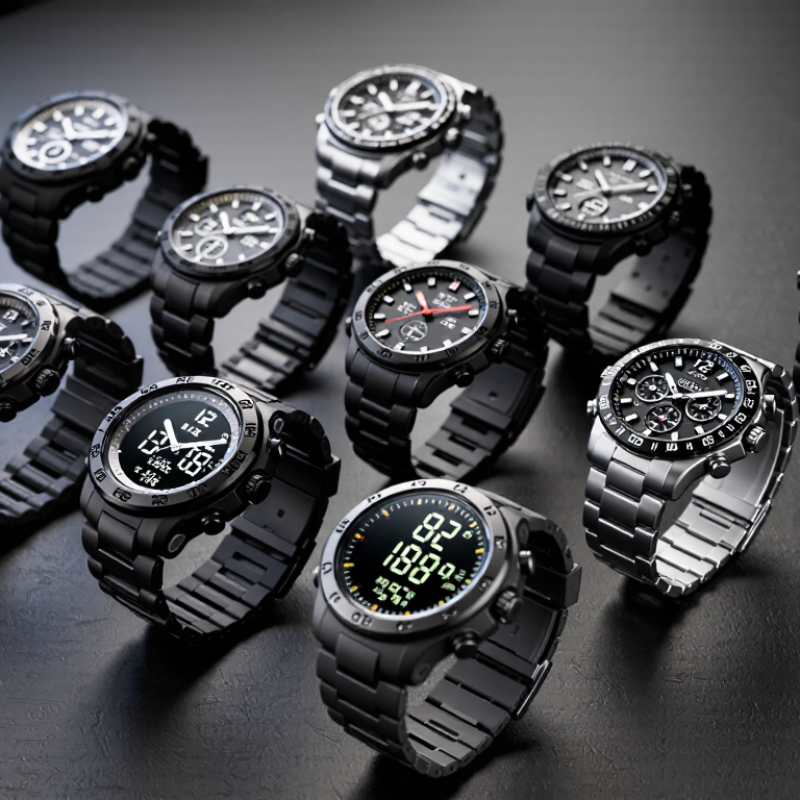
Define Digital-Watch Criteria: Display, Battery, Durability, and Functions
A useful digital watch starts with a screen you can read at a glance. Check contrast, digit size, and backlight coverage, especially in bright sun or a dim hallway. A high-contrast display often beats a crowded screen. Small buttons can also make setting alarms awkward, even when the menu looks simple.
Battery claims need context. A watch with frequent alarms, a bright backlight, and constant timing may drain faster than one used only to show the time. IDC’s Worldwide Quarterly Wearable Device Tracker forecast 538 million wearable-device shipments in 2024, up 6.1 percent. That figure covers many device types, not digital watches alone, but it shows how broad the category has become. Compare expected battery life under similar use, not just the largest number on the package. A replaceable cell may suit years of basic use; rechargeable models need a charging routine.
For durability, inspect the stated water-resistance rating and the conditions behind it. ISO 22810 outlines tests for water-resistant watches, but a rating does not make every watch suitable for every activity. Look for a sturdy case, recessed buttons, and a strap that stays secure when damp. Functions should earn their place: a stopwatch helps during training, while alarms and a clear date display suit daily wear. More features can mean more menus. I still find that easy operation matters most when checking the time with wet hands or in a hurry.
10 Best Digital Watches for Men in 2026 — Define Digital-Watch Criteria: Display, Battery, Durability, and Functions
These are ten representative digital-watch profiles, not branded product listings. Battery life and features are typical specification ranges for watches in each category; actual performance depends on the individual model, settings, and use. Water-resistance ratings do not automatically mean a watch is suitable for diving.
| Rank | Watch Profile | Display | Typical Battery Life | Typical Water Resistance | Durability and Functions | Best For |
|---|---|---|---|---|---|---|
| 1 | Everyday Resin Digital | High-contrast LCD with time, date, and day-of-week display | About 5–10 years on a replaceable coin-cell battery, depending on functions used | Often 100 m | Lightweight resin case; usually includes an alarm, stopwatch, countdown timer, and backlight | Reliable daily wear and general outdoor use |
| 2 | Solar-Powered Outdoor Digital | Segmented LCD, commonly with a world-time or multi-time display | Solar-assisted; operating time varies with light exposure and power-saving settings | Often 100–200 m | Designed for regular outdoor use; may include alarms, a stopwatch, countdown timer, and low-charge indicator | Frequent travelers and people who want fewer battery changes |
| 3 | Rugged Shock-Resistant Digital | Large, segmented LCD with prominent numerals | Commonly several years on a replaceable battery | Often 100–200 m | Reinforced case and protected buttons; typically offers a stopwatch, countdown timer, alarms, and backlight | Work, hiking, and rough everyday handling |
| 4 | Slim Digital Dress Watch | Compact LCD with a clean time-and-date layout | Typically several years on a replaceable battery | Often 30–50 m | Thin, lightweight case; basic alarm and stopwatch functions are common | Office wear and occasions where a low-profile case is preferred |
| 5 | Large-Display Utility Digital | Oversized digits for quick reading | Typically several years, depending on backlight use | Often 50–100 m | Usually prioritizes a clear backlight, alarm, stopwatch, and countdown timer over connected features | Easy time reading during work, exercise, or low-light use |
| 6 | Tide-and-Moon Outdoor Digital | LCD showing time alongside tide or moon-phase information | Typically several years on a replaceable battery | Often 100 m | May include tide graphs, moon data, alarms, and a stopwatch; tide information can depend on location settings | Coastal activities and recreational fishing |
| 7 | Fitness Tracker Watch | Compact LCD or OLED touchscreen | Commonly about 5–14 days; frequent GPS or display use can shorten it | Often 5 ATM or a comparable swim-oriented rating | May track steps, heart rate, sleep, workouts, and phone notifications; feature availability varies | Everyday activity tracking and casual fitness |
| 8 | GPS Running Digital Watch | LCD or transflective display, often designed for outdoor readability | Often several days to around two weeks in smartwatch mode; GPS use typically lasts tens of hours | Commonly 5 ATM | GPS workout recording, pace and distance data, interval training, and activity tracking are common | Road running and structured training |
| 9 | Multisport GPS Watch | Outdoor-readable LCD or transflective display; some models use touchscreens | Typically several days or more in watch mode; continuous GPS operation is much shorter | Commonly 5 ATM, with some models offering higher ratings | May support multiple sport profiles, route navigation, training metrics, and wireless sensors | Hiking, cycling, and multi-activity training |
| 10 | Connected Smart Digital Watch | Color OLED or AMOLED touchscreen | Usually about 1–3 days, depending on screen and connectivity settings | Varies; many are rated for swimming, but ratings differ by model | May provide apps, notifications, health sensors, voice features, and GPS; generally needs more frequent charging | Phone-connected features and an app-based experience |