

What Is the Best Cryo Chiller in 2026?
Choosing the best Cryo Chiller in 2026 is not about finding one machine that suits every laboratory or production line. The right choice depends on the cooling load, target temperature, operating schedule, and site conditions. A unit that performs well in a quiet test room may struggle beside warm equipment or under continuous use. Small details matter.
A useful measurement principle comes from Lord Kelvin, the renowned thermodynamics authority: “When you can measure what you are speaking about … you know something about it.” His words are not a Cryo Chiller recommendation, but they offer a sound way to compare models. Look beyond headline capacity. Check cooling performance across the operating range, temperature stability, heat rejection, control response, and stated maintenance requirements. Ask vendors for test conditions, not just polished brochures.
This guide examines how to judge those details and compare real-world suitability. It also considers noise, footprint, service access, and energy use, since a chiller must fit the room as well as the process. Reliability claims deserve careful reading. Published specifications can help, but they do not replace application-specific testing. There is no universal winner. That is easy to say, harder to accept when a purchase is urgent. The best Cryo Chiller for 2026 is the one whose verified performance matches your actual load, environment, and support needs.
What a Cryo Chiller Is and Where It Is Used
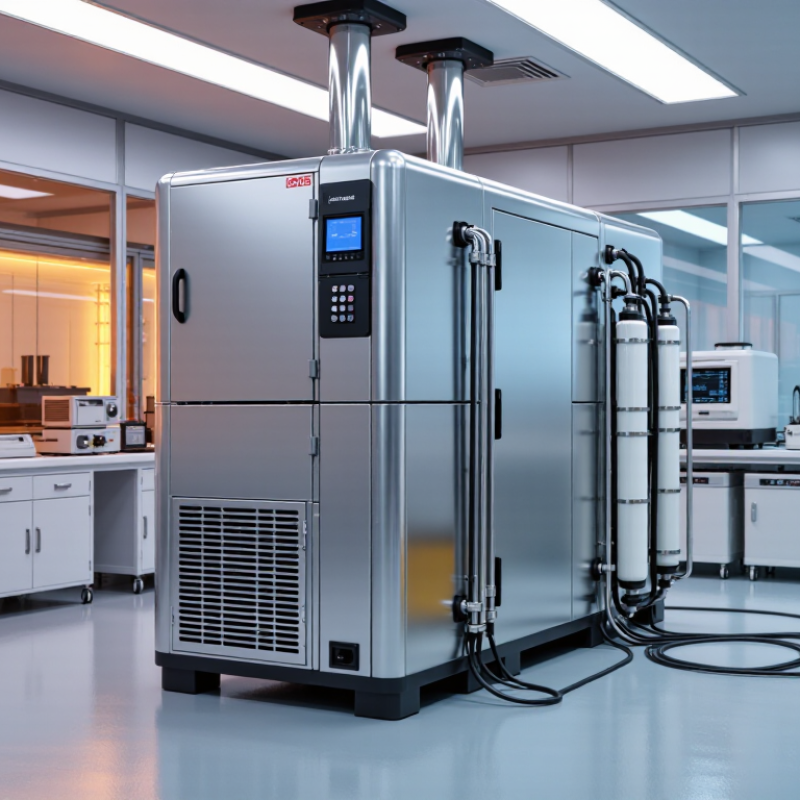
A cryo chiller is a refrigeration system that removes heat from equipment or a circulating fluid at temperatures below ordinary process-cooling ranges. The exact temperature depends on the design; “cryo chiller” is not always used consistently across industries. Check the specified operating range, cooling capacity, coolant compatibility, and temperature stability. Small details matter.
These systems support laboratory instruments, semiconductor process equipment, lasers, and some superconducting research setups. In medical imaging, they may serve auxiliary cooling loops, while MRI magnets typically use dedicated cryogenic refrigeration. The distinction is easy to miss. SEMI reported worldwide semiconductor manufacturing equipment sales of $117.1 billion in 2024 (SEMI, 2025), showing the scale of an industry where reliable thermal control matters. That figure does not measure cryo-chiller use.
A practical choice depends on the heat load, required temperature, flow rate, and room conditions. For example, a tool running continuously in a warm, dusty factory needs different protection from a quiet laboratory instrument. Ask for performance data at your actual setpoint, not only the unit’s headline capacity. Test it under real conditions. Even a well-specified chiller can disappoint if hoses, insulation, or maintenance are overlooked.
What Is the Best Cryo Chiller in 2026? — What a Cryo Chiller Is and Where It Is Used
A cryo chiller is a cooling system designed to remove heat at temperatures below those typically reached by standard process chillers. The suitable system depends on the target temperature, cooling load, process conditions, and operating costs. Temperature figures below are indicative application ranges, not guaranteed equipment specifications.
| Application | Typical Temperature Range | How Cryogenic Cooling Is Used | Common System Considerations |
|---|---|---|---|
| Laboratory and scientific instruments | Often below −100°C for cryogenic instruments; exact requirements vary by instrument. | Maintains low temperatures for detectors, research equipment, and experiments that require reduced thermal noise or controlled cryogenic conditions. | Temperature stability, vibration, heat load, cooldown time, and compatibility with the instrument are important. |
| Semiconductor and electronics testing | Test temperatures are process-specific and may extend from sub-zero conditions to cryogenic temperatures. | Provides controlled cooling for testing electronic components and materials under low-temperature operating conditions. | Precise temperature control, clean operation, repeatability, and integration with test equipment are key factors. |
| Medical and biological sample storage | Approximately −80°C for some ultra-low-temperature freezers; around −196°C for liquid-nitrogen storage. | Supports long-term preservation of biological samples using mechanical ultra-low-temperature equipment or cryogenic liquid storage. | Required storage temperature, backup provisions, temperature monitoring, sample access, and safety procedures must be considered. |
| Gas liquefaction and recovery | Depends on the gas and process; liquefaction generally requires temperatures near or below the gas’s boiling point at the operating pressure. | Removes heat to condense or recover gases in applications such as laboratory gas handling and industrial process recovery. | Gas composition, pressure, flow rate, heat-exchanger design, and process safety determine system requirements. |
| Vacuum and materials testing | Ranges from sub-zero temperatures to cryogenic conditions, depending on the test standard and material. | Reproduces cold operating environments to evaluate material behavior, component performance, or thermal cycling. | Uniformity, ramp rate, chamber size, sample heat load, and measurement accuracy affect test quality. |
| Industrial process cooling | Often around −40°C to below −100°C for specialized low-temperature processes; requirements vary widely. | Provides cooling for processes that need temperatures beyond the practical range of conventional chilled-water systems. | Assess continuous cooling capacity, process fluid compatibility, insulation, energy use, maintenance, and plant integration. |
| Superconducting equipment | Application-dependent; some systems operate at tens of kelvins, while others require temperatures close to 4 K. | Removes heat from superconducting magnets, sensors, or related equipment to maintain the operating conditions required by the system. | Very low-temperature capacity, heat-leak control, reliability, vibration, and system-specific safety requirements are critical. |