Top 10 Benefits of Vertical Machining Center VMC-850A?
The Vertical machining center VMC-850A has transformed the landscape of precision manufacturing. This advanced machine combines speed, accuracy, and versatility, making it an essential tool for diverse industries. With its robust design, it can handle complex tasks smoothly, ensuring high-quality output.
One of its major advantages is the ease of use. Operators can quickly adapt to the VMC-850A, reducing training time. However, some might underestimate the importance of regular maintenance, which is vital for consistent performance. Overlooking this aspect could lead to costly downtimes.
The VMC-850A is not just about efficiency. Its ability to execute intricate designs showcases its reliability. This machine empowers engineers to push boundaries. Still, careful planning is crucial. Identifying the specific needs of a project will optimize its potential. Adopting the VMC-850A may require adjustments in workflow, but the benefits are undeniable. Embracing this technology leads to precision and innovation.
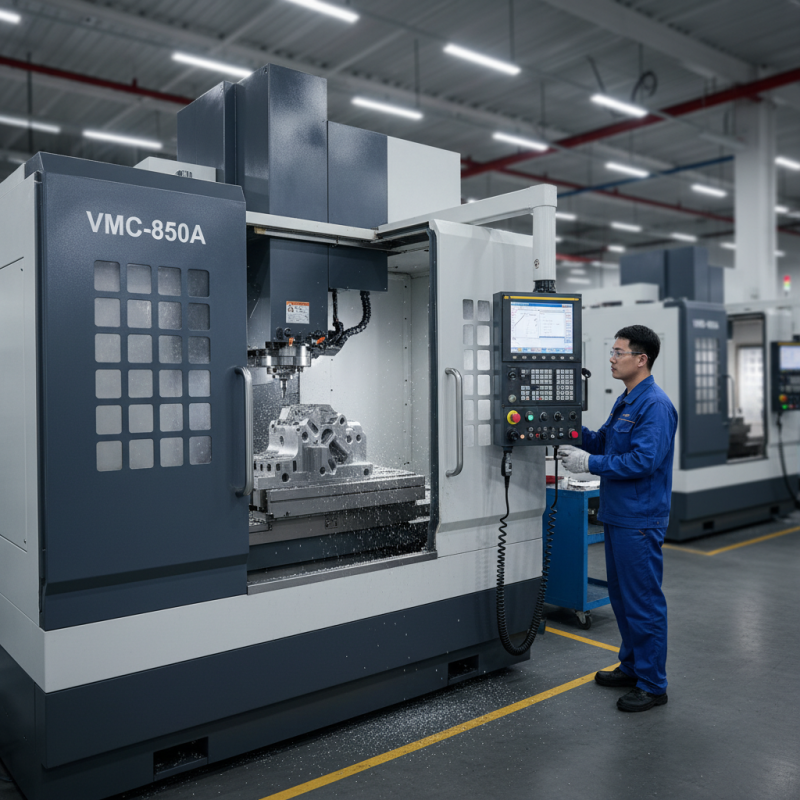
Benefits of Enhanced Precision in VMC-850A Machining
In the realm of precision machining, the VMC-850A stands out for its enhanced accuracy. This vertical machining center leverages advanced technology to achieve tight tolerances. As a result, components produced are often less prone to defects and fit better in assemblies. The fine-tuned spindle speed allows for smoother cuts, leading to an improved surface finish.
The design of the VMC-850A promotes stability, minimizing vibrations during operation. This is crucial for maintaining consistency in manufacturing processes. Operators often report less time spent on quality control. However, achieving the ideal tooling combination requires experimentation and practice. Learning curves can challenge even seasoned machinists, underscoring the importance of continuous skill development.
Moreover, the machine's software integration simplifies the programming of complex tasks. Yet, it can lead to overwhelm for users unfamiliar with high-tech solutions. Finding a balance between automation and manual input remains a work in progress. Each unique project may present unforeseen obstacles that require creative problem-solving and flexibility.
Mastering these aspects is a journey worth taking for those dedicated to precision engineering.
Increased Efficiency through Automated Processes in VMC-850A
The VMC-850A significantly increases efficiency by automating machining processes. This advanced technology reduces manual intervention, allowing operators to focus on oversight rather than routine tasks. Automated setups save time, leading to quicker turnaround times. A seamless workflow is essential in modern manufacturing. Reducing cycle times enhances competitiveness in the market.
Training is crucial for maximizing the VMC-850A's benefits. Operators must understand its features and capabilities. Investing time in comprehensive training can yield substantial returns. Proper knowledge can prevent costly mistakes. Regular maintenance is also important to ensure optimal performance. Checks and adjustments are necessary for consistent output.
Consider implementing a data management system. Using data analysis can highlight inefficiencies and reveal areas for improvement. Analyze production quantities and cycle times regularly for better decision-making. Yet, be mindful of over-reliance on automation. Sometimes, human judgment is irreplaceable in complex situations. Balancing technology with skilled operators is key to success.
Top 10 Benefits of Vertical Machining Center VMC-850A
| Benefit | Description | Impact on Efficiency |
| High Precision | Provides accurate machining with tight tolerances. | Reduces the need for rework and scrap, saving time and materials. |
| Increased Productivity | Faster cycle times due to improved machining processes. | Allows higher output in the same time frame. |
| Flexible Operations | Can handle a variety of materials and components. | Meets diverse production needs with ease. |
| Reduced Setup Time | Quick changeover between different jobs. | Minimizes downtime, maximizing machine availability. |
| Automated Processes | Incorporates automation for repetitive tasks. | Enhances workflow consistency and efficiency. |
| User-Friendly Interface | Intuitive control systems for operators. | Reduces training time and operational errors. |
| Lower Operating Costs | Energy-efficient components and operations. | Lowers overall production expenses. |
| Enhanced Safety Features | Built-in safety mechanisms for operators. | Reduces accidents and improves workplace safety. |
| Sustainability | Environmentally friendly design and materials. | Contributes to corporate sustainability goals. |
| Improved Product Quality | Consistent results across manufacturing runs. | Higher customer satisfaction and retention. |
Cost-Effectiveness and Reduced Waste with VMC-850A Operations
Cost-effectiveness is crucial in modern machining. The VMC-850A offers significant advantages in operational efficiency. Its design minimizes material waste through advanced cutting strategies. By optimizing tool paths, businesses can reduce scrap rates effectively.
Moreover, the VMC-850A's capabilities lead to shorter production cycles. Faster machining times contribute to lower labor costs. This efficiency allows for higher output within the same timeframe. Reduced setup time is another benefit. Users can swiftly reconfigure the machine for different tasks.
However, operators should consider training and maintenance. Initial costs can deter smaller enterprises. Reflecting on the long-term savings is essential. Investing in such technology often yields greater returns. The balance between cost and efficiency must be managed carefully for ultimate success.
Improved Versatility for Complex Parts Manufacturing in VMC-850A
The VMC-850A stands out for its enhanced versatility, especially in manufacturing complex parts. This vertical machining center can machine intricate geometries with precision. According to a recent market study by Grand View Research, the demand for CNC machining is projected to grow at a CAGR of 6% through 2027. This growth reflects the need for efficient, precise manufacturing solutions.
For manufacturers focusing on complex parts, the VMC-850A offers advanced capabilities. Its multi-axis machining allows for the creation of components that traditional methods struggle with. With the capability to make parts in various materials, including metals and plastics, it delivers flexibility in production. However, some users report challenges with setup time and tool changes, which can impact overall efficiency. Continuous training and process optimization can mitigate these issues.
Tip: Regular maintenance improves machine accuracy and reduces downtime. Operators should prioritize periodic inspections. Investing in staff training pays dividends. Knowledgeable employees enhance productivity and product quality, leading to better overall performance. Understanding the machine's capabilities can help optimize part production and reduce waste.
Top 10 Benefits of Vertical Machining Center VMC-850A
This chart illustrates the top 10 benefits of the VMC-850A vertical machining center, showcasing its versatility in manufacturing complex parts.
User-Friendly Interface and Reduced Learning Curve for VMC-850A
The user-friendly interface of the VMC-850A is a standout feature. Operators of all skill levels can navigate the system easily. This friendly design significantly reduces the learning curve. New users can engage with the machine without getting overwhelmed. This accessibility encourages experimentation, leading to improved skills in machining.
Furthermore, the intuitive controls enhance productivity. Users can quickly adjust settings to fit various projects. The ease of use allows operators to focus on their craft rather than complex instructions. However, some users may find initial confusion in advanced functions. This could deter from maximizing the machine's capabilities at first. Continuous training and hands-on experience are essential for mastering these features.
While the interface is designed for simplicity, it also requires some degree of adaptability. Users should be open to learning and refining their approach. As they familiarize themselves with the VMC-850A, their confidence can grow. Ultimately, this user-centric design positions the machine as a valuable tool for both novices and seasoned professionals.

