

What Are Acid Storage Cabinets Used For?
Acid Storage Cabinets are designed to hold corrosive liquids in a controlled, clearly identified place. In laboratories, workshops, and maintenance areas, they help keep acid containers stable and separated from incompatible materials. A cabinet can also provide secondary containment when fitted with a compatible spill tray. It does not make unsafe handling safe.
The need is practical. A leaking bottle can damage shelving, labels, and nearby equipment before anyone notices. The NIOSH Pocket Guide to Chemical Hazards lists a recommended exposure limit of 1 mg/m³ for sulfuric acid, illustrating why preventing splashes and airborne mist matters. The guide is a technical reference, not a cabinet performance rating. OSHA’s Hazard Communication Standard also emphasizes accessible chemical hazard information, including labels and safety data sheets. Storage decisions should follow those product-specific details.
A suitable cabinet is selected for the acid’s concentration, container size, and material compatibility. Corrosion-resistant construction and a sound, removable tray make inspection and cleanup more manageable. Keep acids away from bases and other incompatible chemicals, and avoid overloading shelves. Small details matter. One limitation deserves attention: cabinet design varies, and no single model suits every acid or workplace. Check the manufacturer’s specifications, the safety data sheet, and applicable site procedures before choosing. A cabinet is one part of a storage system, alongside clear labeling, routine inspections, and staff training.
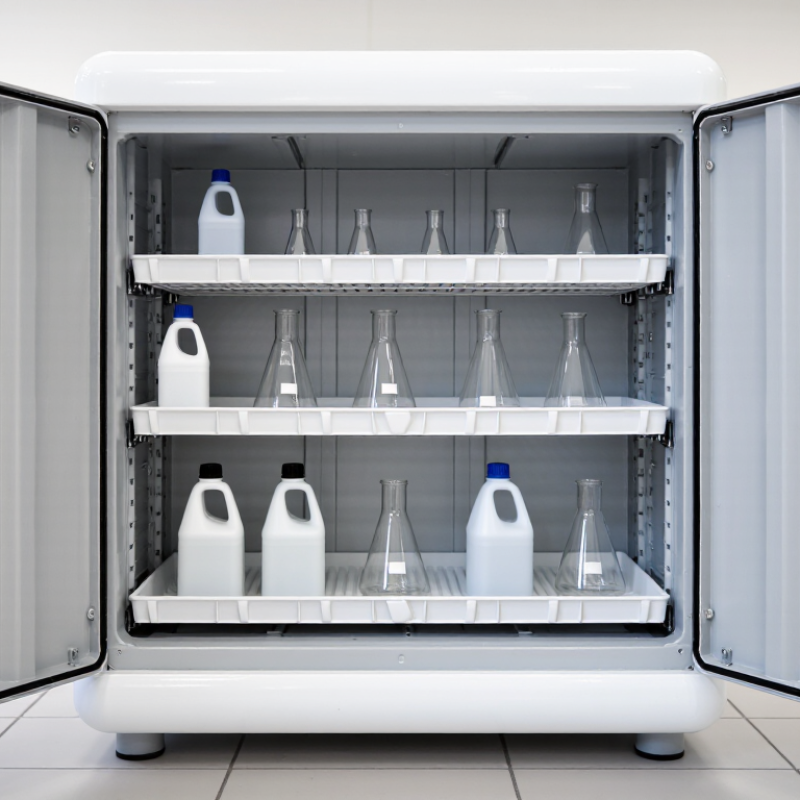
What Types of Acids Are Stored in Acid Storage Cabinets
Acid storage cabinets hold corrosive liquids in compatible, clearly labeled containers, but acids should not be grouped by name alone. Common inorganic acids include hydrochloric, sulfuric, and phosphoric acids. Nitric acid needs extra separation because it is also an oxidizer. Organic acids, such as acetic acid, should be kept apart from oxidizing acids and other incompatible chemicals. Not all acids mix. A cabinet’s corrosion-resistant lining helps, but it does not make incompatible storage safe.
NIOSH’s Pocket Guide to Chemical Hazards lists immediately dangerous to life or health values of 50 ppm for hydrogen chloride, 25 ppm for nitric acid, and 15 mg/m³ for sulfuric acid. These figures describe serious inhalation hazards, not safe storage limits. They help explain why sealed containers, sound ventilation, and prompt attention to leaks matter. Keep acids separate from bases, reactive metals, and materials identified as incompatible on the safety data sheet. Inspect shelves and containers for corrosion or crystallized residue. A neat cabinet can still hide a poor separation decision, so check compatibility before placing a new bottle inside.
What Are Acid Storage Cabinets Used For? — What Types of Acids Are Stored in Acid Storage Cabinets?
Acid storage cabinets provide corrosion-resistant, clearly identified storage for compatible acids and help contain leaks. Choose cabinet materials and storage arrangements using the chemical’s safety data sheet (SDS), concentration, and applicable local requirements. Incompatible chemicals must be segregated; a cabinet alone does not make incompatible substances safe to store together.
| Acid or acid group | Common examples | Why it may be stored in an acid cabinet | Key storage considerations |
|---|---|---|---|
| Hydrochloric acid (non-oxidizing mineral acid) | Hydrogen chloride solutions used in laboratories, cleaning, and industrial processes | Corrosive liquid that can damage incompatible cabinet materials and other stored items. | Use a cabinet and secondary containment confirmed compatible with the solution. Keep away from bases, reactive metals, and oxidizing acids as directed by the SDS. |
| Sulfuric acid (non-oxidizing or oxidizing depending on conditions and concentration) | Laboratory and process-grade sulfuric acid solutions | Highly corrosive; a designated acid cabinet can help protect containers and contain accidental leaks. | Check material compatibility and segregate from bases and incompatible organics. Dilution releases substantial heat; follow the SDS and site procedures. |
| Nitric acid (oxidizing acid) | Laboratory and industrial nitric acid solutions | Corrosive and oxidizing; it needs storage arrangements that account for both hazards. | Segregate from organic materials, solvents, reducing agents, and other incompatible substances. Use a compatible, designated storage area or cabinet in accordance with the SDS and local rules. |
| Phosphoric acid (non-oxidizing mineral acid) | Laboratory, food-processing, and industrial solutions | Corrosive solutions can be stored with compatible acids in a corrosion-resistant cabinet. | Confirm container, shelf, and sump compatibility. Keep separated from bases and other chemicals identified as incompatible on the SDS. |
| Hydrofluoric acid | Aqueous hydrogen fluoride solutions used in specialized industrial and laboratory applications | Requires highly careful containment because it is exceptionally hazardous and attacks glass and many materials. | Use only containers and cabinet components specifically verified as compatible; do not use glass secondary containment. Follow the SDS and facility-specific emergency procedures. |
| Perchloric acid (strong oxidizing acid) | Perchloric acid solutions used in specialized laboratory work | Its oxidizing hazard requires dedicated, carefully controlled storage and handling. | Keep away from organics, combustible materials, and other incompatibles. Consult the SDS and institutional safety staff for dedicated storage requirements; an ordinary acid cabinet may not be suitable. |
| Acetic acid (organic acid; concentrated solutions may be flammable) | Dilute acetic acid and concentrated solutions such as glacial acetic acid | Some solutions are corrosive, while concentrated material can also present a fire hazard. | Check the SDS for the specific concentration and required fire-safety storage. Do not store with oxidizing acids unless compatibility has been specifically established. |
General guidance: Acid cabinets are intended for compatible corrosive chemicals, not for every acid in one shared space. Keep containers closed, labeled, upright, and within the cabinet’s load limits; use compatible secondary containment and follow the SDS, workplace procedures, and applicable regulations.