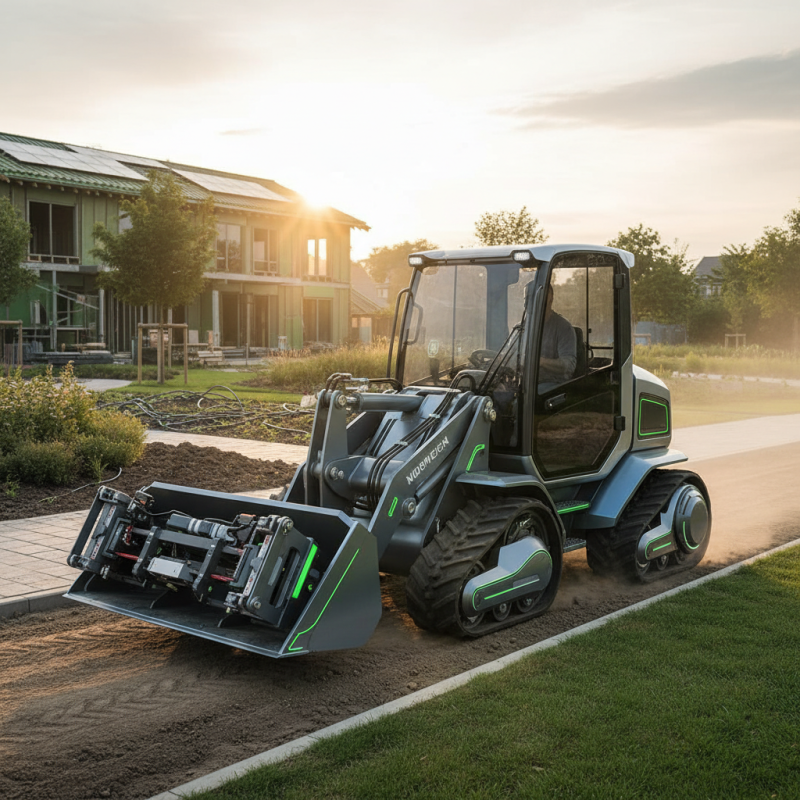
2026 Top Compact Wheel Loader Features and Benefits Explained?
The Compact Wheel Loader market is evolving rapidly. By 2026, advanced features will redefine efficiency in various industries. Compact wheel loaders combine power with agility, making them indispensable for construction and landscaping tasks.
These machines offer exceptional maneuverability, enabling operators to navigate tight spaces with ease. Their compact size does not compromise performance. They are equipped with powerful engines that enhance productivity. Additionally, various attachments allow for versatile use in different applications.
However, with advancements come challenges. Users must adapt to new technologies and functionalities. Some may find it hard to keep up with the developments. Understanding these features is crucial for maximizing the benefits of compact wheel loaders in daily operations. This exploration will highlight essential features, benefits, and considerations for potential buyers.
Overview of Compact Wheel Loaders and Their Applications
Compact wheel loaders have become essential in various industries. They excel in tight spaces where larger equipment struggles. Construction sites, landscaping projects, and agricultural operations rely on them. According to the Construction Equipment Association, compact wheel loaders can lift and transport heavy loads while maintaining agility. This versatility allows them to perform multiple tasks, from moving materials to grading surfaces.
Their size is a double-edged sword. While they offer maneuverability, their limited payload capacity may not meet all demands. For instance, the average compact wheel loader has a lift capacity between 1,000 and 4,000 pounds. This range shows their practicality but also highlights potential limitations. If a project calls for heavier loads, operators might need to consider larger machines.
In terms of features, many compact wheel loaders come equipped with advanced hydraulics and ergonomic controls. These innovations enhance productivity and reduce operator fatigue. However, some operators may feel overwhelmed by technology integration. Training is crucial to fully utilize these advancements. The balance between tech and usability remains an area for improvement in the industry.
Key Features of 2026 Compact Wheel Loaders
Compact wheel loaders play a crucial role in construction and landscaping. In 2026, their features are more advanced than ever. One key feature is the improved lifting capacity. Many models can lift over 3,000 pounds. This enhancement boosts efficiency on job sites.
Another notable feature is the enhanced maneuverability. These machines now offer tighter turning radii. Operators can navigate more effectively in confined spaces. According to industry reports, compact loaders can reduce work site time by up to 25%. This means lower operational costs.
Operators also value comfort and control. Many 2026 models have ergonomic cabins. Improved visibility is another highlight. This allows for better safety and productivity. However, some users note that not all machines have intuitive controls. Training may be needed to optimize use. The balance of features and user-friendliness is still being evaluated across the industry.
Benefits of Using Compact Wheel Loaders in Various Industries
Compact wheel loaders have gained popularity across various industries. These machines excel in tasks that require maneuverability and versatility. Construction sites benefit significantly from their ability to navigate tight spaces. They efficiently load materials, like dirt and gravel, onto trucks. This speed ensures projects stay on schedule and helps prevent delays.
In landscaping, compact wheel loaders prove invaluable. They can transport soil, rocks, and other materials with ease. Their modest size allows for seamless movement around gardens and parks. However, operators must be cautious; these machines can tip over if overloaded. Proper training is essential to avoid accidents and ensure safety.
Agriculture also sees advantages from these loaders. Farmers use them to manage feed, move hay bales, and perform maintenance tasks. The benefits are clear, but some users may overlook the importance of regular maintenance. Neglecting upkeep can lead to breakdowns and increased costs. Being proactive is crucial for maximizing the efficiency of compact wheel loaders.
Technological Advancements in 2026 Compact Wheel Loaders
In 2026, compact wheel loaders are evolving through technological advancements. These machines now come with improved engines. They consume less fuel and produce fewer emissions. This is essential for sustainable operation on job sites. The shift to hybrid and electric models is notable. Some loaders can now work for extended periods without refueling.
Enhanced automation features are making operations more efficient. Operators can rely on systems that assist in load management. These systems help prevent overloads. Load stability sensors improve safety during high lifts. However, relying too much on technology raises concerns. Operators may become less adept at handling challenges manually.
Telematics is another significant development. It allows for real-time monitoring of performance. Users can track usage statistics and maintenance needs. While this data is informative, it can be overwhelming. Operators must learn to interpret this data effectively. Adapting to these technologies can be difficult, but it is essential for maximizing efficiency.
2026 Top Compact Wheel Loader Features and Benefits Explained
| Feature | Description | Benefits |
| Improved Engine Efficiency | New hybrid engine technology that optimizes fuel usage. | Lower operational costs and reduced emissions. |
| Enhanced Loader Control | Next-gen joystick with customizable settings. | Increased operator comfort and precision in operations. |
| Compact Design | Space-saving dimensions without compromising power. | Better maneuverability in tight spaces. |
| Advanced Safety Features | 360-degree visibility and automatic shut-off sensors. | Enhanced operator safety and reduced accident risks. |
| Smart Connectivity | Real-time data sharing and remote diagnostics. | Optimization of maintenance schedules and downtime reduction. |
Comparative Analysis: 2026 Models vs. Previous Generations
The 2026 compact wheel loader models showcase significant advancements over previous generations. Enhanced hydraulic systems deliver better lifting power. This improvement means operators can handle heavier loads more efficiently.
The new models feature improved visibility, which reduces blind spots significantly. Operators report feeling more secure while maneuvering tight spaces.
The engines in the 2026 models are more fuel-efficient. This is a critical factor for sustainability. However, some users find that this has led to slightly less torque compared to older versions. It's a trade-off that requires careful consideration.
Weight distribution has also been revamped for better stability. Nonetheless, some operators have noted that with the added features, maintenance may be more complex.
Moreover, the controls are now more user-friendly, adapting to various operator skill levels. While this is a positive change, it has created a steeper learning curve for some experienced users. They may find it challenging to adjust to the new systems. Each new feature adds value, but some improvements could benefit from further refinement to enhance user experience even more.