

2026 Top Smith Machine With Cables Types for Global Buyers
The global strength-training market is becoming more selective, not merely larger. ACSM’s Worldwide Survey of Fitness Trends 2025 ranked traditional strength training fifth, confirming continued demand for structured resistance equipment. Meanwhile, Grand View Research reports steady growth in the global fitness equipment market through 2030. These figures support the rising interest in a smith machine with cables for commercial gyms, hotels, rehabilitation spaces, and serious home facilities.
The category includes dual adjustable pulleys, functional trainers, cable crossovers, selectorized systems, and plate-loaded designs. Each type changes the buying decision. Cable ratios affect resistance feel. Guide-rod diameter affects movement stability. A wider frame needs more floor space. After-sales support matters even more for international buyers. Replacement cables, bearings, and safety catches should be available locally or shipped reliably.
Dr. Brad Schoenfeld, a respected resistance-training researcher, offers a useful principle: “There is no single best way to train.” That idea applies directly here. The best smith machine with cables depends on user goals, training volume, available space, budget, and service conditions. A luxury frame is not automatically the safest choice. A lower-priced unit may also hide weak pulleys or limited adjustability. A neat ranking can mislead. This guide compares the leading 2026 types through practical details, including frame construction, cable travel, load capacity, safety design, certifications, warranty terms, and installation requirements. Some conclusions remain imperfect, because supplier specifications are not always measured consistently. Global buyers should verify every critical claim before placing an order.
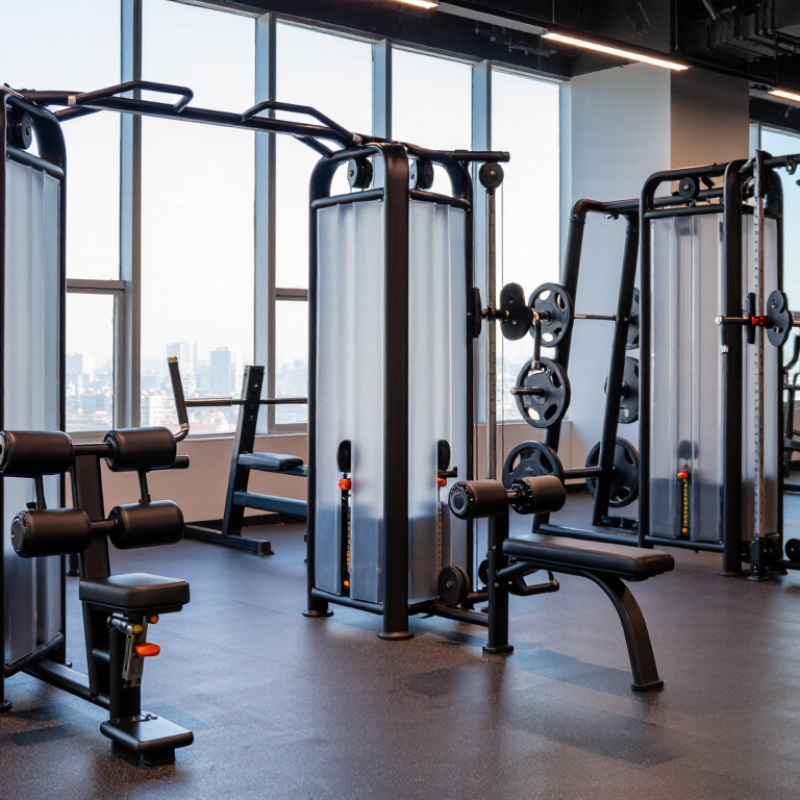
Define Cable Smith Machines Using ISO 20957 Safety and Performance Criteria
2026 Top Smith Machine With Cables Types for Global Buyers
A cable Smith machine combines a guided barbell, pulleys, adjustable resistance, and fixed safety catches. ISO 20957-1 provides general safety principles for stationary training equipment. ISO 20957-2 adds requirements for strength-training equipment. However, neither standard creates one official “cable Smith machine” category. Buyers must assess each function separately.
Check the frame, bar path, locking points, cable routing, and adjustment controls. The bar should travel smoothly without sudden friction. Cables need guarded contact points and visible wear indicators. ISO-based evaluation should also consider stability, load marking, access zones, and foreseeable misuse. A machine rated for professional use requires stronger durability evidence than equipment designed for home training. Small details matter.
Market demand supports careful specification. The EuropeActive and Deloitte 2024 European Health & Fitness Market Report recorded 67.6 million club members and €31.8 billion in industry revenue during 2023. More users can mean heavier daily cycles. That changes the buying decision. Ask for test methods, maximum user mass, working-load limits, and maintenance intervals. Do not trust a large weight number alone.
Cable systems can feel softer than free weights.
That is useful, but not automatically safer.
In practice, pulley alignment may drift after installation, especially on uneven floors. I would verify bolt torque, cable tension, and emergency clearances after assembly. ISO compliance claims should identify the exact edition, tested configuration, and supporting documentation. A certificate without scope is weak evidence.
2026 Top Smith Machine With Cables Types for Global Buyers - Define Cable Smith Machines Using ISO 20957 Safety and Performance Criteria
| Cable Smith Machine Type | Primary Training Use | Typical Footprint (L × W) |
Typical Unit Height | Typical Cable Load | Smith Bar Capacity | Common Cable Ratio | ISO 20957 Safety and Performance Checks | Best Fit for Global Buyers |
|---|---|---|---|---|---|---|---|---|
| Dual Adjustable Cable Smith | Squats, presses, rows, functional cable exercises | 2.00–2.40 m × 1.50–1.80 m | 2.25–2.45 m | 70–100 kg per side | 200–300 kg | 2:1 or 1:1 | Frame stability, bar-stop adjustment, cable retention, pulley guarding, rope and attachment strength, pinch-point protection, endurance testing | Commercial gyms, hotels, rehabilitation facilities and multi-user training areas |
| Counterbalanced Cable Smith | Controlled barbell movements with reduced starting resistance | 1.80–2.30 m × 1.35–1.65 m | 2.20–2.40 m | 60–100 kg per side | 180–250 kg | 1:1 | Smooth travel, balanced carriage, locking mechanism reliability, minimum clearance, structural load testing, cable fatigue and emergency stopping performance | Beginners, supervised training, apartment gyms and facilities prioritizing controlled motion |
| Half Rack Cable Smith | Smith exercises, pull-ups, cable rows and compact strength training | 1.50–1.90 m × 1.30–1.60 m | 2.15–2.40 m | 60–90 kg per side | 150–250 kg | 2:1 or 1:1 | Anchoring and overturning resistance, rack safety catches, pull-up bar strength, cable routing, attachment retention and accessible moving-part protection | Home gyms, personal training studios and locations with limited floor space |
| Power Rack Cable Smith | Heavy squats, bench press, rack pulls and cable accessories | 1.80–2.40 m × 1.50–1.90 m | 2.25–2.50 m | 80–120 kg per side | 250–350 kg | 1:1 | Static and fatigue strength, bar-catch engagement, rack anchoring, frame deformation, weld quality, cable breaking load and user-clearance verification | Strength facilities, sports performance centers and high-frequency commercial use |
| Functional Trainer Smith Hybrid | Full-body functional training, barbell work and unilateral cable movements | 2.20–2.80 m × 1.50–2.00 m | 2.25–2.50 m | 70–100 kg per side | 200–300 kg | 2:1 or 1:1 | Adjustable pulley locking, carriage travel, cable routing, frame torsion, attachment strength, impact resistance and protection from shearing or crushing points | Cross-training gyms, performance centers and buyers seeking one multi-purpose station |
| Plate-Loaded Cable Smith | Independent resistance training without a weight-stack tower | 1.70–2.30 m × 1.35–1.75 m | 2.20–2.45 m | 80–150 kg per side | 200–300 kg | 1:1 | Plate-holder security, load retention, frame stability, cable and pulley durability, bar-stop performance and safe clearance around loading points | Markets where weight plates are widely available and low-maintenance equipment is preferred |
| Selectorized Cable Smith | Fast resistance changes, circuit training and supervised general fitness | 2.00–2.60 m × 1.50–1.90 m | 2.25–2.50 m | 70–120 kg per side | 180–250 kg | 2:1 or 1:1 | Weight-stack guarding, selector-pin retention, cable end connections, pulley alignment, stack travel limits, structural strength and user safety labeling | Commercial fitness clubs, health clubs, hotels and facilities with frequent user turnover |
Related Posts
-

The Ultimate Guide to Choosing the Right Cable Wire for Your Electrical Projects
-
Understanding Wire Nuts: Essential Tips for Safe Electrical Connections
-
How to Choose the Best Extension Cord with Switch for Your Needs?
-
How to Choose the Best Outdoor Extension Cord for Your Needs in 2026?
-

10 Compelling Reasons Why Cable Wire is Essential for Your Global Sourcing Needs
-
Why Choose the Right Outdoor Extension Cord for Your Needs?